










NB: This article is inspired by the work of Sam Bowker from Charles Sturt University. The current author has taken a slightly different angle on the subject material and added to the same.
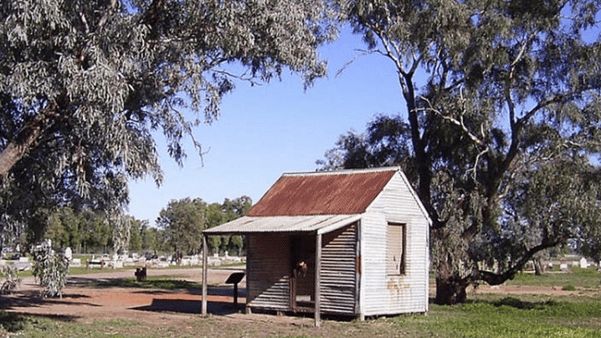
This small, corrugated, iron shed, stained and dented, a humble outback structure that no doubt was built in reverence to Allah (PBUH) was built by a cameleer. Our “Afghan” mosques – made by skilled cameleers and traders from Afghanistan and beyond – are unique to Australia and they are remarkable.
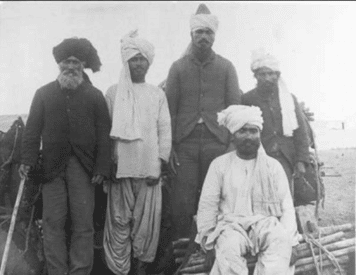
Another mosque, located in Broken Hill, is assumed to have been constructed between 1840-1900.

The mosque is constructed of corrugated iron sheets and wood painted rust red (which is the color of the original mosque and a typical color of Broken Hill). It is in fair condition. The adjoining anteroom is also constructed of the same materials. The mosque sits on a dusty site with an avenue of date palm trees which were planted in 1965 by the Broken Hill Historical Society. At the entrance of the site are two olive trees which were planted by the Islamic Council of New South Wales in December 2008.
One of the earliest known mosques was built circa 1884.

Source: State Library of South Australia/Wikimedia commons
It is a credit to the cameleer’s faith and ingenuity that they were able to construct places of worship from what were often very basic materials.
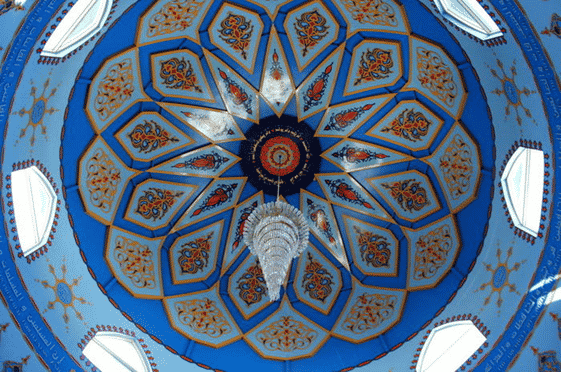
In the ensuing decades to the current era, many magnificent Mosques have been constructed in Australia, and many display the most magnificent care and artistry.
As noted by scholar and theologian Salih Yucel1:
The concept of “country” or homeland in Islam was defined by Muslim jurists in the eighth century in the light of the sacred text. They set three categories: Watan al-asli, the country of birth, the country of one’s spouse or the place of permanent residence; Watan al-sukna, the country of temporary residence and employment; and watan al-safari, the country that is traveled to. Accordingly, for Muslims immigrating to Australia, their new country falls into one of these categories.
The permanency of Mosques that stand out among communities is perhaps a testament to those who now call Australia home, but who never forget their culture and never, their faith.

1Source: Do Muslims See Australia as Their Homeland? The Notion of watan al-asli and watan al-sukna in Islam
https://www.tandfonline.com/doi/abs/10.1080/13602004.2015.1039813