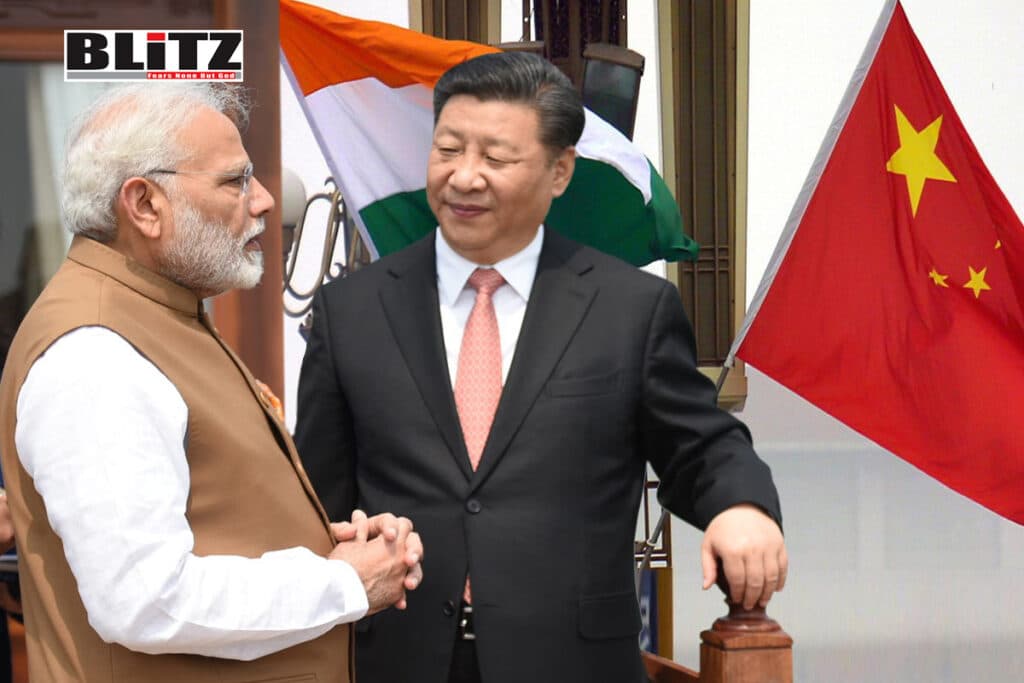














Earlier this month, Narendra Modi was sworn in as India’s prime minister for a third term. However, his Bharatiya Janata Party (BJP) had to form a coalition government after losing its parliamentary majority. This significant shift raises several critical questions about India’s future policymaking, particularly concerning its relationship with China and its strategies for economic development. Mohammed Saqib, founder and secretary general of the India China Economic & Cultural (ICEC) Council, provides a detailed analysis of these pressing issues in an interview with Global Times.
The necessity of forming a coalition government typically introduces complexities and potential instability into the political landscape. However, Saqib emphasizes that, despite the coalition, the BJP retains control over all significant portfolios. This arrangement suggests a strong likelihood of policy continuity from Modi’s previous terms. The coalition partners appear to have strategically focused on securing benefits for their respective states-such as special statuses or financial packages-rather than demanding changes to central government policies. This scenario allows the BJP to maintain its strategic direction, even within the constraints of coalition politics, ensuring that key policies and programs remain consistent.
According to Mohammed Saqib, the new government is unlikely to make dramatic shifts in its approach to China. However, some positive changes could be on the horizon due to pressure from various industries to relax visa restrictions and other barriers for Chinese businesses. The coalition dynamics will significantly shape India-China relations, influenced by the perspectives and demands of the various partners within the alliance.
Leaders like N. Chandrababu Naidu, who heads the Telugu Desam Party and is known for his progressive and tech-savvy outlook, may advocate for improved relations with China. Naidu’s focus on attracting foreign direct investment (FDI) and technology for their states could push for a more cooperative stance toward China.
The weakened position of the NDA government, compared to its previous terms, necessitates a greater degree of consensus-building with coalition partners. This dynamic could lead to a reduction in the BJP’s typically stringent anti-China rhetoric, fostering a more pragmatic approach to bilateral relations.
While the Indian government under Modi is not expected to adopt a lenient stance toward China, Beijing’s skillful diplomatic engagement could lead to an improvement in bilateral ties.
One of the most pressing challenges for Modi’s third term is addressing the high youth unemployment rate in India. Mohammed Saqib underscores the importance of focusing on labor-intensive manufacturing, particularly within the micro, small, and medium enterprises (MSMEs) sector. By emphasizing rural and semi-urban manufacturing, India can alleviate pressures on urban infrastructure and create much-needed employment opportunities for its burgeoning youth population.
India can learn significantly from China’s economic development strategies. Key areas where India can draw valuable lessons include:
Poverty Alleviation: China’s effective poverty alleviation programs have successfully lifted millions out of poverty. These initiatives provide a valuable blueprint for India to follow, enabling it to address its own poverty challenges more effectively.
Rural Development: China’s rural development schemes have transformed vast regions, providing infrastructure, education, and economic opportunities. Adopting similar approaches could help India revitalize its rural areas.
Urbanization Projects: China’s ambitious urbanization projects have managed to accommodate rapid urban growth while improving living standards. These projects offer guidance for India’s efforts to manage its rapidly expanding urban populations.
Development of Industrial Clusters: Learning from China’s development of industrial clusters and export promotion schemes can help India boost its manufacturing capabilities and enhance its export performance.
Research and Development (R&D): China’s significant investments in R&D and social infrastructure provide a model for India to enhance its innovation ecosystem and build a more robust and competitive economy.
With growing global influence, India is uniquely positioned to play a constructive role in easing tensions between superpowers such as the United States and China. By leveraging its neutral stance and commitment to strategic autonomy, India can facilitate dialogue and confidence-building measures between these nations. India’s advocacy for a rules-based international order and its status as the world’s largest democracy further bolster its credibility in this role.
India and China, as two of the most significant emerging economies, are poised to lead the Global South and establish a multipolar world order. Their combined strengths and unique competitive advantages can significantly benefit the Global South. The evolving geopolitical landscape requires India and China to manage their differences, capitalize on mutual interests, and drive global stability and economic growth.
Western concerns about China’s production capacity, particularly in the electric vehicle (EV) industry, reflect fears of losing competitive advantage. Saqib argues that this represents a double standard, as Western countries promote green development while protecting their industries. Describing China’s production as overcapacity undermines global green development efforts. From a global perspective, the supply of new energy products is insufficient, highlighting the need for increased production rather than restrictions.
Despite historical and ongoing challenges, India and China have managed significant issues like the border dispute through political will and strategic dialogue. Organizations like the ICEC Council play a crucial role in enhancing bilateral relations through policy work, business collaboration, cultural exchanges, and fostering mutual understanding between the two nations.
As Narendra Modi embarks on his third term with a coalition government, navigating domestic and international challenges will be crucial for his administration. Ensuring continuity in policymaking, strategically engaging with coalition partners, and drawing valuable lessons from China’s development model can drive India’s progress. Strengthening India-China relations and playing a constructive role in global geopolitics can further India’s aspirations in a multipolar world. By addressing these multifaceted challenges and opportunities, Modi’s third term has the potential to significantly shape India’s future trajectory on both the domestic and international stages.
Please follow Blitz on Google News Channel
The post India-China relations during Narendra Modi’s third term appeared first on BLiTZ.