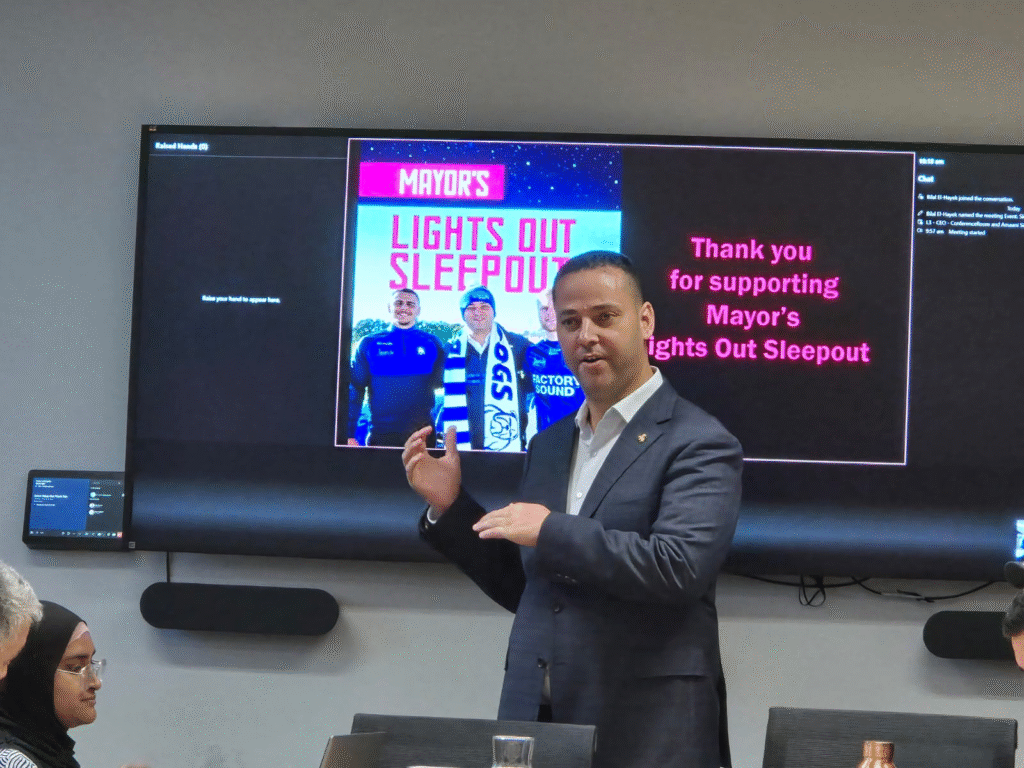













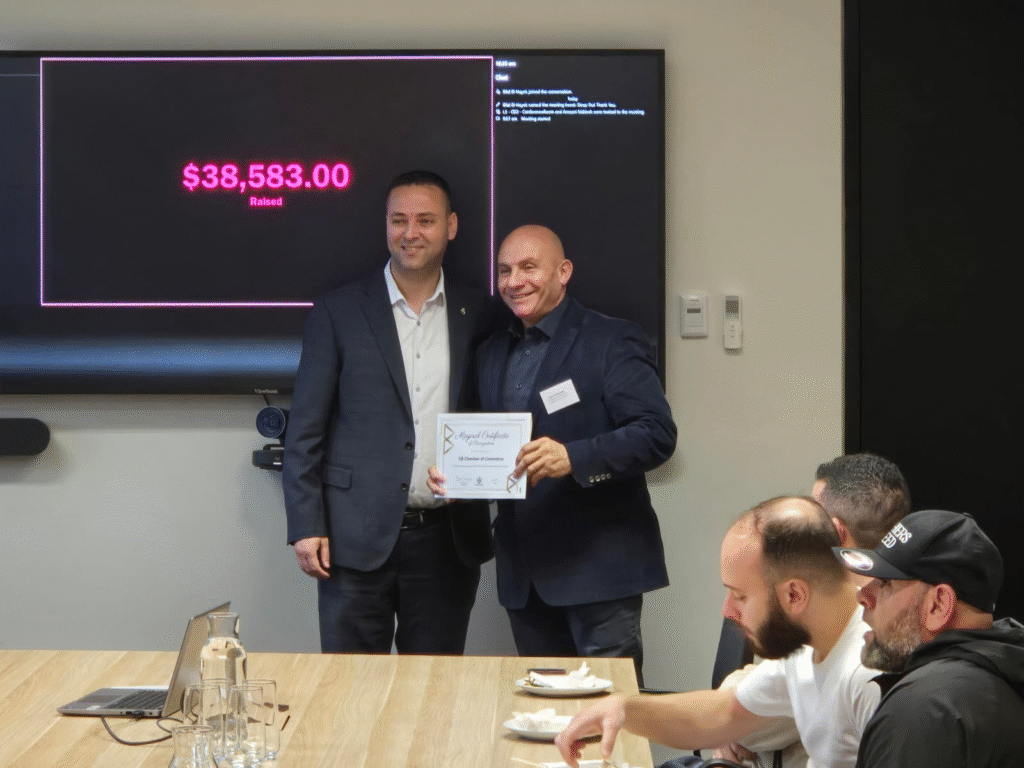
The City of Canterbury Bankstown has celebrated a stellar fundraising effort for people experiencing homelessness, with Mayor Bilal El-Hayek hosting a Thank You Brunch at Civic Tower to recognise supporters of the Mayor’s Lights Out Sleep Out. The community exceeded its $30,000 goal, raising $38,583.
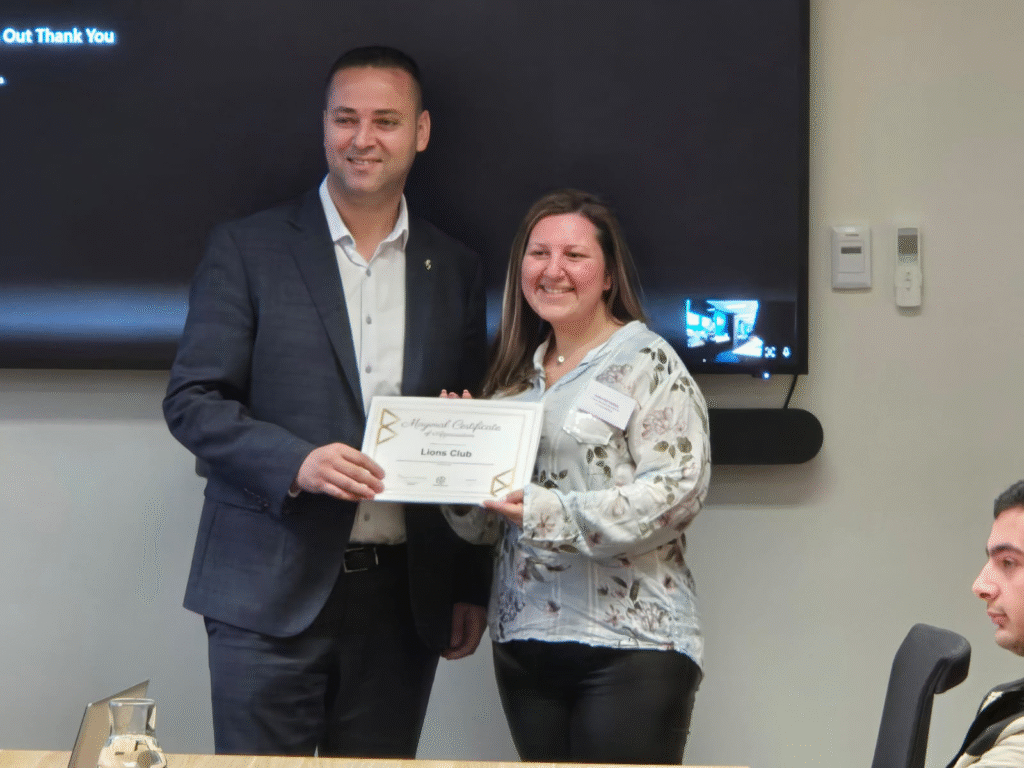
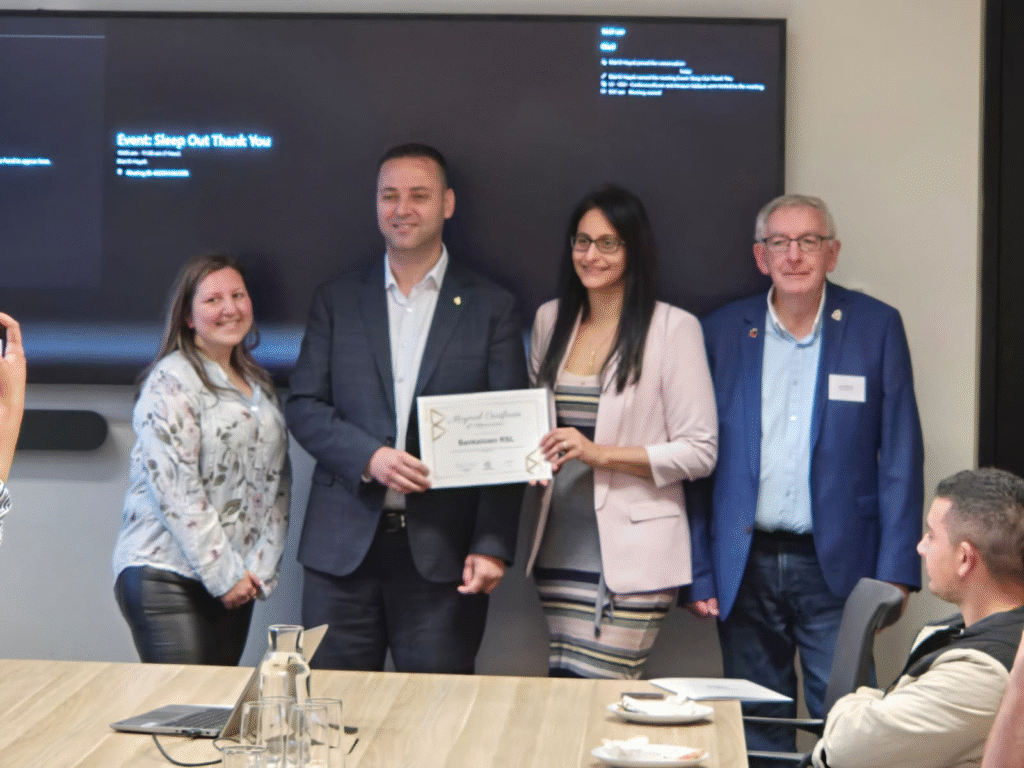
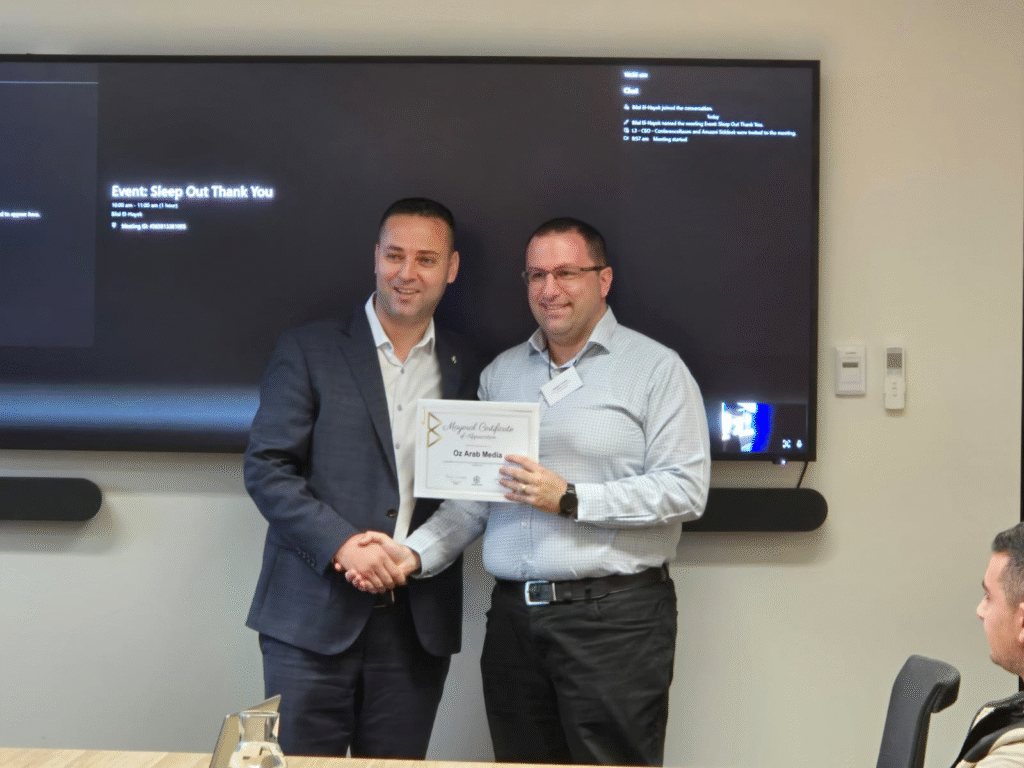
Held in the Conference Room on Level 3 at 66–72 Rickard Road, the brunch brought together community leaders, volunteers, sponsors, and media partners to reflect on the campaign’s impact and the continued need for local support. During the event, Mayor El-Hayek presented Certificates of Appreciation to all who contributed, including Oz Arab Media, the Lions Club of Canterbury Bankstown, Bankstown RSL, Revesby Workers Club, Canterbury Bankstown Chamber of Commerce, and the Canterbury-Bankstown Bulldogs.
Funds raised from the Lights Out Sleep Out will support frontline and community organisations working across Greater Sydney, namely Mission Australia, Maronites on Mission, and Brothers in Need. Each organisation plays a vital role in providing meals, emergency relief, outreach, and pathways to stability for people facing or at risk of homelessness.
Mayor El-Hayek praised the generosity of residents and local partners: “We [Canterbury Bankstown] are not the wealthiest community in the country, but we are the most generous.” He added that the result underscores the power of collaboration—uniting councils, businesses, service groups, sporting clubs, and media to drive real, measurable outcomes.
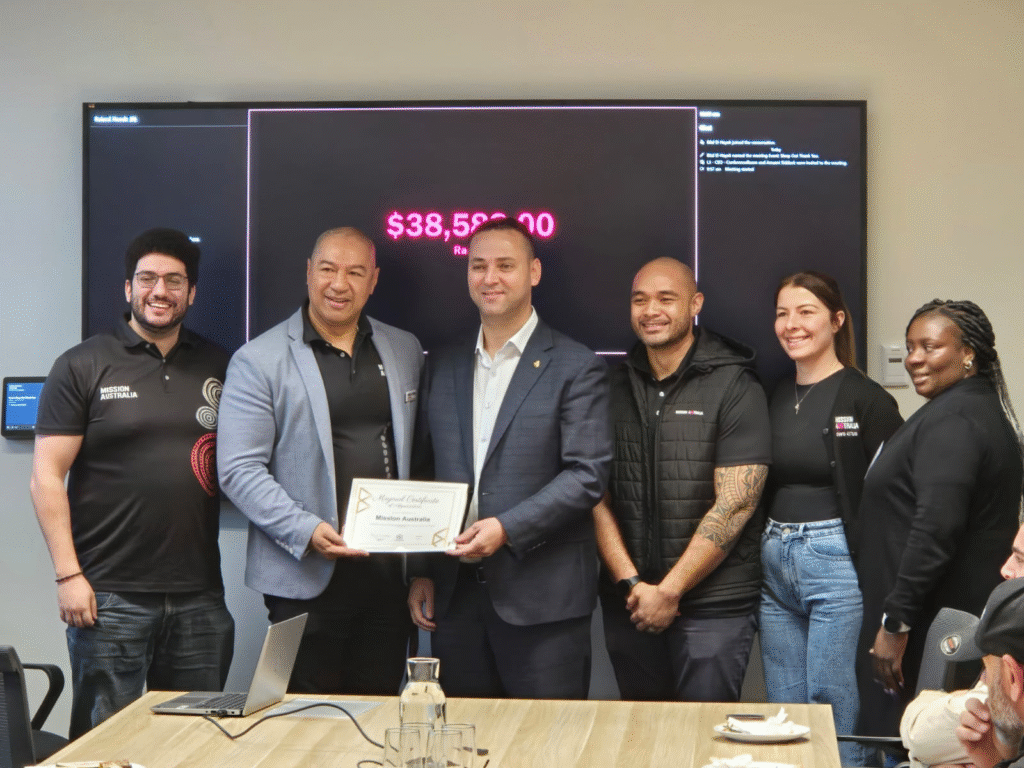
The Mayor’s Lights Out Sleep Out aims to raise both funds and awareness by inviting participants to experience a night without the comforts of home. This year’s result—well above target—reflects growing awareness of housing stress and the desire of locals to be part of practical solutions.
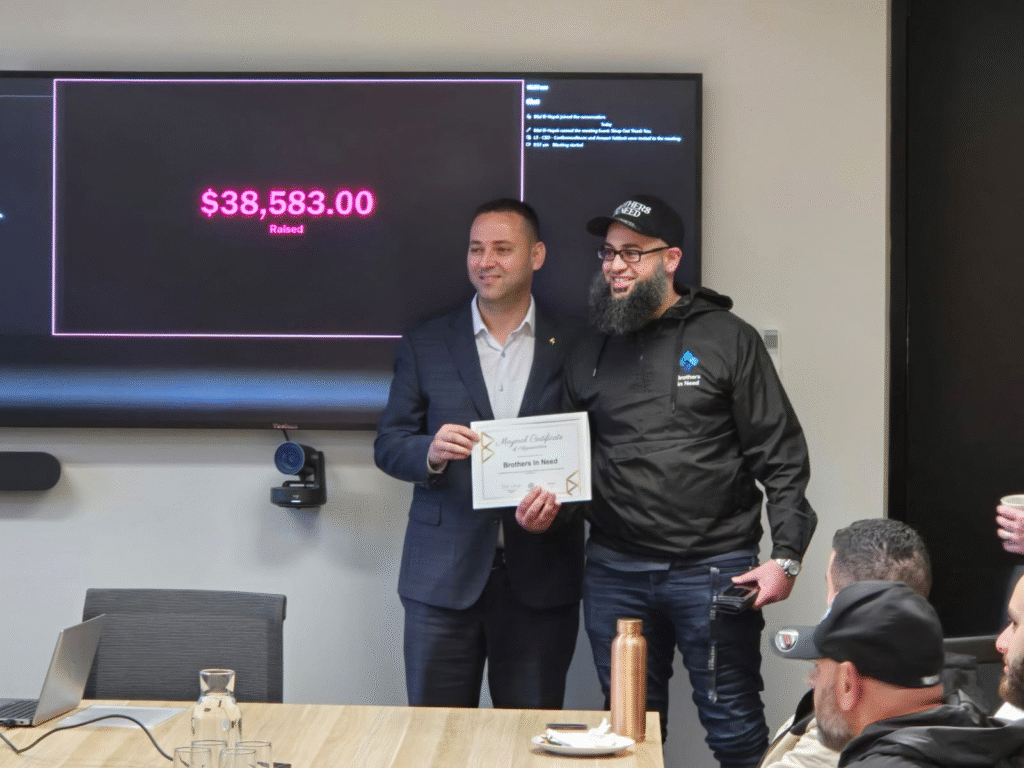
As the certificates were handed out, attendees affirmed their commitment to keep the momentum going, with many noting that ongoing partnerships between council, community groups, and service providers remain crucial as demand for support rises.