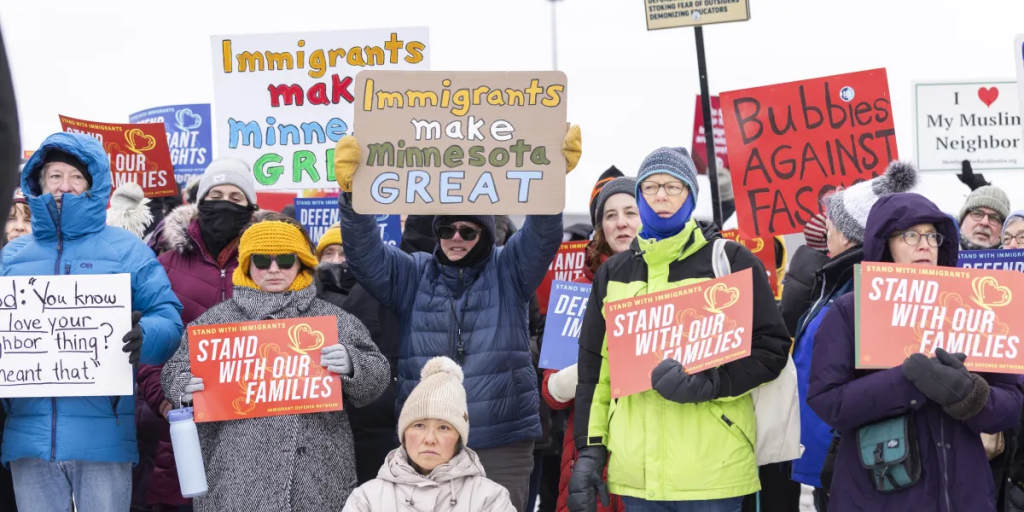













Arabic version: عائلات مينيسوتا تتحدث ضد غارات ICE وتأثيرها
In a poignant revelation of the challenges faced by immigrant families in Minnesota, several families have come forward to share their experiences with the U.S. Immigration and Customs Enforcement (ICE) raids that have left them in fear and uncertainty. Since the Biden administration took office, there has been a notable increase in the number of deportation cases, prompting concerns among immigrant communities about their safety and stability.
Families have reported feeling the weight of constant anxiety as they navigate their daily lives, unsure if they or their loved ones will be targeted by ICE. The stories shared highlight the emotional turmoil and disruption that these raids bring to families who are simply trying to build a life in the United States. Many of these families have children who are U.S. citizens, adding another layer of complexity to their situations.
One family, whose father was arrested during a raid, described the chaos that ensued. The children, who are still in school, are struggling to cope with the absence of their father, leading to declining academic performance and emotional distress. Advocates argue that these raids not only disrupt individual families but also have broader implications for the community, fostering an environment of fear that discourages families from seeking necessary services, such as education and healthcare.
Local organizations are stepping up to support affected families, providing legal assistance and counseling. They emphasize the importance of community solidarity in overcoming the fear instilled by ICE raids. Many families are calling for a reevaluation of immigration policies that disproportionately impact those who are simply trying to contribute to their communities.
The Biden administration has expressed a commitment to reforming immigration policy, but for many families currently living in fear, change cannot come soon enough. As the stories unfold, it becomes clear that the consequences of these raids extend far beyond individual arrests; they ripple through communities, affecting the fabric of society itself. The voices of these families serve as a powerful reminder of the human cost of immigration enforcement and the urgent need for comprehensive reform.
As Minnesota grapples with these issues, it remains to be seen how policymakers will address the concerns raised by these families and whether meaningful change will come to alleviate the fears that currently overshadow their lives.