













Arabic version: الديمقراطيون يؤجلون تصويت صلاحيات الحرب بشأن الضربات الإيرانية
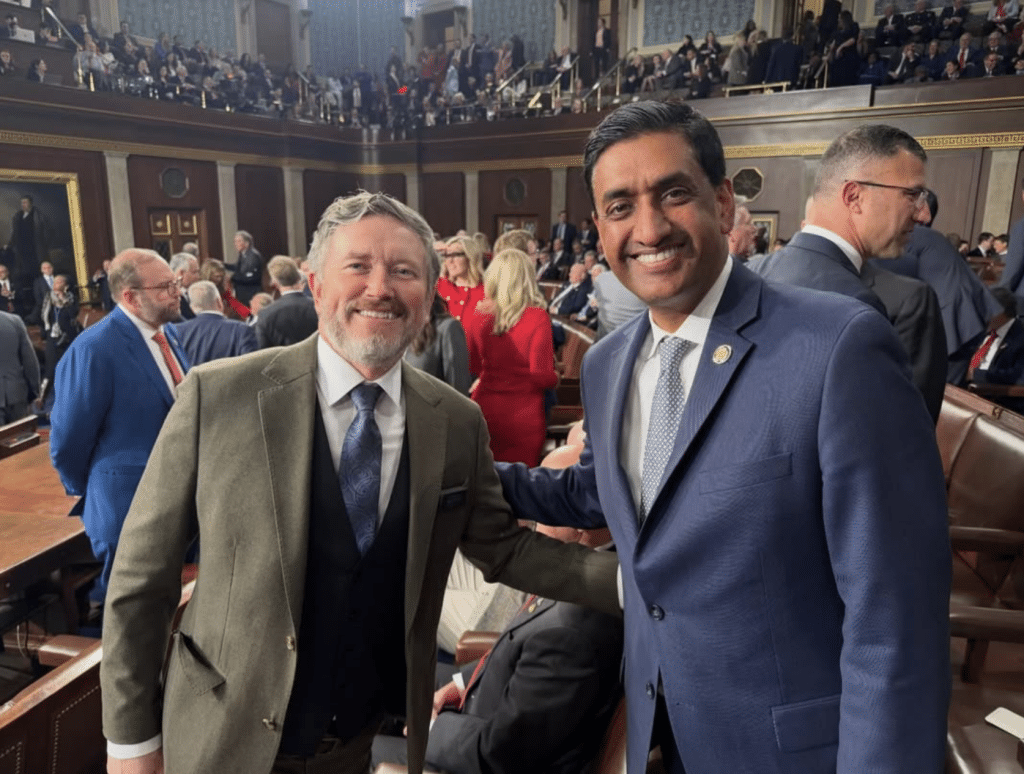
A rare bipartisan moment occurred during the State of the Union address when Democratic Congressman Ro Khanna and Republican Congressman Thomas Massie shared the floor, united in their stance against President Donald Trump’s military threats toward Iran. Khanna, known for his progressive views, and Massie, a vocal anti-war critic, are advocating for a war powers vote that would require Congress to formally record its position on potential U.S. military actions against Iran. However, reports indicate that Democratic leadership is attempting to delay this vote.
According to Middle East Eye, the 1973 War Powers Act permits any senator to propose a resolution to withdraw U.S. forces from conflicts not approved by Congress. This legislative framework is intended to ensure that the executive branch does not unilaterally engage in military action without legislative oversight. In recent years, the ambiguity surrounding the ongoing ‘war on terror’ has allowed the White House to conduct military operations without explicit congressional authorization.
Khanna has emphasized the need for Congress to debate and vote on military engagement before any U.S. troops are put at risk, stating that Trump officials have indicated a 90% chance of strikes against Iran. Despite this, some Democratic leaders are reportedly hesitant to support the war powers resolution, reflecting a divide within the party regarding the necessity of confronting Iran militarily.
Senate Majority Leader Chuck Schumer has acknowledged the seriousness of the situation, urging the administration to communicate its objectives clearly to the American public. Schumer’s comments suggest a cautious approach, balancing the need for military readiness against the political implications of another potential conflict as midterm elections approach.
The upcoming midterms will serve as a crucial test for Trump’s presidency, particularly following the backlash from his previous military actions, such as the assassination of Iranian commander Qassem Soleimani. In response to that incident, Congress had previously sought to limit Trump’s war powers, although he vetoed their resolution. As discussions continue, the future of U.S.-Iran relations remains uncertain, with both sides preparing for various possible outcomes.