













Reading in English | Read in العربية (Arabic)
In the last week of February and the first week of March 2026, the Mauritanian government found itself facing serious human rights accusations concerning the issue of “slavery,” which has become a continuous source of social tension and debate in the country.
This controversy was exemplified by a condemnation issued by the opposition Democratic Alternation Coalition (cad2029) following the imprisonment of six anti-slavery activists and two women who reported cases of slavery. The coalition described these events as “an unprecedented judicial drift aimed at obscuring the truth.”
The media committee of the Initiative for the Resurgence of the Abolitionist Movement (IRA) announced the detention of several of its leaders and activists, asserting that these arrests were in retaliation for their role as whistleblowers on slavery-related violations.
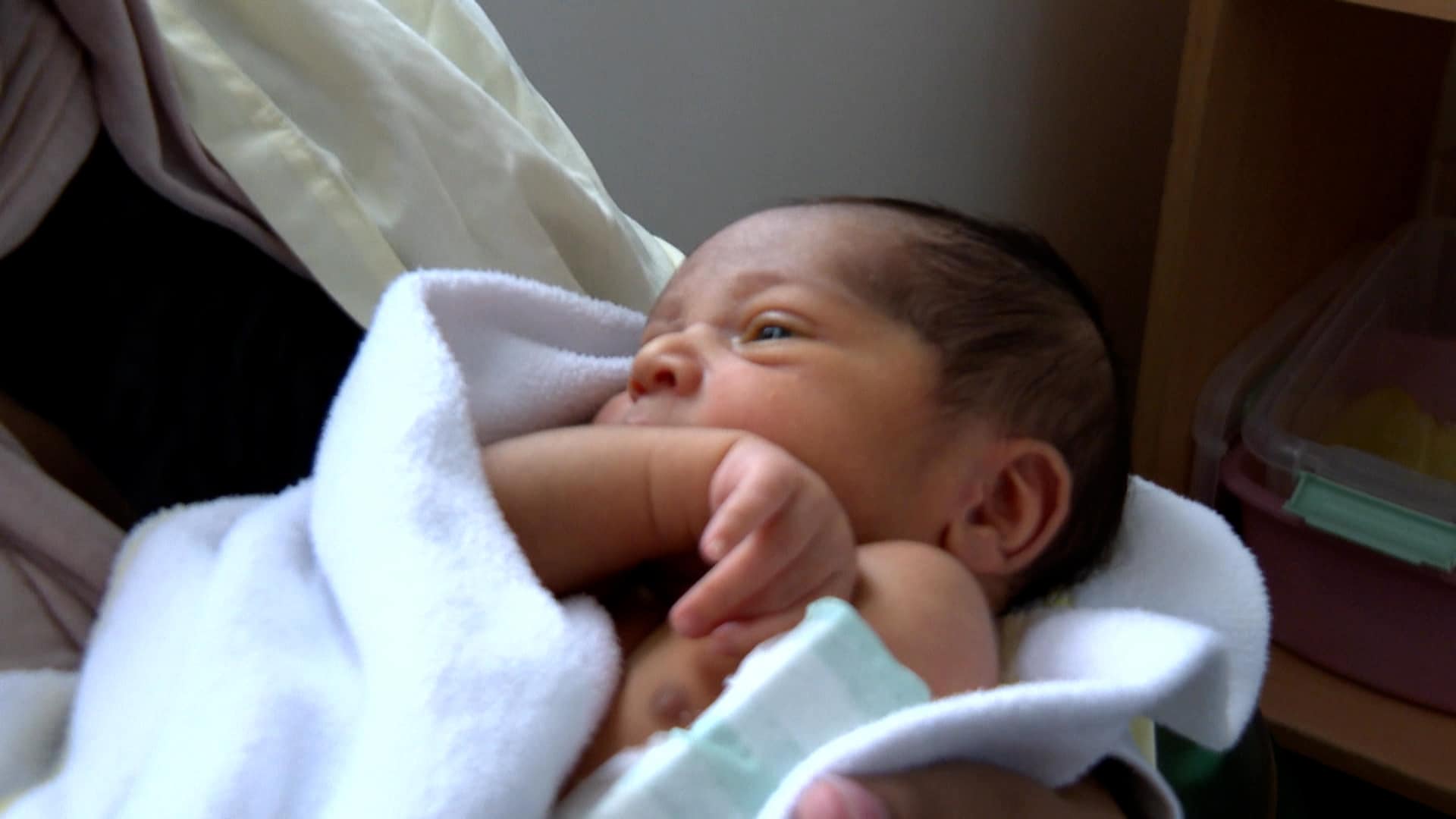
These reactions were sparked by the widely publicized case of a girl named Nuhah, who was reported to be in a state of “slavery” under the care of a family. Despite the Public Prosecutor’s denial of these accusations, claiming that the situation involved the family providing social and humanitarian support, the controversy continued to fuel public debate in Mauritania.
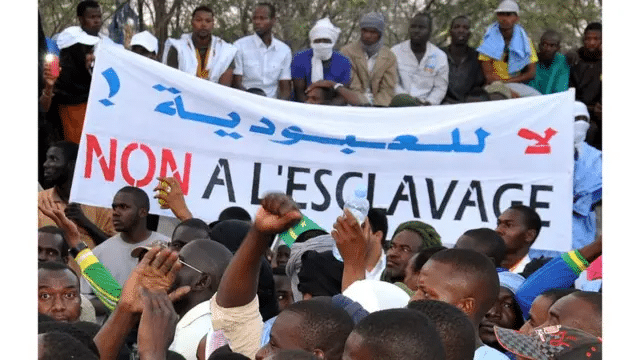
Amid this turmoil, women from the IRA organized a protest in front of the Office of the High Commissioner for Human Rights in Nouakchott, condemning the imprisonment of activists from their movement. The protesters held signs reading: “No to slavery,” “No to the oppression of whistleblowers,” and “The regime imprisons informants and victims while protecting the perpetrators.”
Moreover, the parliamentary representative and leader of the IRA, Biram Dah Abeid, harshly criticized the Mauritanian government regarding the case of Nuhah, which the movement labeled as a slavery case, along with the subsequent arrests.
After the governor of the eastern Hodh region announced on state television that the General Delegation for National Solidarity and the Fight Against Exclusion (Tazart) had provided a plot of land and two million ouguiyas to Nuhah’s family as a gesture of sympathy from the Mauritanian authorities, a logical question arose regarding the reason for this exceptional government generosity.
This question stemmed from two perspectives. First, if Nuhah’s case did not involve slavery, why were these governmental gifts given to her and her family, unlike other girls and families living in vulnerable conditions in Mauritania?
Second, if this exception was not innocent, what were the authorities trying to hide? Could these donations be viewed as a social bribe to the girl’s family to close the chapter on this controversy and public response?
In any case, the official reaction to the event, whether through the arrest of those reporting Nuhah’s situation or the attempt to silence the victim’s family, indicates that we are confronted with an ongoing and widespread phenomenon. The government still seems unable to find a genuine solution to eradicate this social ill.
Indeed, while social phenomena often require significant time to address their root causes due to their deep entrenchment in the societal fabric, real political will, when present, should help expedite the steps needed to eliminate the scourge of “slavery.”
Notably, the authorities’ actions regarding Nuhah’s case appeared unwise, as there was a contradiction between providing social gifts to the victim’s family while denying her experience of slavery. The authorities could have created a more coherent narrative by acknowledging the social circumstances and closing the case, which would have had a more convincing local impact.
The essential conclusion we want to emphasize is that human dignity is a matter that cannot be overlooked or normalized through violations. This is not only because international law affirms this principle, along with local legislation, but also because Islam, which the majority of Mauritanians practice, calls for the honoring of human beings and the eradication of slavery.
In this context, we observe that Islam has expanded the avenues for the liberation of slaves in cases where Muslims commit unlawful acts, while simultaneously closing the door to any new individuals entering into slavery, adhering to the principle of gradualism in combating this social ill and eliminating its inputs.
Therefore, it should have been expected that the Islamic community, after 14 centuries since the prophecy of Muhammad (peace be upon him), would have moved beyond the concept of slavery. However, the case of Nuhah and many others illustrates the gap between the application of religious texts in their legal and humanitarian aspects and the reality of Muslims, their culture, and social customs.
In conclusion, it is crucial to assert that the duty to reject any form of human slavery is a shared responsibility among all sectors of society, starting from government authorities, extending to political parties and civil rights organizations, and reaching scholars, thinkers, and the cultural and media elite. Through their collaborative efforts to confront this phenomenon with seriousness and determination, we can glimpse a ray of hope on our path toward building a society characterized by dignity, equality, and citizenship values that unite all its segments and components.