












Reading in English | Read in العربية (Arabic)
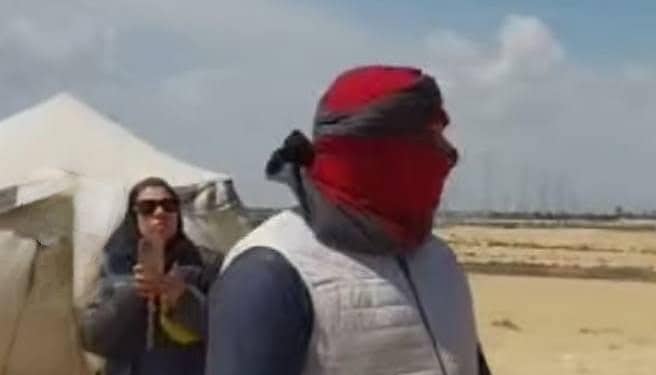
It is undeniable that the actions of a woman, accompanied by a group of thugs, some of whom were masked and armed, on Friday, March 27, represent a serious violation. This incident marks the third time they have trespassed on state land owned by the Egyptian Ministry of Tourism and Antiquities in the area of the submerged monasteries near the Monastery of St. Bishoy in Wadi Natron, located in the Beheira Governorate. Their breach involved encroaching upon the vicinity of an archaeological monastery that was only recently discovered, dating back to between the 4th and 6th centuries AD, covering an area of nearly 2000 square meters, as identified by the Supreme Council of Antiquities and the Faculty of Archaeology at Cairo University. They attempted to claim the monastery by planting various trees around the surrounding land to deceive officials into believing that the woman owned the monastery.
Some monks and workers from the Monastery of St. Bishoy in Wadi Natron bravely confronted the aggressors without fear, enduring insults and attacks, which resulted in injuries for some. They successfully prevented the forceful seizure of the monastery. Meanwhile, other monks notified the security authorities, who responded promptly and apprehended the intruders, forwarding them to the prosecution.
The woman disregarded Egyptian law without hesitation, brazenly assaulting the monastery for the third time, the most recent incident occurring just ten days ago. This followed a report filed against her during her first attempt to encroach on the same area on October 13, 2025. This situation raises questions about whether she is fully aware of the significance of this region and the Christian heritage it holds related to monastic life, as well as the possibility that she is being protected and shielded from accountability by corrupt officials. Therefore, it is imperative for the state to coordinate with the Bishop and the head of the Monastery of St. Bishoy to construct a proper wall around the archaeological site that befits the area and to prepare it as a part of Egypt’s religious tourism sites. Additionally, security measures should be strengthened by the relevant authorities to safeguard the site.