














Arabic version: يجب أن يمتد الغضب إلى ما هو أبعد من تدنيس الرموز الدينية
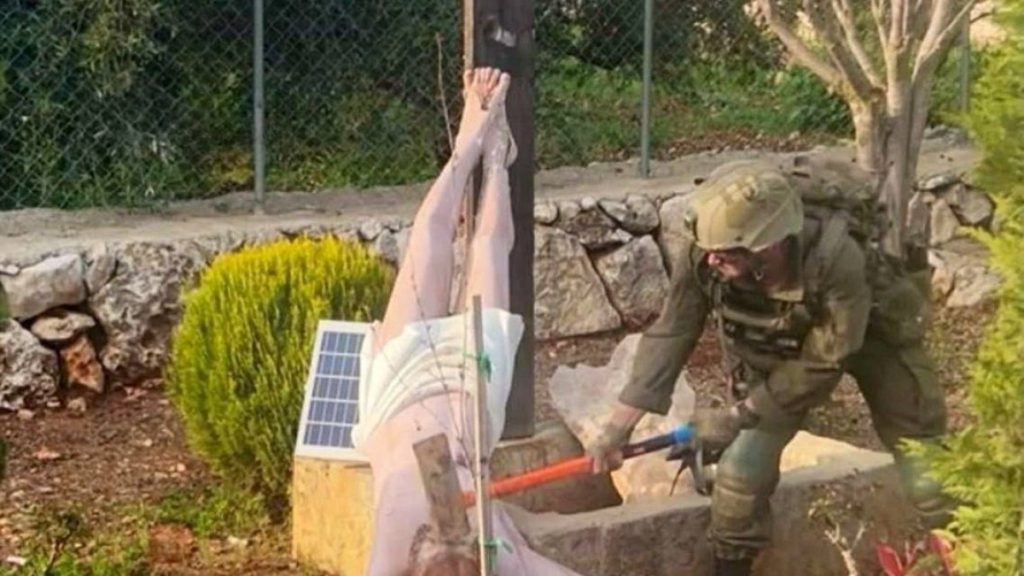
A recent incident involving an Israeli soldier damaging a statue of Jesus in Debel, Lebanon, has sparked outrage among many Christians. The soldier was seen in a video circulating on social media decapitating the statue and striking its head as it lay on the ground. According to Al Jazeera, this act is seen not only as disrespectful but also as a desecration, particularly painful for those who hold religious sentiments.
Israeli officials have dismissed the incident as an isolated act. However, critics argue that this event is symptomatic of a broader culture that fosters enmity towards others and normalizes religious supremacy. The repeated harassment of Christian clergy in Jerusalem and a culture of impunity for offenses against them suggest deeper societal issues. This incident raises questions about the ideological and political formations that shape such actions.
The video has prompted discussions about the Israeli military’s self-image as “the most moral army in the world,” a claim that many Palestinians find deeply offensive. Numerous documented instances of violence against Palestinian civilians, including abuses by soldiers, highlight a significant gap between this image and the lived experiences of those affected.
The author argues that the real outrage should not solely focus on the destruction of a religious statue, but rather on the broader context of violence against civilians. They emphasize the importance of recognizing the devastation in Gaza and Lebanon, where civilian lives are routinely targeted, and neighborhoods are destroyed. A genocide has taken place, and the systematic assault on human life, they contend, must be the central focus of our outrage.
Faith leaders are called to demand accountability for war crimes, stressing that meaningful outrage should address not only symbolic offenses but also the ongoing violence against human lives. This perspective urges a reordering of priorities in the face of such moral catastrophes, as the destruction of human lives far outweighs the desecration of religious symbols.