











Arabic version: ناديا هيرنانديز تعرض موسيقى الاحتجاج الفنزويلية في AGNSW
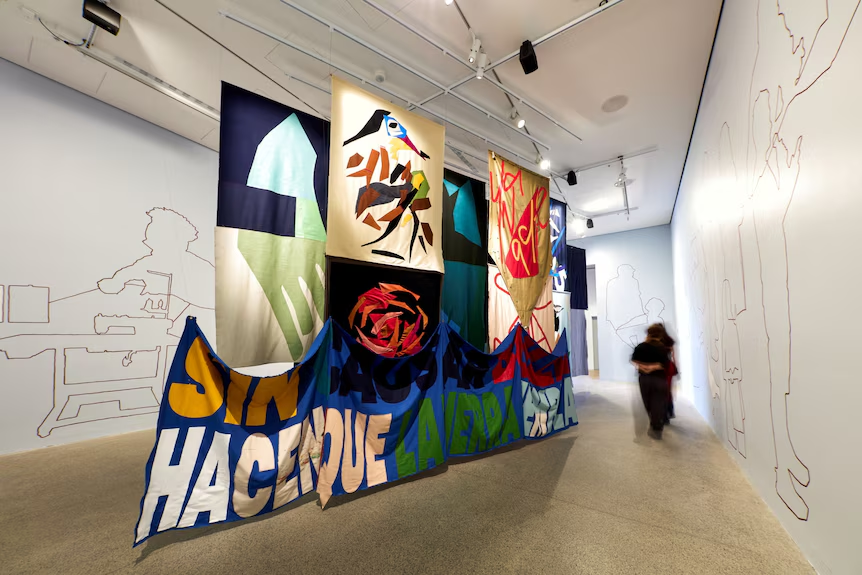
Nadia Hernández’s latest work, titled Para verte mejor, en todo tiempo, is a powerful exploration of Venezuelan protest music, currently on display at the Art Gallery of New South Wales (AGNSW). According to ABC News, this multidisciplinary installation aims to create a living archive of protest songs that reflect the rich tradition of political dissent in Venezuela.
Hernández, originally from Mérida, Venezuela, moved to Tucson, Arizona, when she was nine, and later to Brisbane, Australia, where she studied fine arts. Now residing in Melbourne, she is part of a growing Venezuelan community. Due to the oppressive political regime in Venezuela, she and many others in the diaspora are unable to return home, making her art a vital connection to her culture and heritage.
The installation builds on Hernández’s previous work tracing the history of Venezuelan protest music. It features a textile collage, a soundscape, and a mural that showcases the journey of the project and its collaborators. The soundscape includes contributions from various artists and reflects the political power of songs, blending historical context with contemporary expressions.
Para verte mejor, en todo tiempo pays homage to gaita, a traditional Venezuelan folk music genre known for its political commentary. Hernández emphasizes that protest is embedded not only in gaita but also across various musical genres in Venezuela, including salsa and punk. The project incorporates fragments from protest songs reworked into new verses and features diverse sound recordings from her hometown, enhancing the immersive experience of the installation.
Hernández views her work as a form of protest, using art as a powerful means of self-expression and cultural preservation. Her artistic process is deeply rooted in family stories and the desire to maintain connections with her homeland, despite the physical distance. Para verte mejor, en todo tiempo embodies a commitment to sharing and preserving Venezuelan cultural traditions within the diaspora.