












Arabic version: ارتفاع أسعار النفط بعد اشتباكات أمريكية إيرانية في ممر مائي رئيسي
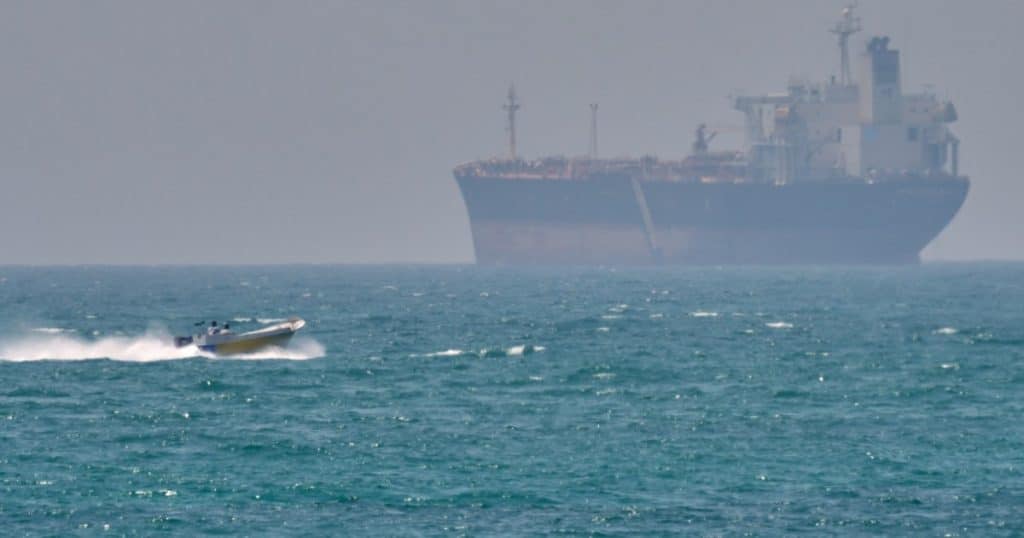
Oil prices have jumped after clashes between the United States and Iran in the Strait of Hormuz, a conduit for about one-fifth of global oil and natural gas supplies. Futures for Brent crude rose as much as 7.5 percent during a volatile trading session on Thursday, before easing as Asia’s markets opened on Friday morning. According to Al Jazeera, the international benchmark stood at $101.12 per barrel, down from a day’s high of $103.70.
The escalation occurred despite a truce announced on April 7. The US Central Command reported that it launched strikes on Iran after three US Navy guided-missile destroyers came under attack from Iranian missiles, drones, and small boats in the strait. In response, Iran’s Khatam al-Anbiya Central Headquarters accused the US of violating the ceasefire by attacking an Iranian oil tanker and another vessel in the vicinity of the waterway, as well as targeting civilian areas, including Qeshm Island.
US President Donald Trump downplayed the situation, asserting that the ceasefire remained in effect, while Iranian state media reported that the situation had gone “back to normal.” However, shipping in the strait has been at a near standstill since late February due to the threat of Iranian attacks on the massive oil tankers that usually transport much of the world’s energy supplies.
The rise in Brent prices reflects an approximate 40 percent increase compared to levels before the war, coinciding with an estimated shortfall in daily production of 14.5 million barrels. Amid these developments, Asian stock markets opened lower on Friday, with Japan’s benchmark Nikkei 225, South Korea’s KOSPI, and Hong Kong’s Hang Seng Index each falling more than 1 percent. The S&P 500 also fell about 0.4 percent overnight after hitting an all-time high the previous day.