











Arabic version: لغز حطام ديدووتر مستمر في وونيروب
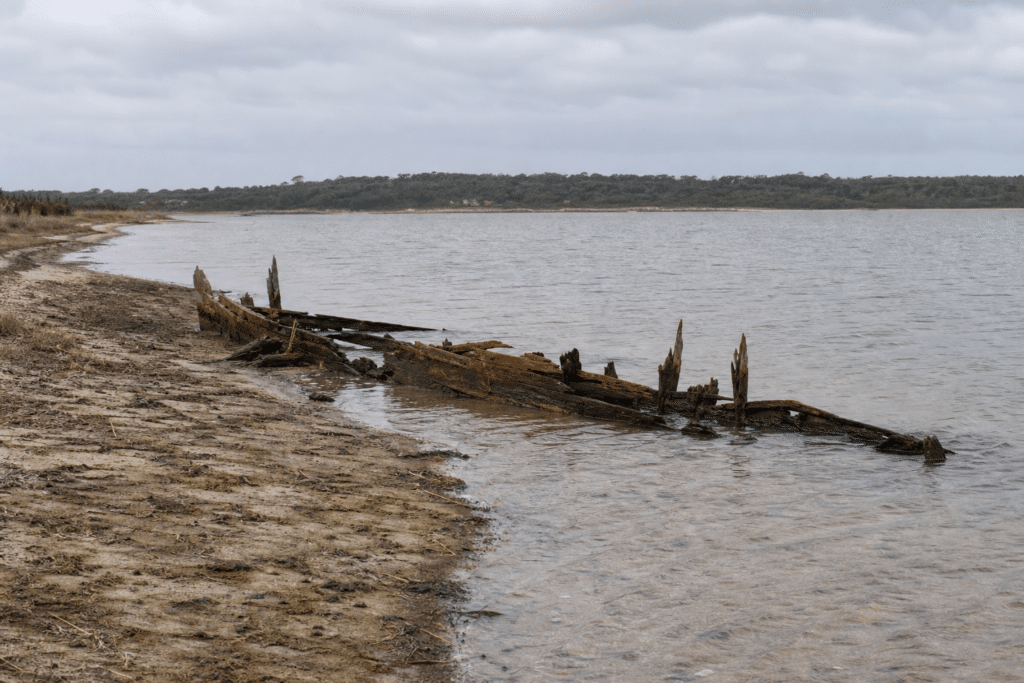
According to ABC News, a small archaeological team is continuing to search Western Australia’s Wonnerup Deadwater for traces of a shipwreck that has inspired speculation since the early years of British colonisation.
The stagnant lagoon, near the Wonnerup Inlet at Busselton, has produced only uncertain clues. Recent searches found an antique glass bottle, a rotting jarrah fence post and a tiny handmade copper nail that maritime archaeologist Ian McCann said was more likely to have come from a small rowboat. A hard layer drilled beneath the sand was later identified as a shell bed.
The strongest evidence for a wreck comes from colonial accounts. Explorer and surveyor Francis Thomas Gregory wrote in 1861 that he had seen a vessel of “considerable tonnage” near the Vasse Inlet around 1846-47, and judged it to have been wrecked more than 200 years earlier. Early settler Leonard Worsley Clifton also described the wreck as “evidently ancient”.
Objects associated with the legend, including timber believed to be a ship’s structural brace, small cannons, pistols and anchors, have not been conclusively dated as pre-colonial. WA Maritime Museum curator Ross Anderson said local folklore, including rumours of pirates and buried treasure, had grown without firm archaeological evidence. He said alleged links between the Lockville chest and the wreck were unfounded.
Mr McCann doubts the vessel was a lost Dutch trading ship, suggesting descriptions and fieldwork point more toward an American whaling vessel. Mr Anderson said a French chaloupe lost during the Baudin expedition in 1801 could also explain some material found in the area. Storms, altered shorelines, mining, vegetation, mud and silt have complicated surveys, leaving the Deadwater wreck unresolved.