











Reading in English | Read in العربية (Arabic)
Liverpool will cement its reputation as Australia’s home of South Asian fashion when the internationally acclaimed exhibition The Offbeat Sari opens at Liverpool Powerhouse this November.
With George Street’s vibrant Little India already a destination for South Asian fashion, jewellery, bridal wear and textiles, Liverpool is the natural home for an exhibition celebrating one of the world’s most recognisable garments.
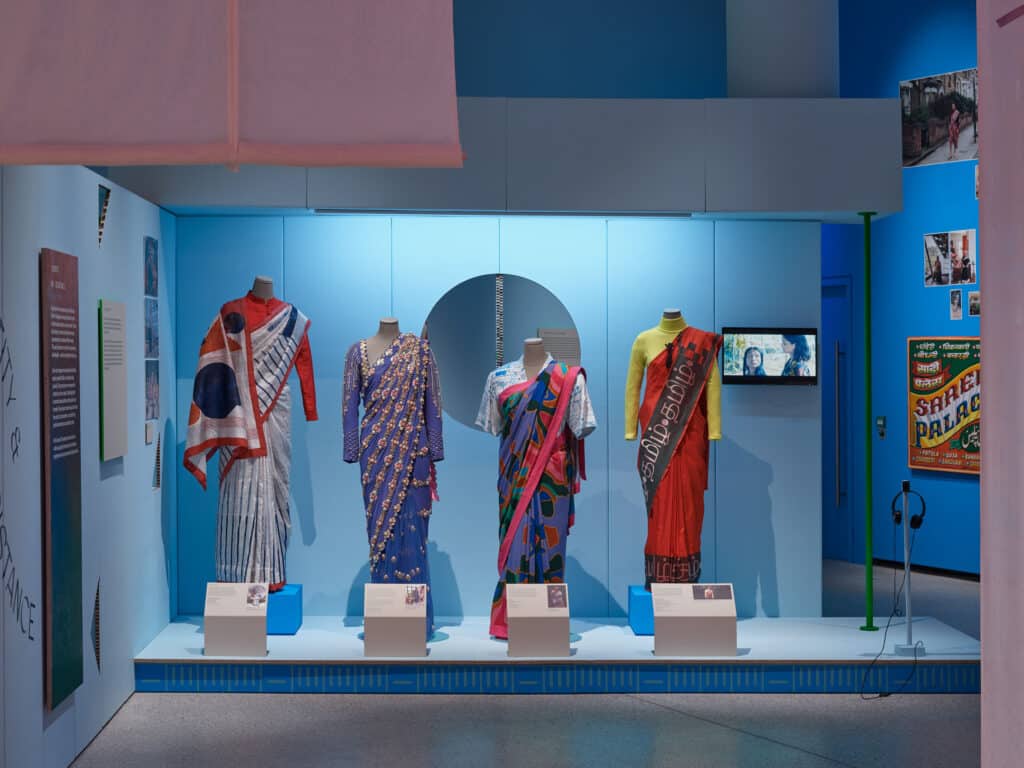
Sydney audiences will have a rare opportunity to see more than 50 extraordinary contemporary saris from India when the Design Museum London’s touring exhibition opens exclusively in NSW at Liverpool Powerhouse on 7 November 2026.
To mark the occasion, Liverpool City Council’s award-winning Starry Sari Night will move to Liverpool Powerhouse this year, bringing together fashion, food, music and culture in a celebration of South Asian heritage and its growing influence on mainstream Australian fashion.
Liverpool Mayor Ned Mannoun said the exhibition recognised the important contribution of Liverpool’s Indian and South Asian communities to the city’s cultural and economic identity.
“George Street’s Little India has helped establish Liverpool as the home of subcontinental fashion in Australia, attracting shoppers from across Sydney and beyond,” Mayor Mannoun said.
“Our Little India businesses have spent decades building that reputation, offering everything from traditional saris and spectacular bridal fashion to jewellery, textiles and contemporary designs. Their hard work and entrepreneurship have helped make Liverpool a destination in its own right.
“The sari is no longer just a garment of the Indian subcontinent: it’s an Australian garment. Australians from the subcontinent are Australians. Full stop.
“Our multiculturalism isn’t something separate from our Australian identity. It’s part of who we are. When Australians wear a sari, they’re not just celebrating another culture. They’re celebrating Australian culture.
“Fashion has an incredible ability to bring people together, and our award-winning events, including Starry Sari Night, demonstrate how celebrating each other’s cultures builds stronger communities.
“That’s what makes bringing Starry Sari Night to Liverpool Powerhouse alongside this extraordinary international exhibition so special. We’re celebrating our local businesses, our shared identity and the contribution our South Asian communities have made to modern Australia.
“You shouldn’t have to travel to London or the Sydney CBD to experience world-class culture. We’re bringing it right here to Liverpool.”
An extraordinary international exhibition
From a sari made from hair-thin stainless-steel wire to a sequinned garment created using recycled hospital X-ray film, The Offbeat Sari reveals a side of Indian fashion that many Australians have never seen.
The free international exhibition explores how designers, wearers and craftspeople are reinventing the sari, turning a garment with thousands of years of history into a canvas for innovation, identity, sustainability and self-expression.
Presented in partnership with the Design Museum in London, and conceived and curated by Priya Khanchandani, the exhibition brings together contemporary designs ranging from couture pieces associated with Bollywood and Hollywood to saris inspired by street fashion, activism, sport and everyday life.
Exhibition curator Priya Khanchandani said: “The sari is experiencing what is conceivably its most rapid reinvention in its 5,000-year history. It makes the sari movement one of today’s most important global fashion stories, yet little is known of its true nature beyond South Asia.”
Among the exhibition highlights is Rimzim Dadu’s Gold Sculpted Wave Steel Sari, constructed from hair-thin stainless-steel wires, as well as an X-ray Sequinned Sari by Abraham & Thakore, which uses recycled hospital X-ray film and post-consumer plastic bottles.
The exhibition also features a pink sari associated with India’s Gulabi Gang, a social justice movement opposing violence against women, and a concept sari worn by Lady Gaga.
The exhibition explores three themes: Transformations, Identity + Resistance, and New Materialities, showing how contemporary Indian designers, wearers and craftspeople are challenging traditional ideas about what a sari can be, how it can be worn and what it can represent.
Celebrating Liverpool’s Little India
For decades, George Street’s Little India has been an important part of Liverpool’s cultural and commercial heart, with local businesses helping preserve traditional craftsmanship while introducing new generations to South Asian fashion.
The precinct’s fashion boutiques, jewellery stores, textile retailers and other businesses have created a shopping and cultural experience that reflects Liverpool’s diverse communities and attracts visitors from across Greater Sydney.
The arrival of The Offbeat Sari provides an opportunity to recognise the contribution of these businesses and strengthen Liverpool’s position as Australia’s leading destination for South Asian fashion and culture.
Moving Starry Sari Night to Liverpool Powerhouse will connect the city’s much-loved cultural celebration with a major international exhibition, creating an opportunity for people from all backgrounds to experience the sari as both a traditional garment and an expression of contemporary fashion.
The exhibition will also be accompanied by a book titled The Offbeat Sari: Indian Fashion Unravelled, as well as public programs and workshops celebrating textile traditions, creativity and the experiences of South Asian communities in Western Sydney.
Exhibition details
What: The Offbeat Sari
Where: Liverpool Powerhouse
When: 7 November 2026 to 4 April 2027
Admission: Free
Presented by: Design Museum, London
Curated by: Priya Khanchandani
Liverpool City Council’s award-winning Starry Sari Night will be held at Liverpool Powerhouse to coincide with the exhibition, with event details to be announced.
Presented exclusively in NSW at Liverpool Powerhouse, The Offbeat Sari is a touring exhibition by the Design Museum, London. Conceived and curated by Priya Khanchandani.
Background
About the Design Museum
The Design Museum is a multifaceted museum, an ever-changing space for the public, industry and education to come together and explore new ideas. A registered charity, the museum’s innovative exhibitions, partnerships, research and learning programmes evidence how design can enable this planet and its inhabitants to thrive. Our landmark building in Kensington, London, is the centre of our national network and a global hub for the transformative potential of design.
https://designmuseum.org/About the Curator
Priya Khanchandani (@hiyapriya) is a London-based curator, writer and broadcaster whose work investigates narratives of identity and belonging in design. Educated at the Royal College of Art and at Cambridge University, she was formerly head of curatorial at London’s Design Museum, and the first female editor-in-chief of Icon, the architecture, art and culture magazine. She now writes regularly for the UK national press. She has also held roles at the London’s Victoria and Albert museum and the British Council, lectures widely, and been a trustee in the arts sector for the past 16 years.