












Arabic version: تستخدم فرق الإنقاذ تقنيات متقدمة في عملية التعافي من زلزال فنزويلا
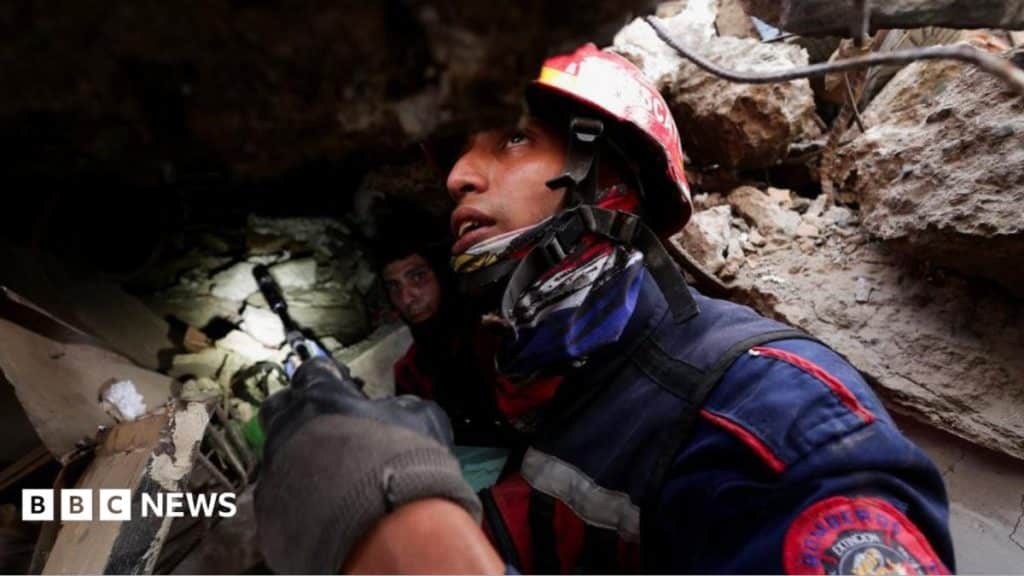
Rescue teams are urgently searching for survivors in the aftermath of Venezuela’s twin earthquakes, which have resulted in at least 1,450 people known to have been killed. The critical 96-hour period for finding survivors has passed, but rescuers remain hopeful and continue their efforts with the same intensity as on the first day. According to BBC News, various techniques are being employed to locate those still trapped beneath the rubble.
Among the most effective tools are specially-trained search dogs, capable of detecting human scents from up to 10 meters deep. These dogs bark loudly when they sense a potential survivor, alerting rescuers to their location. Lee Ivory, deputy national coordinator for UK International Search and Rescue (UK ISAR), highlights the remarkable abilities of these dogs, which are trained using toys imprinted with human scent as rewards.
In addition to canine assistance, rescuers utilize sound detection devices. By shouting into the rubble and employing seismic and acoustic listening tools, teams can pick up faint sounds made by trapped individuals. This method significantly enhances the chances of locating survivors who might be buried under debris.
Technical search cameras and thermal imaging equipment are also crucial in these rescue operations. Cameras can be maneuvered into tight spaces to provide visual access to trapped individuals, while thermal imaging detects body heat, helping rescuers locate victims not directly visible.
Manual tools and heavy machinery play a vital role in the rescue process. Workers use disk cutters, saws, and bulldozers to clear away heavy debris, creating pathways to reach those in need. Local teams often coordinate access to this equipment, which is essential for shifting large amounts of concrete and other materials.
As rescue efforts continue, the combination of these advanced techniques offers a glimmer of hope for finding survivors in the devastating aftermath of the earthquakes.