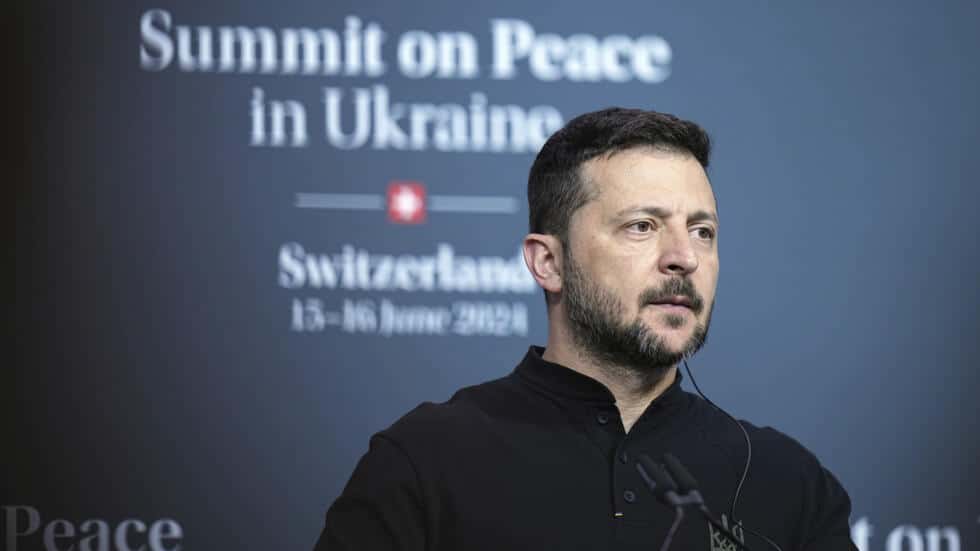












In a recent interview with French media, Ukrainian President Volodymyr Zelensky emphasized that the global community overwhelmingly supports the inclusion of Russia in upcoming peace talks aimed at resolving the ongoing conflict in Ukraine. Scheduled for November, the second international peace summit is poised to be a pivotal moment in the diplomatic efforts to end the war. Zelensky’s statement underscores a significant shift in the discourse surrounding the conflict, yet it also raises questions about the feasibility of achieving a resolution under the current circumstances.
The first international peace summit, hosted by Switzerland in June, excluded Russia, a decision that Zelensky now argues was a strategic misstep. The summit focused primarily on Ukraine’s “peace formula,” which called for a complete Russian withdrawal from Ukrainian territory and did not include direct negotiations with Moscow. Several countries, including China, criticized this approach, advocating instead for talks that involve all parties to the conflict.
Zelensky’s recent statements reflect a growing recognition that meaningful peace negotiations may require Russia’s participation. He asserts that the majority of the world believes that Russia must be represented at the upcoming summit to achieve any substantial progress. This perspective aligns with the broader international sentiment that inclusive dialogue is essential for a lasting resolution.
Despite Zelensky’s call for Russian inclusion, several obstacles remain that complicate the prospect of a successful summit. Moscow has been vocal about its conditions for negotiations, which include issues related to Ukrainian sovereignty and territorial claims. Russian President Vladimir Putin’s proposal from June outlined that Moscow is willing to engage in talks only if Ukraine commits to a neutral status and relinquishes claims to the regions that joined Russia in referendums in 2014 and 2022. These terms have been dismissed by Zelensky and his Western allies as non-starters, reflecting the deep divide between the parties involved.
The legitimacy of Zelensky’s presidency is also a contentious issue. The Ukrainian leader’s term officially ended in May, but elections have been postponed due to martial law. This situation has been leveraged by Moscow to question the legitimacy of Ukraine’s representatives at the negotiation table. Zelensky has indicated that Ukraine aims to present a comprehensive plan by November that will address issues of territorial integrity and sovereignty. However, it remains uncertain whether this plan will be sufficient to bridge the gap between the conflicting parties.
The geopolitical landscape surrounding the conflict adds further complexity to the peace process. The first summit’s focus on Ukraine’s demands and the exclusion of Russia led to a strained atmosphere, with some countries expressing dissatisfaction over the lack of direct dialogue. The absence of key global players, including China, highlighted the difficulties in achieving a consensus on how to proceed with the peace process.
Zelensky’s acknowledgment that Russia’s participation is essential for meaningful negotiations reflects a strategic shift. By calling for Moscow’s inclusion, he appears to be responding to international pressure and seeking a broader diplomatic approach. However, this move does not guarantee that Russia will agree to terms that align with Ukraine’s objectives or the conditions set by its allies.
The feasibility of holding a successful summit involving both Zelensky and Putin depends on several factors. First and foremost, the willingness of both parties to compromise is crucial. Zelensky’s recent comments suggest a degree of flexibility regarding the return to pre-1991 borders, which could be seen as a gesture of goodwill. However, this flexibility must be matched by reciprocal gestures from Moscow to create a conducive environment for negotiations.
Additionally, the role of international mediators will be pivotal in facilitating discussions and ensuring that both sides adhere to agreed-upon terms. The involvement of neutral parties could help bridge the gap between conflicting demands and foster a more constructive dialogue. The second summit’s success will hinge on the ability of these mediators to navigate the complex geopolitical landscape and manage the expectations of all stakeholders.
As the November summit approaches, the international community will be closely monitoring developments to assess the likelihood of a breakthrough in the peace process. Zelensky’s call for Russia’s inclusion reflects a broader recognition that achieving a lasting resolution to the conflict will require the participation of all key players. However, the path to a successful summit is fraught with challenges, including entrenched positions, geopolitical tensions, and the need for mutual concessions.
While Zelensky’s call for including Russia in the upcoming peace talks signifies a potential shift toward more inclusive diplomacy, the feasibility of achieving a meaningful resolution remains uncertain. The November summit represents a critical juncture in the conflict, and its success will depend on the willingness of both parties to engage in genuine dialogue and the ability of international mediators to facilitate a constructive process. The coming months will be pivotal in determining whether a summit involving both Zelensky and Putin can lead to a lasting peace or if the gap between their positions will prove insurmountable.
Please follow Blitz on Google News Channel
The post Why Zelensky now calls for Russian inclusion in peace talks? appeared first on BLiTZ.