












Arabic version: تعليقات السفير الأمريكي حول إسرائيل تثير ردود فعل دولية
United States Ambassador to Israel Mike Huckabee has faced condemnation from Arab and Muslim countries after suggesting Israel has a biblical right to much of the Middle East. In an interview with prominent right-wing American commentator Tucker Carlson, Huckabee suggested that Israel has a God-given right to land stretching from the Euphrates River to the Nile, which would encompass Lebanon, Syria, Jordan and parts of Saudi Arabia.
Huckabee stated, “It would be fine if they took it all,” arguing that the geographical borders of Israel are rooted in the Bible, a belief shared by Christian Zionists. According to Al Jazeera, Huckabee later walked back his comments, calling them “somewhat hyperbolic” and adding that Israel is not seeking expansion but has a right to security within its current borders.
Christian Zionism, which has roots dating back to the late 19th century, posits that the establishment of the state of Israel in 1948 marks a significant biblical fulfillment. Prominent themes within this ideology include the belief that the ongoing Middle East conflict is part of a divine plan, and that supporting Israel is essential to avoid divine judgment.
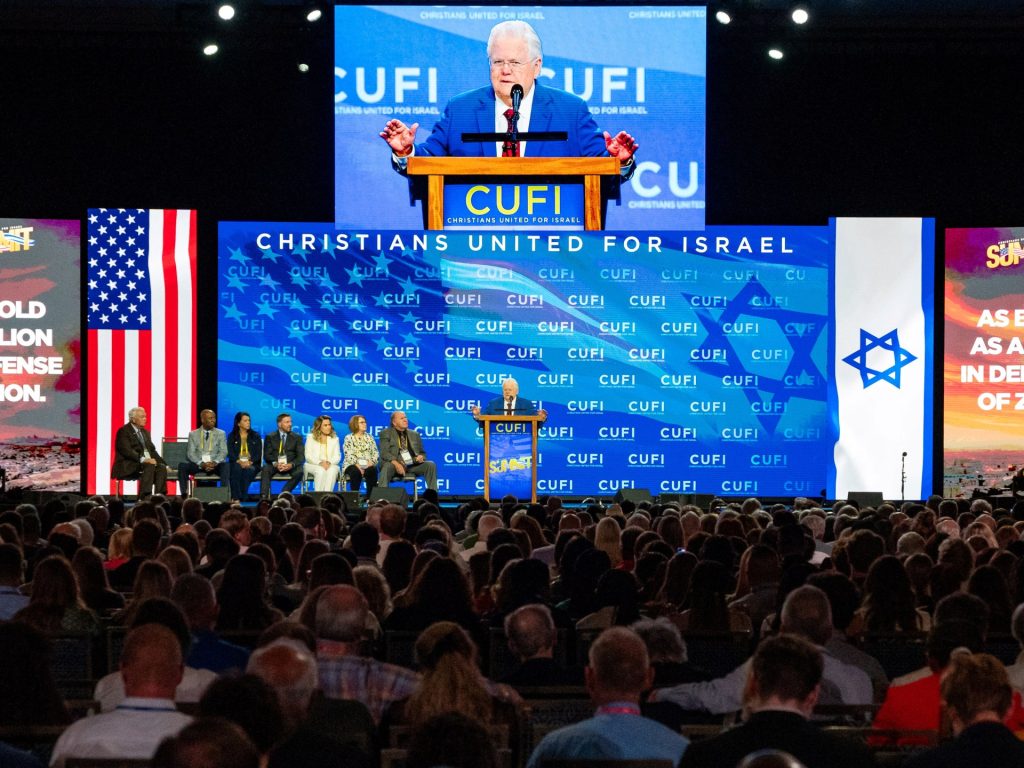
This ideology has garnered a substantial following in the United States, with estimates suggesting over 30 million Christian Zionists primarily affiliated with evangelical churches. Organizations like Christians United for Israel play a significant role in lobbying efforts, influencing U.S. foreign policy in favor of Israel. Critics argue that these beliefs intertwine religious convictions with political and military agendas, further complicating the dynamics of the Israel-Palestine conflict.
Despite the influence of Christian Zionism on U.S. politics, some analysts suggest that its impact may be waning. The integration of these beliefs into broader neoconservative foreign policy has been noted, yet the overall influence of Christian Zionist groups appears to be declining in contemporary American political discourse.