













Reading in English | Read in العربية (Arabic)
On International Women’s Day, we pay tribute to every woman who has fought, struggled, and made a difference. We honor every mother who instilled values, every leader who broke barriers, and every girl who dreams of a bright future. This day serves as a reminder of our commitment to making justice a reality, practicing equality, and ensuring that opportunities are available to everyone without exception. Societies that respect women and provide equal opportunities are ultimately more prosperous and stable.
Every year on March 8th, the world celebrates “International Women’s Day” in recognition of women’s roles in building families and communities and their long struggle for rights and equality. The United Nations officially adopted this day in 1977 as a global occasion to celebrate women’s social, economic, political, and cultural achievements, while also promoting women’s rights and reinforcing the principle of gender equality. This acknowledgment highlights the importance of women’s roles in achieving sustainable development and societal stability.
Observing this day is not merely a symbolic celebration; it is a practical call to enhance fair policies, empower women, and create a safe environment that ensures their full and active participation.
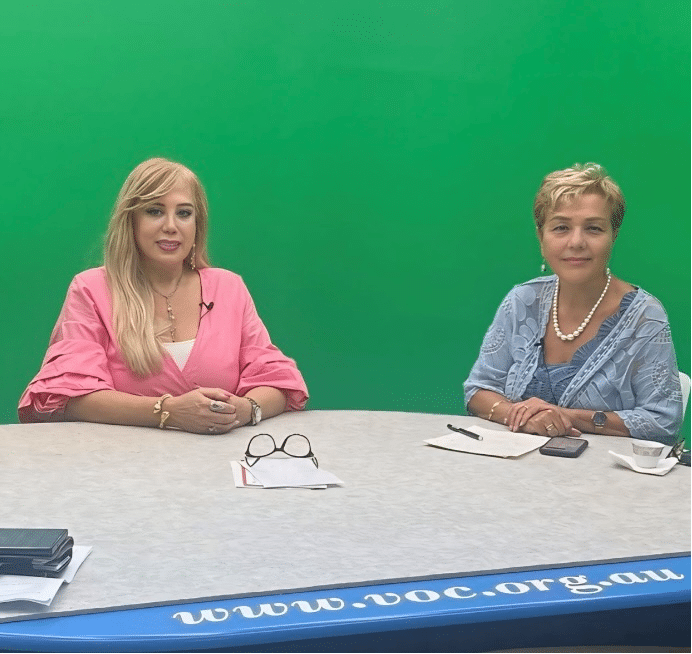
In this context, the distinguished media personality Shadia Al-Haj hosted several women from different countries—Lebanon, Jordan, Syria, Palestine, and Sudan—on her valuable program via Sawt Al-Mahabba radio. They shared their experiences in their respective fields, which, despite having many similarities, also differ based on the customs, traditions, and the treatment of women in each country. Among the participants, I represented Lebanon, speaking from my experience in journalism and social work.
In the field of media:
The presence of women in journalism and media is a crucial element in building balanced and professional media discourse. Women’s participation in journalism began modestly in the late 19th century, often in sections aimed at family and society. As human rights movements evolved through history, women have managed to establish their presence across various forms of media, including print, visual, audio, and digital. Their roles have expanded to include political and war coverage, journalistic writing, analytical columns, hosting talk shows, and conducting investigative reports, adding professional depth and a unique analytical perspective that reflects the diversity of society.
Numerous outstanding women have risen to high leadership positions, managing media institutions and serving as editors-in-chief. However, despite their competence and excellence, women still face challenges related to unequal opportunities, wage gaps, and a lack of full recognition of their skills in reaching senior positions. Therefore, enhancing women’s roles in media is essential for adding diversity and development to media content and allowing for different perspectives that reflect societal issues.
In Australia, women make up about half of the media workforce, yet their representation in senior management positions is significantly lower (around 30% or less). In Lebanon, despite women’s high participation in the media and sometimes outperforming men academically, their presence in top leadership roles remains limited compared to men, with about 23% in leadership positions, often due to social and cultural factors.
In the field of social and humanitarian work:
Women play a vital and effective role in social work and charitable institutions, both individually and institutionally. In most countries, women constitute the majority of the volunteer and charity workforce. Thus, women are not just participants in charitable work; they are a driving force essential for improving the quality of social services and expanding humanitarian influence in society, adding a human and compassionate dimension to charitable and social institutions. Their contributions are unique and capable of making a genuine and positive impact.
The reason for women’s success in social, charitable, and humanitarian work stems from their emotional and social nature. Women are inherently nurturing, compassionate, and empathetic, possessing the ability to connect with and understand others’ needs. They operate from their hearts, engaging with those in need, feeling their emotions, and responding to them to the best of their ability, especially when it comes to children and the elderly. This nurturing nature makes their role effective and successful, explaining the high number of women in this field and their excellence in providing humanitarian and social assistance. Here, I recall the words of the theologian philosopher Augustine: “The woman carries in her heart a compassion that man does not know, and from this compassion arises all goodness.”
Despite women representing the majority of workers and volunteers (60-70%), and their essential role being evident in social and humanitarian work, they often encounter barriers in accessing leadership positions. Their leadership of charitable institutions in administrative and leadership roles is lower than men in many countries (20-30%), indicating a significant gap between their numbers and official leadership roles in decision-making, despite their superiority in actual participation and fieldwork.
In conclusion, we find that despite progress and development, empowering women remains necessary as it directly impacts family well-being, economic growth, and national advancement. It is not merely a social option; it is a developmental necessity. Justice begins when opportunities are equal, not when roles are similar. The higher the status of women in society, the more the entire society thrives.