














Arabic version: سوق الحبوب التاريخي في غزة يواجه الدمار بسبب الصراع المستمر
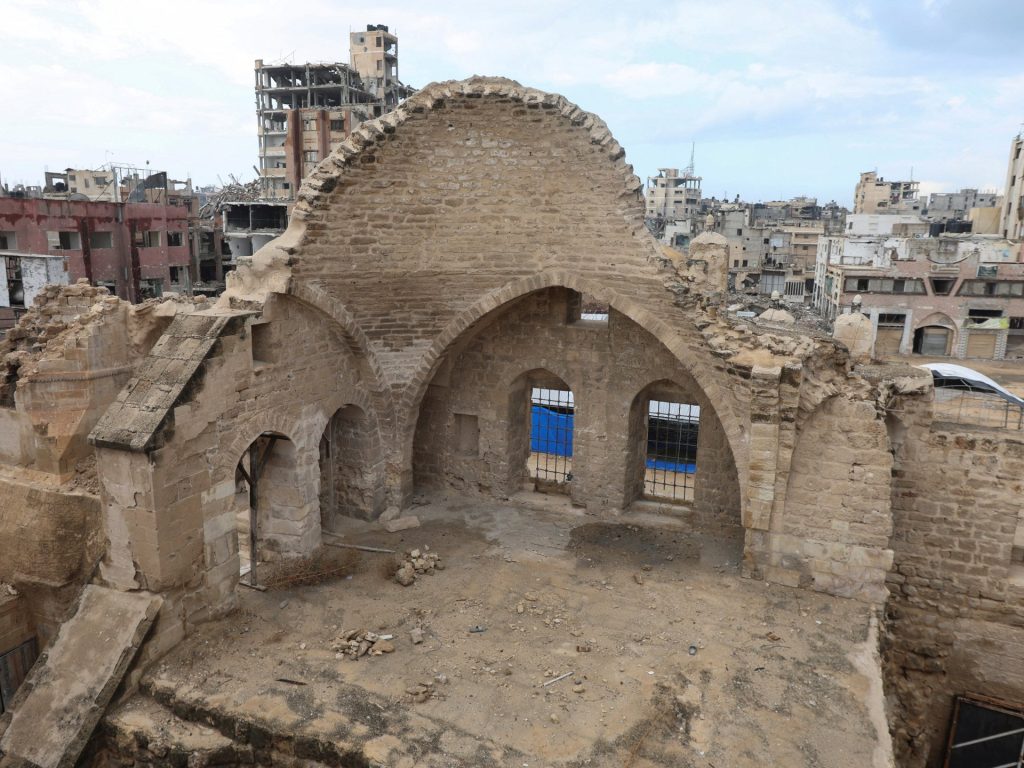
Khan Younis, Gaza Strip – Historic landmarks often withstand centuries of volatile change, but when rockets and missiles fall, even the most enduring stones become fragile. For generations of families in Gaza’s southern city of Khan Younis, the Grain Market was the first stop when they went shopping. According to Al Jazeera, reaching it meant walking past the historic Barquq Castle, a centuries-old structure dating back to 1387 and the very foundation of Khan Younis.
However, the castle was more than an old monument; it was a familiar landmark marking the entrance to one of the city’s liveliest commercial spaces. The aromatic scent of spices and dried herbs would accompany any walk towards the Grain Market. But Israeli attacks inflicted heavy damage on the Grain Market and the Barquq Castle, leaving the once-bustling area filled with shattered alleys and heavy silence.
Sitting in his store along a row of damaged old shops, 60-year-old Nahed Barbakh, one of the city’s oldest and most well-known traders of staple food supplies, lamented the drastic change. He noted that the market, once the economic heart of Khan Younis, is now unrecognizable after more than two years of Israeli bombardment. “The occupation killed many of our friends who worked here,” he said, reflecting on the financial devastation that has left many shops closed.
The Grain Market, which traces its origins to the late 14th century, has been a central hub for trade and commerce. However, it now sits perilously close to the yellow line, a demarcation established by Israeli forces that has reshaped the city’s geography. Many residents hesitate to walk in the area, leaving the revival of daily commerce a distant prospect.
The market, previously overflowing with fresh produce and vibrant stalls, now features only a handful of makeshift stands. Local resident Om Saed al-Farra expressed disbelief at the market’s current state, noting that preparations for Eid, once a joyful occasion, have turned into a gloomy experience. Khan Younis Mayor Alaa el-Din al-Batta emphasized the market’s historical significance, stating that it once connected people across Gaza but has now been targeted by ongoing conflict.
Despite parts of the market’s infrastructure remaining intact, many traders have not returned. The ongoing blockade and tightened restrictions have pushed businesses to the brink of collapse, leaving the Grain Market a shadow of its former self, struggling to survive under the weight of destruction and loss.