













Arabic version: القوات الإسرائيلية توسع سيطرتها في جنوب لبنان
Israeli forces have reached the outskirts of the southern Lebanese city of Nabatieh and captured the strategic Beaufort Castle despite a ceasefire agreement in place since April. This marks Israel’s deepest incursion into Lebanese territory in more than a quarter of a century, with Israeli troops now occupying about 2,000 square kilometres (770 square miles) of Lebanese territory – nearly one-fifth of the country. According to Al Jazeera, the Israeli military has issued evacuation orders extending as far north as the Zahrani River, indicating a possible shift in military strategy.
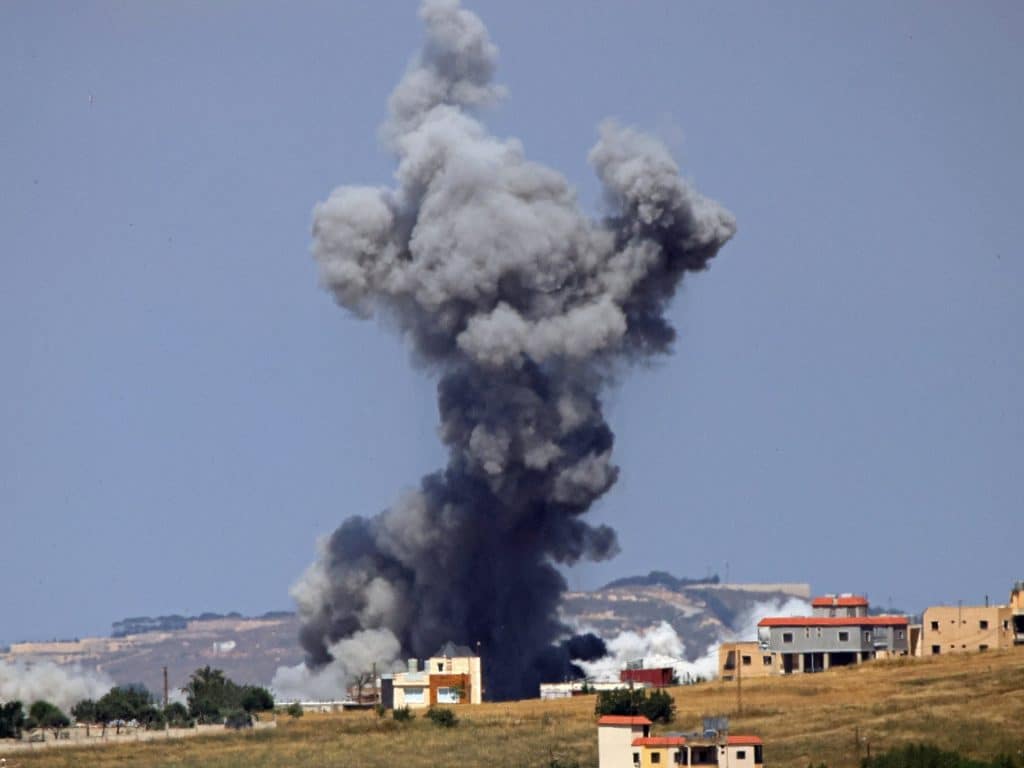
The Israeli military’s operations have reached towns like Zawtar al-Sharqiyah and Choukine, which are near Nabatieh, a significant stronghold for Hezbollah. Reports indicate that Israeli strikes on Deir ez-Zahrani at dawn on Sunday killed several people, complicating the ongoing US-mediated talks aimed at a permanent resolution to the conflict.
Analysts suggest that the control of Nabatieh is crucial not only for military reasons but also politically and socially, as it is one of the principal political, economic, and social centres of Lebanon’s Shia community. Experts warn that this could lead to a reconfiguration of the political landscape in southern Lebanon, potentially undermining Hezbollah’s influence and altering the demographic makeup of the region.
The capture of Beaufort Castle, a historic fortress, is viewed as both a military and symbolic victory for Israel. The fortress provides a vantage point over southern Lebanon and has historically been associated with some of the most intense confrontations between Israel and Hezbollah forces. Israeli officials have stated that their operations aim to dismantle Hezbollah’s military presence, but the expanded evacuation orders suggest a broader strategy that could involve long-term territorial control.
As the situation develops, the implications of Israel’s actions in southern Lebanon raise questions about the future of regional security and the ongoing conflict, particularly in relation to Iranian involvement and US diplomatic efforts. The evolving military operations could redefine the balance of power in the area, extending beyond immediate military objectives to long-term geopolitical considerations.