











Reading in English | Read in العربية (Arabic)
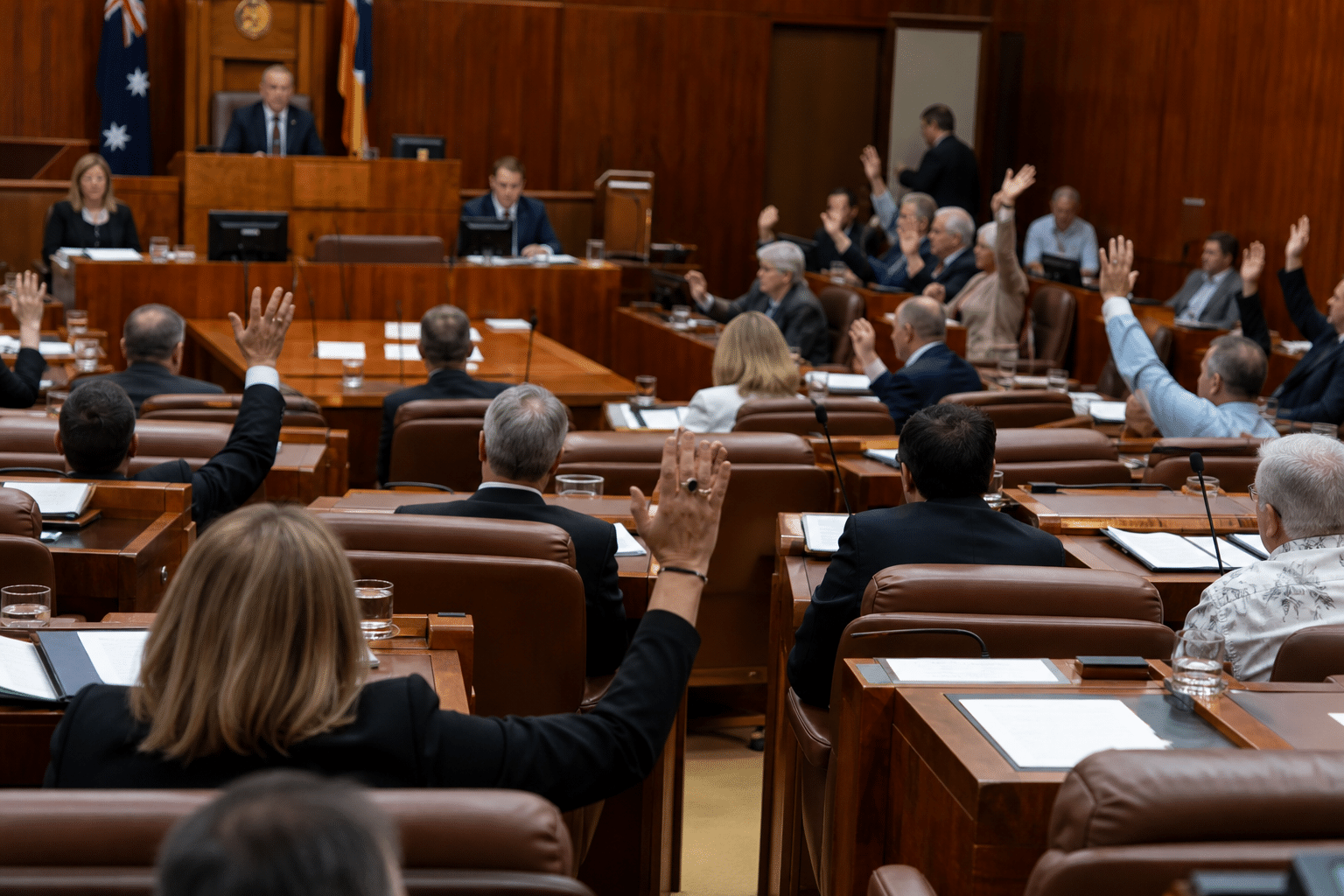
Among all the contradictions produced by the Libyan crisis in recent years, perhaps none is greater than the existence of an institution that is supposed to represent a complete legislative authority while a significant part of its political weight revolves around a single individual.
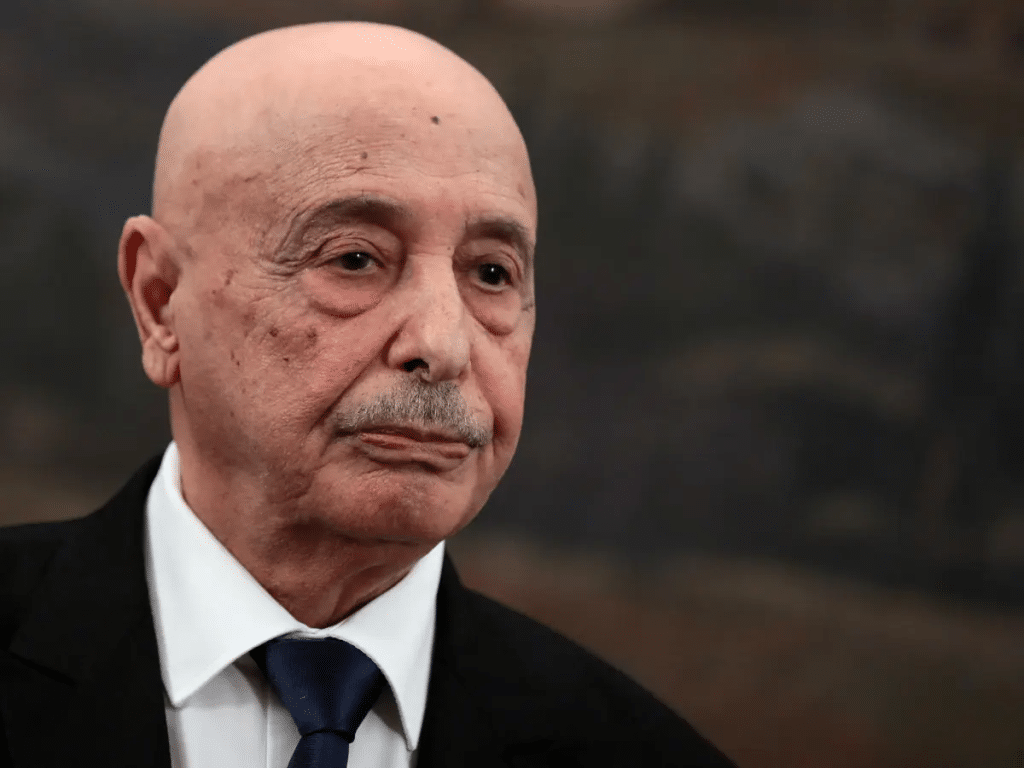
This discussion is not about liking or disliking Aguila Saleh, nor is it about defending or attacking him. It is about a political truth that is hard to ignore: the man has succeeded, or circumstances have allowed him, to become the most prominent face of the House of Representatives, to the extent that questions about the future of the parliament are now more closely tied to the future of its president than to the institution itself.
Therefore, the absence of Aguila Saleh from the scene, for any reason, will pose an awkward question before it is a political one: Has the Libyan parliament built an institution capable of sustaining itself, or has it merely relied on the influence of one man throughout the years?
Libya has spent more than a decade trapped in the same cycle; political entities extending beyond their legal deadlines, elites speak of political rotation while clinging to their seats, and institutions call for state-building yet fail to renew themselves. At the heart of this equation remains Aguila Saleh, not just as the parliament’s president, but as one of the most significant symbols of an entire era of political stagnation.
His supporters may argue that he has preserved the legislative institution from collapse, while his opponents might claim he has been more a part of the crisis than a solution to it. However, both sides agree on one undeniable fact: his absence will not be an ordinary event.
The more pressing question is not who will succeed Aguila Saleh, but why is there still no clear successor to Aguila Saleh?
How can an institution that is supposed to encompass dozens of political figures fail to produce an alternative leadership of equal weight? How can one discuss a state and its institutions while the fate of an entire organization remains dependent on the presence or absence of one individual?
This is not merely Aguila Saleh’s problem; it is a dilemma for the entire Libyan political system—a system that has produced powerful personalities and weak institutions. When institutions are weaker than individuals, the absence of any influential figure becomes a greater concern than the absence of the institution itself.
Regionally, the question becomes even more sensitive. Egypt, which has woven a close relationship with Aguila Saleh over the years, may find itself facing a new reality. Not because Cairo will lose contact with Libya—countries do not base their policies solely on individuals—but because it may lose a figure who had an exceptional ability to understand and navigate the balances of eastern Libya.
But does Egypt have another man of Aguila Saleh’s stature?
There may be those with influence, those with positions, and those with support. However, merging these elements into a single personality is no easy task. Political stature is not granted by decree; it is built through years of presence, struggle, relationships, and experiences.
Nonetheless, a more important question may be entirely different: Is the issue the absence of Aguila Saleh, or is it that the Libyan scene has failed over these years to produce a new generation of leadership capable of replacing him?
Here lies the real crisis.
If the departure of any individual is enough to disrupt an entire institution, then the flaw lies not in the absence but in the institution itself. If Libya fears a vacuum after more than a decade, it indicates that political elites have been preoccupied with managing the crisis rather than focusing on building alternatives.
Aguila Saleh may remain in his position for several more years, or he may leave the scene tomorrow, but the true dilemma will remain. The crisis is not one of a man, but of a political system that has yet to transition from a phase of individuals to a phase of institutions.
Countries are not measured by the power of their leaders, but by the ability of their institutions to endure after their departure. When the fate of an entire institution hangs in the balance of a single person, it reflects not the strength of that individual but rather the fragility of the political structure surrounding them.
The Libyan crisis has granted some individuals exceptional influence, but it has simultaneously deprived the country of producing new leaders capable of taking responsibility and revitalizing the scene. While elites consumed their time managing balances and conflicts, investment in building institutions and creating alternatives diminished.
Worse still, most Libyan political bodies have become more associated with individuals than with the roles they were created for. Instead of citizens inquiring about the role of the institution, they now ask about the individual who manages it. Instead of legitimacy being derived from laws and regulations, a large part of it has become reliant on personal influence, relationship networks, and power balances.
This phenomenon is not exclusive to the House of Representatives; it has almost become a general characteristic of the Libyan scene for years. Therefore, any discussion of real political reform must start with reinstating the significance of institutions, rather than searching for new figures to fill the void.
When any country reaches a moment where it fears the absence of a leader more than the weakness of its institutions, this is not a sign of stability; it is a political alarm that should be taken seriously.
The future of the House of Representatives will not be determined solely by who occupies the presidency after Aguila Saleh, but by the institution’s ability to prove that it is greater than its president and can continue based on the principles of the state rather than the strength of individuals.
Thus, the question that should concern Libyans is not: What will happen if Aguila Saleh is absent?
Instead, it should be: What has the Libyan elite done over these years to ensure they have an alternative?
If the answer is that no alternative exists, then the crisis is much deeper than the future of the parliament’s president. It is a crisis of an entire political class that has failed to produce the future, content instead with managing the present, delaying obligations, and recycling the same faces in every new phase.
In this context, the absence of individuals merely reveals a larger truth: that Libya, despite all past initiatives, settlements, and dialogues, has not yet succeeded in building institutions capable of renewing themselves from within.
Libyans may disagree about Aguila Saleh, just as they may disagree about many other political figures. However, what should not be contested is that countries are not built on individuals, no matter how significant they are, but on institutions that possess the ability to endure, rejuvenate, and persist.
If institutions remain mere shadows of their individuals, then every absence will turn into a crisis, and every transfer of power will become a battle, leaving the state’s future hanging on the fate of men rather than the strength of laws.
Here lies the real challenge facing Libya today: not the search for a successor to Aguila Saleh, but the search for a state, not just one man, to ensure continuity.