Arabic version: روبنيو يعلن أن إيران لا يمكنها فرض رسوم في مضيق هرمز
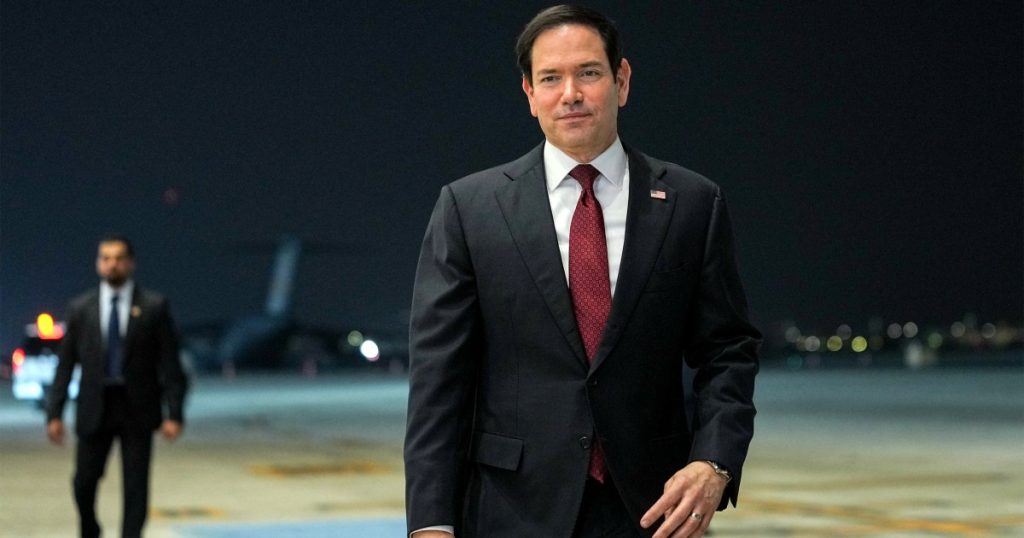
US Secretary of State Marco Rubio has said Iran will not be permitted to charge tolls or fees for vessels transiting the Strait of Hormuz under any final agreement with Washington, exposing one of the biggest points of friction in negotiations aimed at ending months of conflict across the Middle East. According to Al Jazeera, Iran recently announced it would waive planned transit fees through the strait that crosses through its territorial waters for 60 days while talks with the United States continue in Switzerland, suggesting charges could be introduced once the negotiating period expires.
Washington and Tehran signed a preliminary agreement in Switzerland this week to halt hostilities and launched a 60-day diplomatic process focused on sanctions relief, Iran’s nuclear programme and the future administration of the Strait of Hormuz. Pakistan, which helped mediate the talks alongside Qatar, has said negotiations to end the four-month US-Israel war on Iran are expected to resume early next week, likely on Tuesday.
Rubio emphasized that the Strait of Hormuz is an international waterway, asserting that no country is allowed to charge tolls or fees on it. This stance is supported by international law, which protects the right of transit through strategic waterways such as the Strait of Hormuz, preventing coastal states from imposing explicit tolls simply for passage through international shipping lanes, even when they are passing solely through territorial waters.
Despite the temporary suspension of fees, Iran’s chief negotiator, Mohammad Bagher Ghalibaf, has signalled that Tehran views the post-war arrangement as fundamentally different from the status quo that existed before the conflict, suggesting that Iran intends to retain control over the waterway as a strategic leverage point. Concerns remain about the potential for a dispute over tolls to complicate or derail the ongoing peace negotiations.