













Arabic version: جي دي فانس يشكل استراتيجية رئاسية من خلال انتقاد إسرائيل
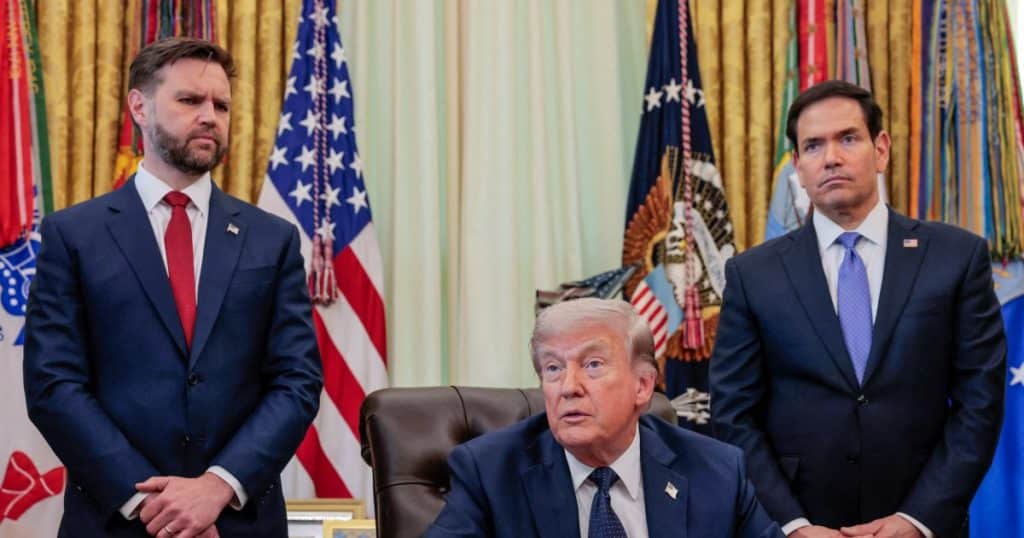
Vice President JD Vance is positioning himself for the 2028 presidential race by publicly challenging the prevailing pro-Israel stance within the Republican Party. In a recent interview with the New York Times, Vance dismissed claims of an intense rivalry with Secretary of State Marco Rubio, despite ongoing speculation about tensions between the two. According to Al Jazeera, Vance’s recent statements reflect a strategic shift aimed at appealing to a growing base of Republican voters who are increasingly skeptical of Israel.
Over the past two weeks, Vance has diverged from his usual cautious public persona, making bold remarks critical of Israeli policies. This contrasts sharply with Rubio, who has maintained a strong pro-Israel position, advocating for military action and supporting Israeli Prime Minister Benjamin Netanyahu. Vance’s efforts to negotiate a peace deal with Iran have further distanced him from Rubio’s hawkish approach.
Polling data indicates a significant decline in support for Israel among younger Republicans, with 57 percent of Republicans under 50 expressing negative views towards the country. Vance appears to be capitalizing on this shift, as he seeks to establish himself as the voice of skepticism within the party. His remarks suggest a deliberate attempt to separate his foreign policy stance from Rubio’s by questioning the conflation of criticism of Israel with Jew hatred.
However, navigating this new political landscape poses challenges for Vance. As the sitting vice president, he must balance his criticisms with loyalty to President Trump, who has also expressed frustration with Netanyahu. The future of U.S.-Israel relations remains uncertain, particularly with potential changes in Israeli leadership.
As the 2028 election approaches, the issue of Israel is likely to become a significant point of contention. Vance’s strategy may resonate with a Republican base seeking a departure from traditional pro-Israel rhetoric, but he must also contend with the established Christian Zionist faction within the party. The evolving dynamics suggest that Vance is not only responding to public sentiment but is also strategically positioning himself for a potential shift in the Republican platform on foreign policy.