













Arabic version: مشروع جديد لزراعة المحار يهدف إلى revitalizing نظام Cockburn Sound البيئي
A groundbreaking initiative in Cockburn Sound (Derbal Nara) is utilizing mussels to enhance marine ecosystem health. The Byssal project, founded by aquaculturalist Glenn Dibbin alongside Recfishwest, Indo-Pacific Environmental, and Commercial Maritime, aims to restore the area’s environment by reimagining mussel farming for ecological purposes rather than seafood production.
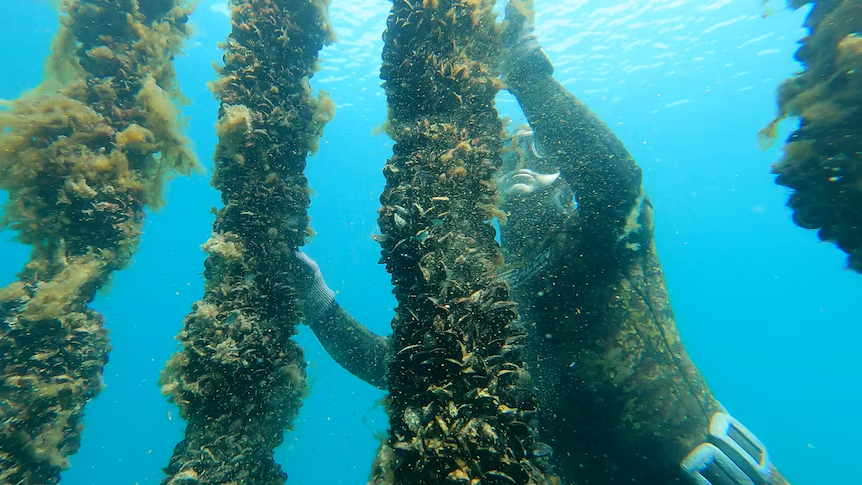
According to ABC News, the project involves the use of ropes suspended beneath the water’s surface, allowing baby mussels to naturally attach and grow. This innovative setup not only provides a habitat for the mussels but also functions as an artificial reef, significantly less expensive to establish than traditional methods.
Mussels are known for their filtering abilities, capable of cleaning up to three litres of water per hour. This filtration process is essential, as Cockburn Sound has experienced a dramatic loss of seagrass meadows—nearly 80% since the 1960s—largely due to murky waters that inhibit sunlight penetration. Improved water clarity from mussel filtration may allow for the recovery of these critical habitats.
The Byssal project is not only focused on mussel cultivation but also on creating a complex ecosystem. As mussels mature, they attract various marine species, including juvenile crabs and larger predators like squid and fish, effectively turning the area into a thriving nursery for marine life.
Looking ahead, the project aims to scale up production to 1,000 tonnes of mussels annually, with potential benefits for local fish stocks and the broader marine environment. The initiative also includes a process called greenwalling, which involves reseeding mussels onto nearby rock walls, further promoting ecosystem restoration. The Byssal project represents a significant step towards sustainable marine practices in the region.