












Arabic version: المحكمة تغرم نيوترج 35,000 دولار بسبب رائحة الأسمدة في كانمانتو
A South Australian court has fined fertiliser company Neutrog $35,000 after finding the business intentionally or recklessly caused an environmental nuisance with odour from its Kanmantoo site.
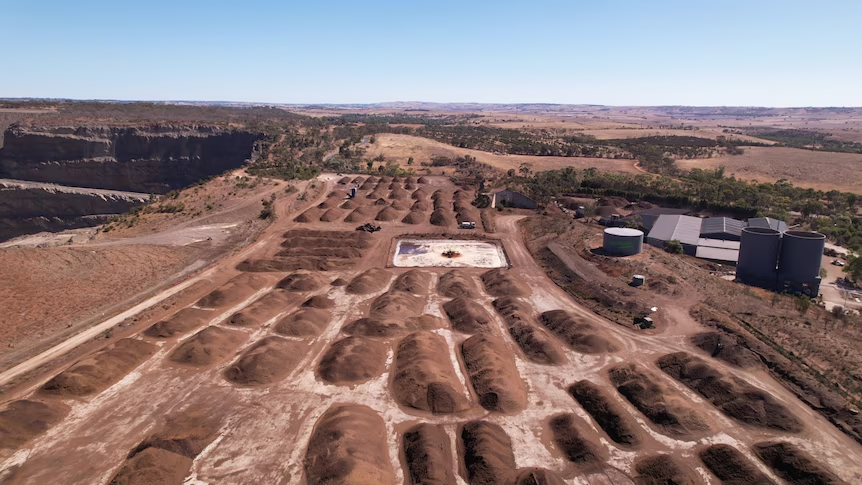
According to ABC News, Neutrog pleaded guilty in the Environment, Resources and Development Court to causing a recurrent odour nuisance between July 2022 and April 2023, and to breaching its EPA licence by creating stockpiles of poultry litter and compost up to 7.49 metres high when its licence permitted only 3 metres.
The court heard an EPA aerial survey found 50 of 56 measured piles exceeded the permitted height. Between November 11, 2022, and April 23, 2023, the EPA received 718 complaints about the smell from the property. The company also admitted taking in 37.88 tonnes of waste coffee grounds from Foodbank South Australia to produce a product called Human Beans, despite its licence only authorising production from poultry litter.
Senior Judge Michael Durrant described the offending as at the “mid to serious” level and said the nuisance affected residents and businesses in their ordinary use and enjoyment of homes, properties and community. The court was told Neutrog brings in around 3,000 tonnes of poultry litter each month, a scale Judge Durrant noted when saying the coffee-grounds activity was “less serious” by comparison.
Local residents have continued to report odour problems. Peter Roberts, part of a community reference panel set up by Neutrog last September under a new licence that began in January 2026, said the smell remained unbearable at times and described the fine as insufficient deterrence. Neutrog said it had made operational changes as part of a continuous improvement program, had engaged with the local community, and that the Human Beans project had been undertaken in good faith to support Foodbank SA.
Why this matters: the odour affected hundreds of local complainants and, according to the court, interfered with normal use and enjoyment of homes and businesses near the Kanmantoo site roughly 60 kilometres south-east of Adelaide. Residents have argued composting activity within 1.5 kilometres of the township will sustain the problem unless moved further away.
What happens next: the EPA’s director of compliance, circular economy and investigations said the fine is a deterrent and that the authority undertakes regular inspections of the site and acts to correct non-compliance, ranging from readjusting or moving stockpiles to prosecuting matters in court.
Related sections: Australia/استراليا | Western Australia | South Australia | General | Social/إجتماعية