












Arabic version: المباريات المتأخرة في أميركا المفتوحة تجدد الجدل حول الجدولة
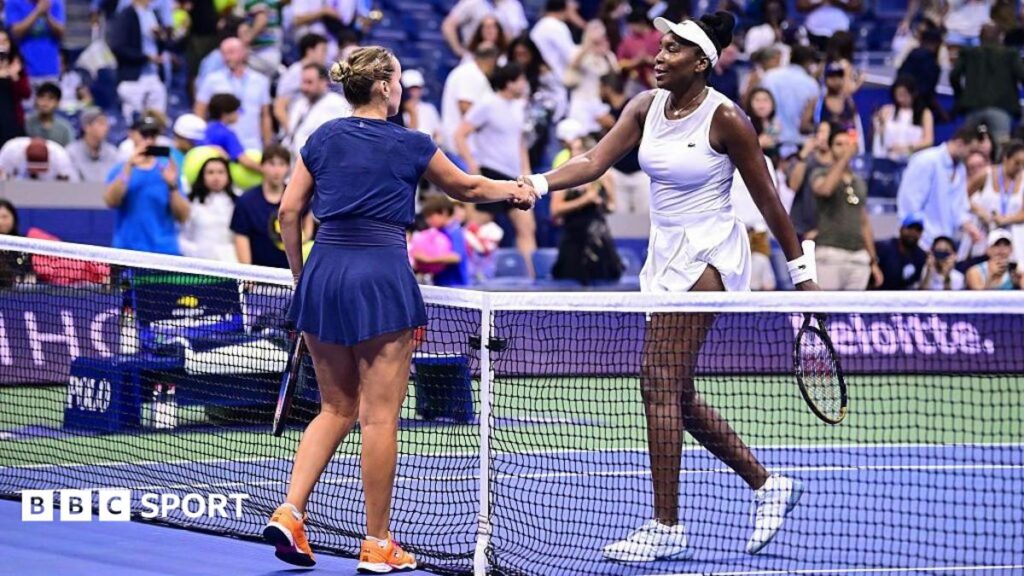
According to BBC News, Venus Williams and Sofia Kenin began their US Open first-round match just after midnight on Monday, with Kenin winning in straight sets shortly after 2am local time in New York. Williams said the timing was “not ideal” and “wasn’t great” for either player’s conditioning. Their late start followed Novak Djokovic’s five-set defeat by Mariano Navone, which lasted more than four hours.
The US Open uses separate day and night sessions, with one men’s and one women’s match scheduled from 7pm on Arthur Ashe Stadium. The format allows organisers to sell tickets for the same seats twice, while night-session tickets are typically more expensive and feature higher-profile players. It also boosts the value of television rights: ESPN agreed in 2024 to pay $2.04bn (£1.5bn) to show every match until 2037.
But the uncertain length of tennis matches can push the second night-session contest deep into the early morning. A five-set men’s match can run beyond four or five hours, while a three-set women’s match can exceed three hours. By the end of the Williams-Kenin contest, the 23,933-capacity stadium had many empty seats. Players have raised concerns about disrupted warm-ups, meals, recovery and sleep. Coco Gauff said players who finish at 3am may not get to bed until 5am, 6am or even 7am.
The issue is part of a broader dispute between players and Grand Slam organisers over revenue, recovery time, media duties and pension contributions. Wimbledon instead stops play at 11pm, with unfinished matches resumed the next day. Wimbledon and the US Open have increased prize money for 2026, while a Grand Slam players advisory council is due to launch after the US Open. Whether it will seek changes to late finishes remains unclear.