

Arabic version: دراسة تعيد صياغة فهم سلوك صيد النمر التسماني
According to ABC News, researchers from Flinders University and the University of Melbourne have analysed thylacine skull structure, finding that the extinct marsupial’s distinctive jaws were suited to subduing small-to-medium prey with powerful snapping bites.
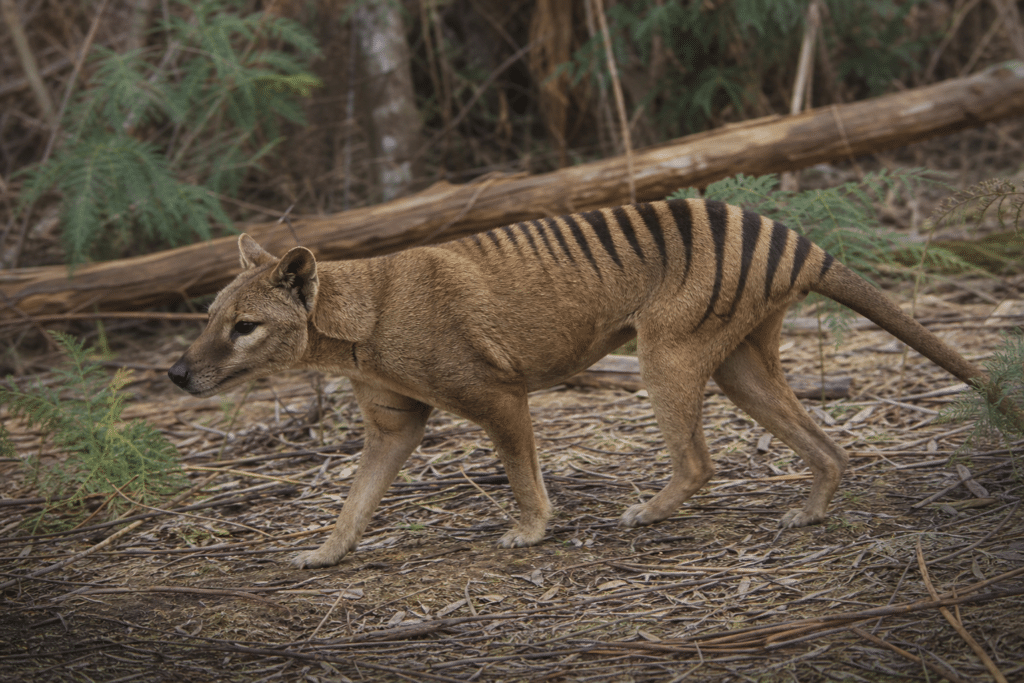
The Australian study examined the skulls of the thylacine, also known as the Tasmanian tiger. Researchers said its oversized skull, long and tall upper jaw, and mace-like widened snout produced a bite unlike that of any living meat-eating mammal.
The team concluded the animal could use “high-impact snapping” to catch prey such as bandicoots, rather than larger animals including sheep. The finding further challenges a longstanding belief linked to the species’ extinction.
Thylacines survived in Tasmania into the 1900s, but farmers targeted them after they were blamed for killing sheep and other livestock. A government bounty accelerated their decline. The last thylacine in captivity was at Beaumaris Zoo Hobart in 1933.
Professor Vera Weisbecker of Flinders University said the research showed the thylacine could not readily be compared with animals previously used as references. A 2011 study had found that the species’ weak jaws made it unlikely to kill and eat sheep. Weisbecker said the loss of the thylacine meant the loss of an animal unique to the planet.
Its scientific name, Thylacinus cynocephalus, includes a term meaning “dog head”, but the thylacine was a marsupial mammal more closely related to kangaroos, koalas and the Tasmanian devil than to dogs.