












Arabic version: إحصاء للحيتان يكشف فترات أطول بين مواسم التكاثر
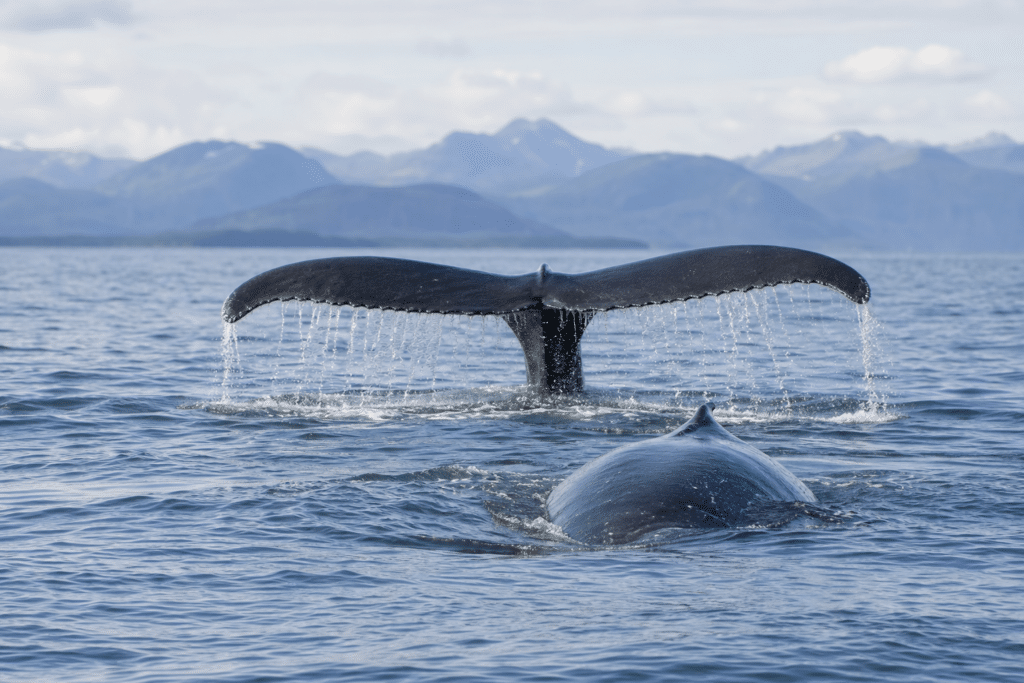
According to ABC News, 50 years of aerial tracking has identified a shift in breeding patterns among endangered southern right whales travelling from Antarctica to southern Australia each winter. Researchers have monitored the whales between Fremantle in Western Australia and Ceduna on South Australia’s far west coast since 1976.
Murdoch University senior researcher Joshua Smith, who led this year’s census, recorded 520 whales across the south-west, including 235 cow-calf pairs. The result was lower than last year’s count of 646 individual whales and 304 calves, and individual sightings were down 20 per cent compared with a decade ago. Dr Smith said the population had stalled since 2011.
The long-term data indicates calving intervals are extending. Researchers had previously considered breeding cycles to restart every three to four years, but Dr Smith said the pattern was now moving towards five years. He said several reproductive cycles over about a decade were needed to understand population changes.
At the Great Australian Bight, Australian Right Whale Research Program chief scientist Claire Charlton recorded 61 mother-calf pairs from land-based monitoring at the Yalata Indigenous Protected Area. Those pairs accounted for more than 30 per cent of the south-west total. Dr Charlton described the marine park as a conservation success story, although total sightings were down.
Dr Charlton said warming water temperatures could affect marine food webs, reducing sea lice and then krill, a key food source for whales. She also pointed to pressure from krill fisheries and said food scarcity could lead whales to delay breeding. Israelite Bay, Point Ann and Point Charles in Western Australia, and the Head of Bight in South Australia, remain population hotspots.