












Arabic version: أحافير خوان غورج ترصد صلة طويلة بين شياطين تسمانيا والبشر
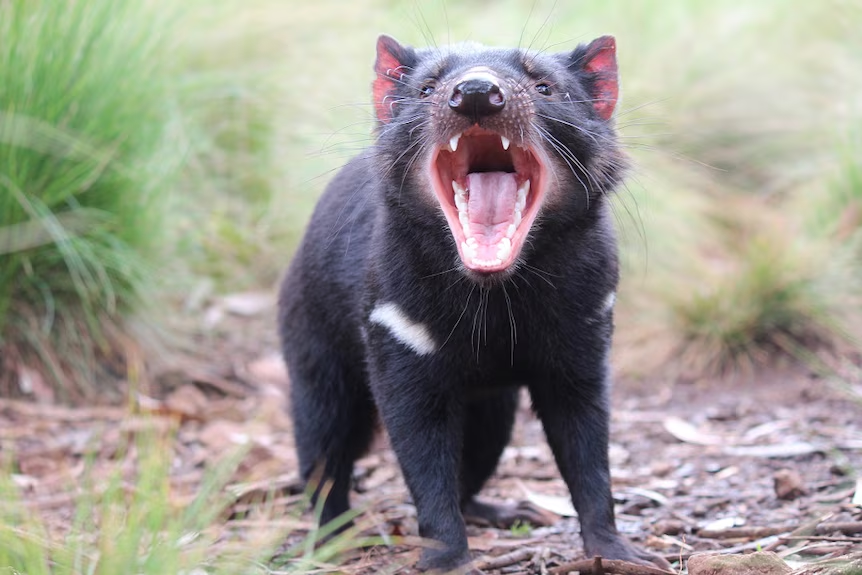
According to The Guardian, fossils uncovered at Juukan Gorge show Tasmanian devils lived alongside people in Western Australia’s Pilbara region for tens of thousands of years. Jaw and tooth fragments from the ancient rock shelter confirm the carnivorous marsupials’ presence in northwestern Australia, filling a previous gap in the fossil record.
The fossils date from 7,000 to 46,000 years ago and were found with evidence of scavenging across that period, including bite marks on bones and acid digestion of bone fragments. Dr Tim Churchill, a palaeontologist at UNSW and lead author of the research, said devils persisted through major climatic shifts, from warm, wet conditions to the cooler and drier last glacial maximum.
Tasmanian devils are now restricted to Tasmania but were once abundant across Australia. They became extinct on the mainland about 3,200 years ago. Churchill said the Juukan Gorge evidence indicates the species was highly adaptable, living not only in Tasmania’s cold, wet forests but also in the Pilbara’s arid, rocky gorge lands.
Some gnawed and digested bones may have come from scraps left at human camps, suggesting a long relationship in which devils scavenged food from people. Churchill said the animals may have helped shelter inhabitants by removing rotting carrion and reducing disease risk. Research published in Archaeology in Oceania suggests devils may have become increasingly reliant on human camps as human abundance grew over the last 50,000 years.
The relationship may have continued until dingos arrived on mainland Australia, after which devils and thylacines disappeared. Burchell Hayes, chair of the PKK Land Committee, said the remains underscore Juukan Gorge’s cultural and scientific significance and link ancestors of the Puutu Kunti Kurrama people to the area. The shelter, destroyed by Rio Tinto in 2020, has also yielded stone artefacts, campfires, shell beads, bone tools and a belt made from human hair.