












Reading in English | Read in العربية (Arabic)
A Guide to Launching a Business Podcast That Builds Your Brand and Audience
For local service providers, consultants, and founder-led small businesses, the hardest part of small business marketing is earning trust before a prospect ever picks up the phone. Ads can get attention, but they rarely deliver industry expert positioning fast enough to justify the spend, and generic content blurs brands together. Podcasting for business growth solves that by giving entrepreneurs a consistent way to share real thinking, client outcomes, and point of view that builds brand authority through podcasts over time. With the right entrepreneur podcast strategies, a show becomes a simple, repeatable asset that attracts qualified conversations.
Build a Credible Business Podcast From Day One
This process helps you launch a business podcast that sounds focused, useful, and worth returning to. For general readers, the goal is simple: show up consistently with clear insights so trust builds before anyone ever contacts you.
- Step 1: Choose a focused topic you can own
Start with one narrow problem you help people solve, then turn it into a simple promise for the show (who it’s for and what they’ll get). A fast way to validate the angle is to understand audience needs by reading FAQs, sales emails, and client questions you already hear every week. - Step 2: Map a repeatable episode plan
Pick 3 to 5 recurring segments, such as “myth vs. reality,” “case breakdown,” or “quick next step,” so every episode has a familiar structure. Keep a running list of 20 episode ideas by grouping themes like pricing, timelines, common mistakes, and success stories. - Step 3: Set up a quiet recording space and workflow
Choose the quietest room available, soften echoes with rugs or curtains, and place your mic 6 to 8 inches from your mouth. Do a 30-second test recording, then adjust position and volume until your voice sounds clear without background hum. - Step 4: Script smarter with a tight outline
Write a short opener, three talking points, and a clear close with one call to action, then speak naturally from bullet points. To keep momentum and improve over time, segment your content into a few formats you can repeat, like solo explainers, interviews, and mini case studies. - Step 5: Launch simply and commit to consistency
Publish three episodes close together so new listeners can sample your thinking right away, then stick to one release day for the first 8 weeks. Ask for one specific action in every episode, such as replying to a question or booking a short call, so your show creates real conversations.
Study Interview Podcasts to Sharpen Your Industry Message
Once you’ve nailed the basics of planning and recording, the fastest way to refine your message is to listen like a strategist. Sampling a range of podcasts, especially story-led, interview-style shows, helps you pick up on emerging industry trends, notice which messaging styles feel clear and credible, and understand what audiences lean in for (and what they skip). You’ll hear how different hosts frame problems, position solutions, and keep conversations focused on outcomes listeners care about.
A useful model is an alumni series built around real-world turnaround stories. The UoPX alumni podcast shares inspiring, practical insights from alumni who changed their lives through learning, offering motivation and advice for anyone weighing their own path to success. Listening to journeys like these can spark ideas for how you tell your own story, and how you connect it to the results your customers want. With your message getting sharper, you’re ready to match that clarity with the right recording gear and editing tools.
Build Your Recording Kit: Essential Gear and Editing Tools
Great interview podcasts feel effortless because the production is consistent, clean audio, steady volume, and a predictable format. Build a simple kit that supports the messaging you’ve been studying, so your expertise (not your echoey room) stays front and center.
- Choose the right microphone type for your format: Match the mic to how you record most often. A USB dynamic mic is usually the easiest “plug-and-record” choice for solo episodes or quick market updates because it rejects room noise better than many condensers. If you’re planning guest interviews in-person, budget for two mics rather than “sharing” one, your editing time drops dramatically when each voice has its own track.
- Treat your space before you buy pricier gear: The room is often the real problem, not the microphone. Record in a small, furnished space; add a rug, curtains, and a soft throw behind the mic to cut reflections, and keep your mouth 4–6 inches from the mic for a consistent, warm sound. Do a 20-second test recording and listen on earbuds, if you hear reverb, fix the room first.
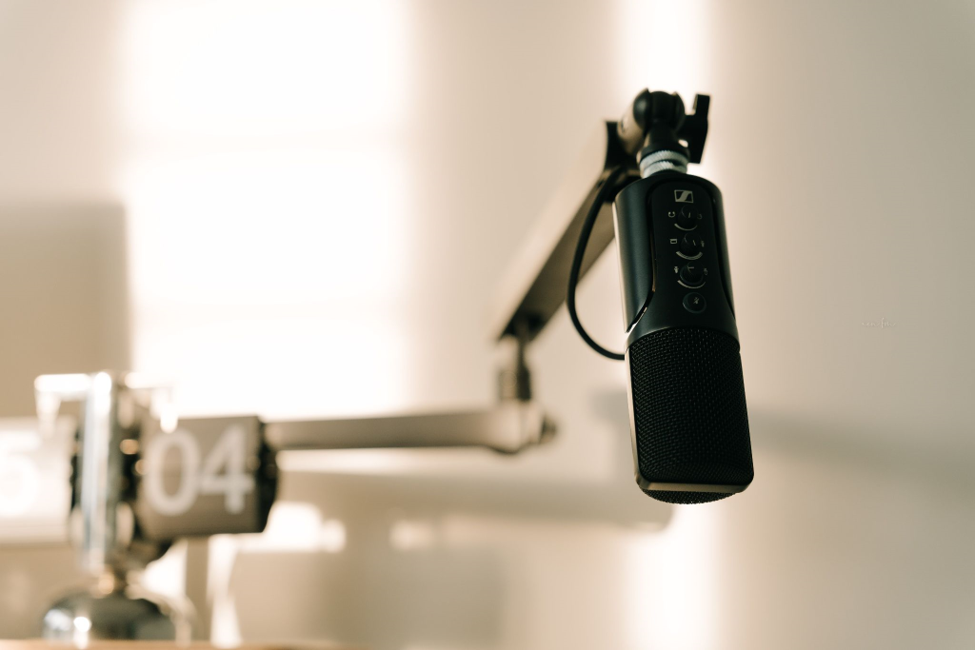
- Don’t skip the must-have accessories: A pop filter or foam windscreen reduces harsh “P” and “B” blasts, and a basic desk stand or boom arm keeps mic distance steady (which helps your volume stay even across takes). Closed-back headphones prevent audio bleed and let you hear mouth clicks or HVAC hum before you record a full episode. If you record on a laptop, a simple USB cable extension can also reduce desk vibration and fan noise reaching the mic.
- Pick one editing tool and learn a repeatable workflow: You need software to record and edit, especially if you’re new to production and want a clean, professional finish, and record and edit is the minimum baseline for publish-ready audio. Choose a DAW that fits your comfort level and stick with it long enough to build speed. Free editors can be plenty for most business podcasts, and Audacity is a common starting point because it covers recording, basic cleanup, and exports without a monthly cost.
- Use a simple production checklist to stay consistent: Consistency is what makes your “industry message” land episode after episode. Try this workflow: outline (5–10 bullet points), record (single take when possible), edit (remove big mistakes first, then tighten pauses), level (light compression/limiting), and export (one file name format every time). Save a reusable intro/outro template so your branding stays steady while your interview insights and stories stay the star.
- Plan for remote guests like a pro (without overbuying): For interview-style shows, ask guests to wear wired earbuds, sit in a carpeted room, and speak into a mic positioned slightly off-axis to reduce plosives. Always record a local backup track when possible, and collect a 10-second “room tone” clip from each speaker, this makes edits smoother and keeps your audio bed consistent.
Podcast Promotion FAQs Business Owners Ask
Q: What platforms should I distribute my podcast on first?
A: Start with the big directories your audience already uses: Apple Podcasts, Spotify, and YouTube Music, then expand. Use a podcast host to submit once and syndicate everywhere to save time. Claim your show pages early so your branding and links stay consistent.
Q: How do I promote each episode on social media without sounding repetitive?
A: Build one “episode marketing set” and rotate formats: a 30 to 60 second audiogram, a quote graphic, a short lesson in text, and a behind-the-scenes photo. Write one core takeaway, then tailor the hook to each platform’s style. End every post with one clear action like “listen,” “comment,” or “DM a question.”
Q: Why is podcasting worth it if my audience is small right now?
A: Trust compounds, and the right listeners are more valuable than raw download counts. Many brands lean in because podcasts outperform display advertising for key outcomes like recall and intent.
Q: How often should I release episodes to keep growth steady?
A: Choose a cadence you can sustain for 90 days, weekly or biweekly are both fine. Consistency trains listeners and gives your promotion rhythm a predictable beat.
Q: What engagement habits actually keep listeners coming back?
A: Ask one specific question every episode and read a listener reply in the next one. A quick self critique after publishing helps you tighten delivery and make each show easier to follow.
Launch a Business Podcast That Builds Trust and Consistency
It’s easy to feel like podcasting requires perfect gear, a big audience, and constant new ideas, so the first episode keeps getting delayed. The approach that works is simple: treat a podcast as a repeatable marketing tool that shares real expertise with real people, one clear conversation at a time. When that becomes the habit, the podcast impact on brand building shows up as familiarity and trust, and business growth through podcasts follows as prospects arrive already confident in your voice. Start before you feel ready, then stay consistent enough to be remembered.