












Arabic version: عمليتا إنقاذ بمروحيتين تدفعان إلى تحذير بشأن سلامة المشي في تسمانيا
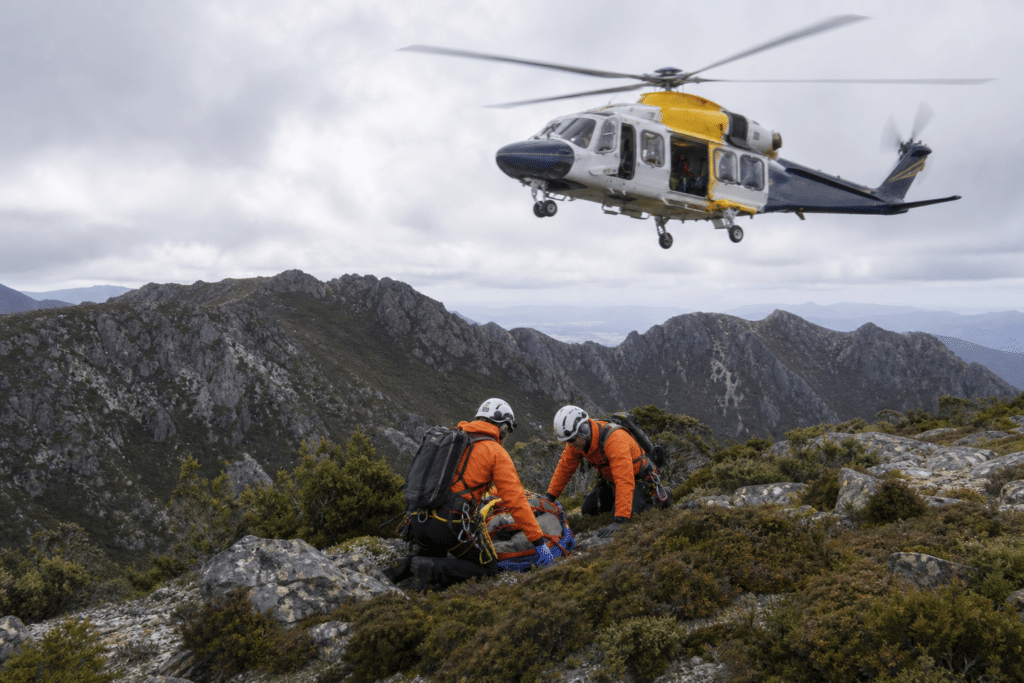
According to ABC News, Tasmania Police have urged people exploring the state to carry suitable communications equipment after two separate helicopter rescues involving bushwalkers on Saturday.
A 62-year-old New South Wales man was walking alone at Dennes Point on North Bruny Island on Saturday morning when he fell and slipped about 10 metres down a steep hill towards the water. Police said he was not injured and contacted emergency services by mobile phone at about 10:30am. A specialist police roping team travelled to the scene in the Westpac Rescue Helicopter, rescuing him at about 1pm.
Senior Constable Callum Herbert of Search and Rescue said the man stopped himself at the top of a further 40-metre cliff after slipping on an unstable slope at the edge of a coastal track. He said contacting emergency services was a sensible decision because an attempt at self-rescue could have led to a further fall and a catastrophic outcome. Police advised walkers to carry a charged mobile phone, including on short walks, and to stay vigilant in coastal areas where loose vegetation and gravel can make ground unstable.
In a separate rescue, a 44-year-old man became ill while day walking with two others from an overnight campsite in the Tyndall Range on Tasmania’s west coast. The group activated a personal locator beacon and used satellite communications to contact emergency services at about 3pm after he became unable to continue. The Westpac Rescue Helicopter located the group and took the man to the Royal Hobart Hospital for assessment.
Police said the group had appropriate camping supplies and communication equipment, including the beacon, which helped ensure a quick emergency response. Inspector Steve Jones said the incident was a reminder for people walking in remote areas to take sufficient food, water, communications equipment and emergency shelter for unexpected delays.