












Reading in English | Read in العربية (Arabic)
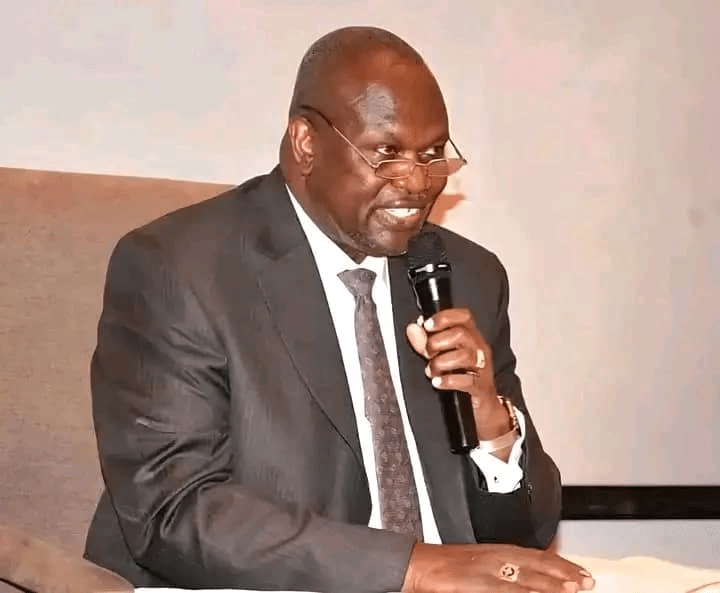
JUBA, South Sudan – South Sudan’s suspended First Vice-President, Dr Riek Machar, has raised concerns over alleged unilateral amendments to the country’s 2018 revitalised peace agreement, accusing President Salva Kiir’s government of making significant political decisions without consulting other signatories.
Speaking before a special court in Juba on Wednesday, Machar argued that several political developments had taken place during his detention, including changes to key provisions of the peace agreement that he claimed were made without following the required procedures.
Machar accused the Sudan People’s Liberation Movement-in-Government (SPLM-IG), led by President Kiir, of removing provisions from the agreement without consulting other parties involved in the peace process.
He maintained that such unilateral actions violated the Revitalised Agreement on the Resolution of the Conflict in South Sudan (R-ARCSS), which was signed in 2018 to end years of civil conflict and establish a transitional power-sharing government.
During Wednesday’s proceedings, Machar, who leads the Sudan People’s Liberation Movement-in-Opposition (SPLM-IO), requested permission from the court to have government prosecutors play recordings of speeches delivered by senior officials during the funeral of the late General David Majur Dak, who was reportedly killed in connection with the Nasir incident in March 2025.
However, the prosecution opposed the request, arguing that the proceedings should remain focused on the legal charges rather than broader political disputes.
The lead government prosecutor maintained that the courtroom was not a platform for political rallies and urged the court to adhere strictly to established legal procedures.
Machar’s defence lawyers challenged the prosecution’s objections, alleging that the lead prosecutor had political affiliations with the ruling SPLM-IG and was among those seeking a governorship position ahead of the anticipated December elections.
The allegations raised by the defence were not independently substantiated during the reported proceedings.
Following the exchanges, presiding judge Dr James Alala adjourned the hearing until 19 October 2026, when Machar is expected to continue presenting his defence.
Political Tensions Threaten South Sudan’s Fragile Peace Process
The court proceedings come amid a deepening political crisis in South Sudan, where relations between President Kiir and Machar have deteriorated significantly, raising renewed concerns about the future of the country’s peace process.
The two leaders, whose political rivalry has shaped much of South Sudan’s post-independence history, have repeatedly clashed over power-sharing arrangements, security reforms and the implementation of the 2018 peace agreement.
Tensions escalated following violent clashes in Nasir in March 2025, which prompted the government to place Machar under house arrest in Juba.
Authorities subsequently established a special court to hear charges against Machar and several other officials linked to the opposition movement.
The proceedings have attracted criticism from some political activists and opposition figures, who allege that the prosecution is politically motivated and intended to exclude Machar from the country’s leadership. The government’s position and the evidence presented in court remain central to determining the legal merits of the case.
The political situation reportedly deteriorated further on 22 September 2026, when President Kiir issued a decree dissolving the transitional government established under the 2018 peace agreement.
According to the reported decree, all five vice-presidential positions, including Machar’s, were terminated, while the national parliament was also dissolved.
These developments have intensified concerns about the stability of South Sudan’s political institutions and the prospects for implementing the remaining provisions of the peace agreement.
With the court proceedings continuing and disagreements over the transitional arrangements unresolved, South Sudan faces mounting uncertainty over its political future and the durability of the peace process intended to bring lasting stability to the country.