











Arabic version: غوغل توسّع مبيعات وحدات TPU عبر أوراكل كلاود
According to Cnbc, Google is widening access to its tensor processing units through Oracle’s cloud platform, marking the first time customers will be able to use the company’s TPUs outside Google’s own infrastructure. Alphabet announced the Oracle arrangement Tuesday, a day before its third-quarter earnings report.
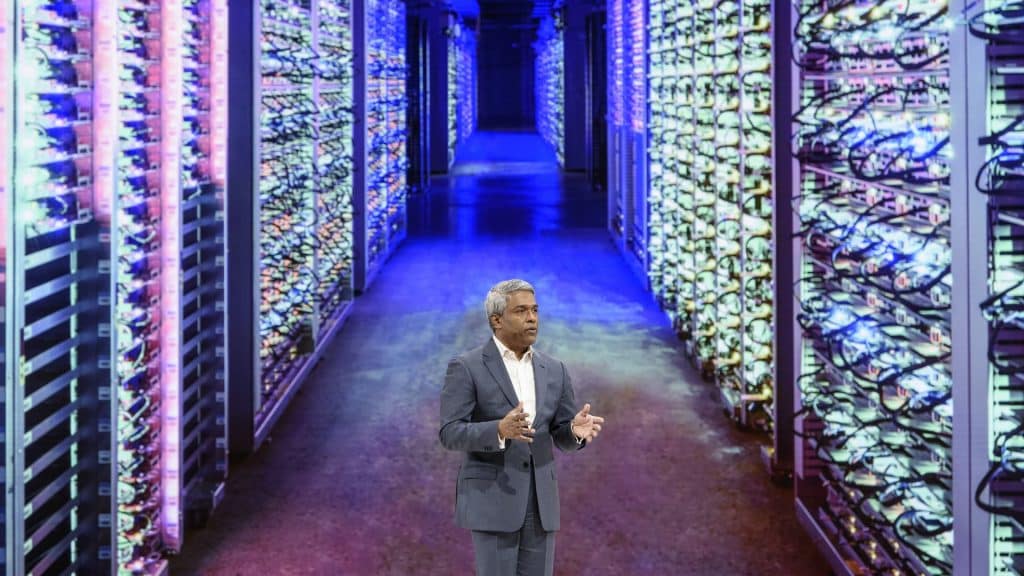
Google has developed its custom AI chips since 2013, but began selling TPUs to outside customers only in the second quarter of this year. The Oracle relationship gives Google another route to expand its AI-chip business as it competes with Nvidia, which has dominated the market. Google Cloud chief Thomas Kurian spent more than 20 years at Oracle before joining Google in late 2018.
Chris Ballard, managing director at Check Capital Management, said Google could eventually take market share from Nvidia. Uday Cheruvu, a portfolio manager at Harding Loevner, said Google had been strong at pursuing its own approach but had not been able to serve customers, adding that this mindset had changed.
Analysts expect Google Cloud revenue to rise about 90% from a year earlier after 82% growth in the second quarter. Google reported $25 billion in second-quarter cloud revenue, behind Amazon Web Services at $42 billion and Microsoft Azure at $29 billion. Estimates for TPU sales differ: TD Cowen projects $9.4 billion in the second half of this year and $62.5 billion in 2027, while Wells Fargo expects about $9 billion in third-quarter sales and $99 billion next year.
Google’s largest TPU customer is AI rival Anthropic, which agreed last October to use up to 1 million TPUs in a deal worth tens of billions of dollars. OpenAI is also planning to buy TPUs from Google. Google declined comment. CFO Anat Ashkenazi said in July that only a small portion of TPU revenue from existing agreements would be recognized this year, with the vast majority expected in 2027.