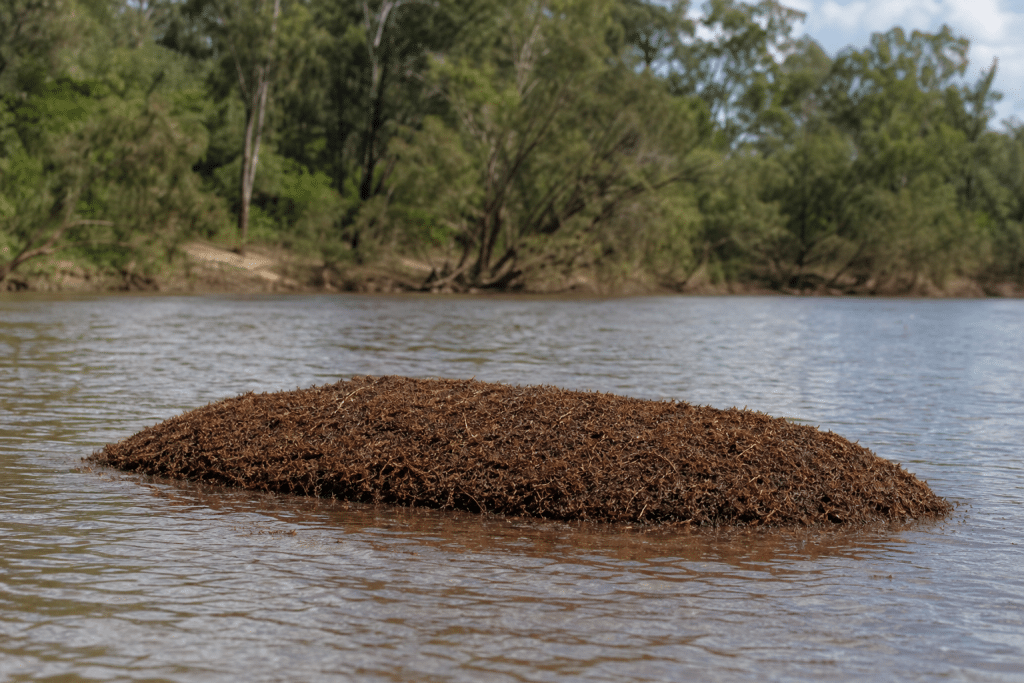












Arabic version: تحذير لسكان كوينزلاند مع تزايد خطر انتشار النمل الناري عبر الطوافات
According to ABC News, experts are urging Queenslanders to remain alert as the wet season increases the risk of fire ants spreading through waterways by forming floating rafts. Invasive fire ants have infested about 850,000 hectares across south-east Queensland and northern New South Wales in recent years.
National Fire Ant Eradication Program general manager of operations Marni Manning said heavy rain and swollen waterways can cause ants to join together in a rafting configuration. She said the rafts help the insects share oxygen, protect queens and young, and move to a safer location.
Griffith University PhD candidate Cassidy Winter said fire ant colonies can contain multiple queens, making their rafting behaviour a containment concern. He said colonies can split and form multiple colonies after rafting away. While rafting is not entirely unique to fire ants, he said the multiple-queen structure adds to the challenge.
Manning said rafts are a last-resort survival response and warned that the ants can increase their toxicity at that time. She said it can be dangerous to handle a nest in water or a raft that has reached a riverbank, as ants may latch onto anything while attempting to escape the water.
She urged people who find a nest or raft to stay well back, warning that disturbed ants can emerge quickly and continue attacking what they see as a threat. Young children, older people, domestic pets and livestock can be particularly vulnerable. Manning said containment in the south-east corner was a precursor to successful eradication and described efforts as on track, while calling on the community to continue working with the program.