Arabic version: افتتاح مختبر مياه مملوك للسكان الأصليين في كوينزلاند
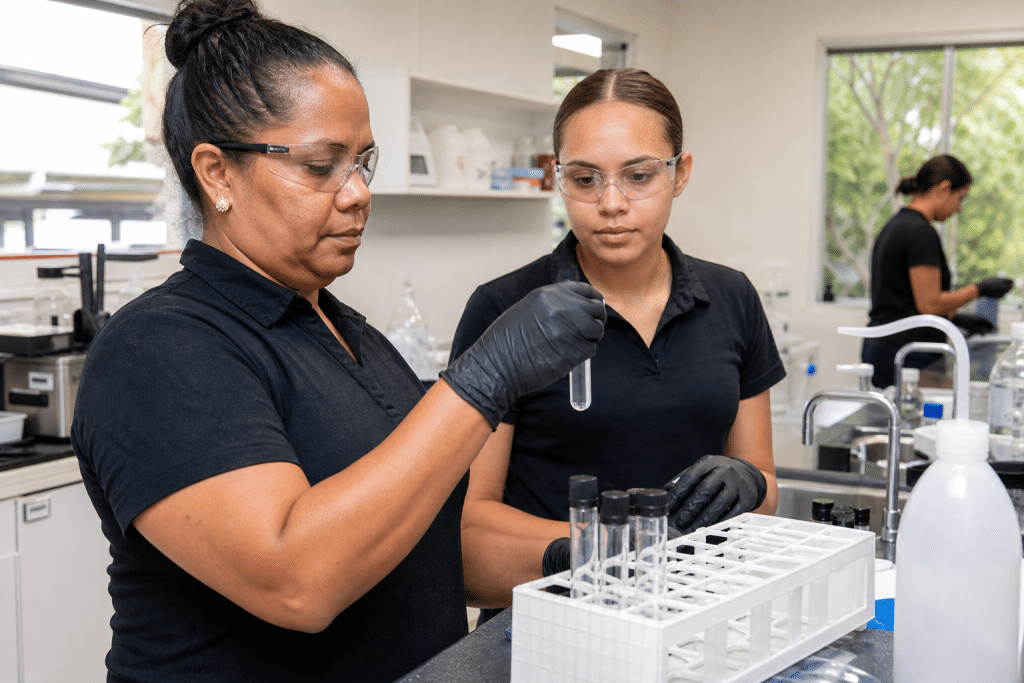
According to ABC News, Gidarjil Development Corporation has opened Nyamgim Gung, described as Australia’s first Indigenous-owned water testing laboratory. The facility sits beside the Burnett River at Bundaberg Port, about 400 kilometres north of Brisbane. Its name means “looking at water” in the region’s Gurang language.
Gidarjil built the laboratory while overseeing projects in Gladstone and Bundaberg for the Bailai, Gurang, Gooreng Gooreng and Taribelang Bunda traditional owner groups. Environmental scientist and laboratory manager Nirali Vadgama has worked on establishing the site since 2022. The lab received national and international accreditation through the National Association of Testing Authorities in September.
Using sophisticated technology and automation, Nyamgim Gung can test for nutrients, trace elements, hardness and alkalinity. While specialising in seawater, it can also analyse river, fresh and brackish water. Ms Vadgama said the accreditation showed that “science can thrive right here in regional areas.”
The laboratory will process samples collected by Gidarjil’s Indigenous rangers for water-quality management projects and offer testing services to other organisations, creating another income stream for the not-for-profit. Previously, samples collected on country were sent to Brisbane for analysis. Gidarjil chief executive Margaret Blackman said the regional facility would deliver faster answers and greater independence in caring for waterways.
Alongside the accreditation, Gidarjil launched Dulba Muni, its first all-female ranger program. The Gurang name means “strong women”. The organisation is also working with the on-site Yalga Binbi Institute to teach young Indigenous leaders about on-country management, with Ms Blackman expressing hope that future trainees could become scientists and run the laboratory.