
Arabic version: أكاديمي يحذّر من أن مطار غرب سيدني قد يزيد حدة الحرارة
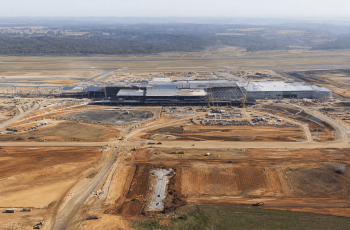
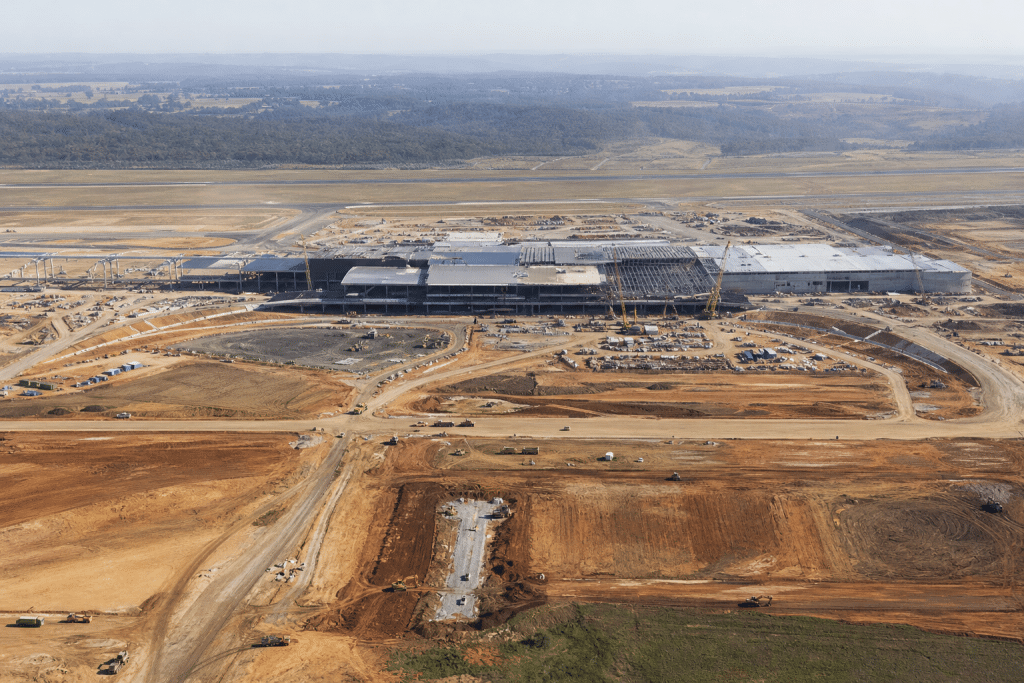
According to ABC News, urban planning professor Sebastian Pfautsch is concerned that Western Sydney International Airport could make nearby homes hotter during summer. The 1,780-hectare Nancy Bird Walton Airport site at Badgerys Creek is being built in an area where temperatures have reached 50.1C on extreme heat days.
Professor Pfautsch, of Western Sydney University, said the airport’s extensive unshaded black tarmac could act as a large heat sink. He said such surfaces absorb solar radiation and re-radiate it, warming surrounding areas. He also said conditions at the airport could reduce the cooling effect of southerly winds that normally move towards Penrith, St Marys and Emu Plains during extreme heat.
Western Sydney summer temperatures can be 8C to 10C higher than those in eastern and coastal areas, which receive sea breezes and higher annual rainfall. Professor Pfautsch said dense concrete, limited shade, dark roofs, added traffic, trucks and airport activity could further increase heat. He called for offset measures including tree canopies, lakes or canals, and reflective tarmac paint.
A Western Sydney International Airport spokesperson said climate-change risk assessments had been conducted during every phase of design and construction. The spokesperson said high and severe risks under climate scenarios to 2090 had been mitigated to protect airport operations from heat-related disruption, with the work independently verified by the Infrastructure Sustainability Council and/or the Green Building Council of Australia.
ABC meteorologist Tom Saunders said the average mid-summer maximum at WSI was about 30C, compared with 26.7C at Sydney Airport, and WSI could be up to 8C warmer depending on wind direction. Aviation academic Jason Middleton said hotter, less-dense air can reduce engine thrust and aerodynamic lift, requiring longer take-off and landing distances, particularly for larger aircraft.