
Arabic version: منظمات إغاثة تمنح خطة السلام في غزة تقييماً منخفضاً
According to Al Jazeera, five international aid organisations have graded the Trump administration’s 20-point Comprehensive Plan to end the Gaza Conflict at four out of 26 possible points, one year after the United Nations Security Council endorsed it. The Danish Refugee Council, Norwegian Refugee Council, Oxfam, Refugees International and Save the Children gave the plan zero for humanitarian access and one point for civilian protection.
The assessment came as Israeli forces launched a new ground offensive in central Gaza, advancing west of the military’s “Yellow Line” and issuing new forced evacuation orders. OCHA said the line’s expansion had increased Israeli control from 58 percent of Gaza at the start of the ceasefire 13 months earlier to 65 percent. Palestinians were confined to 128sq km, OCHA said last month, while NPR map analysis put the area at 109sq km.
Aid groups said humanitarian access remained far below the plan’s target of at least 600 UN-coordinated trucks a day. An average of 49 such trucks entered Gaza daily in September, Al Jazeera reported. During the week of October 12, 315 commercial trucks entered, including 223 carrying food, 51 carrying non-essential items, 12 carrying hygiene and shelter materials, and one carrying medical supplies.
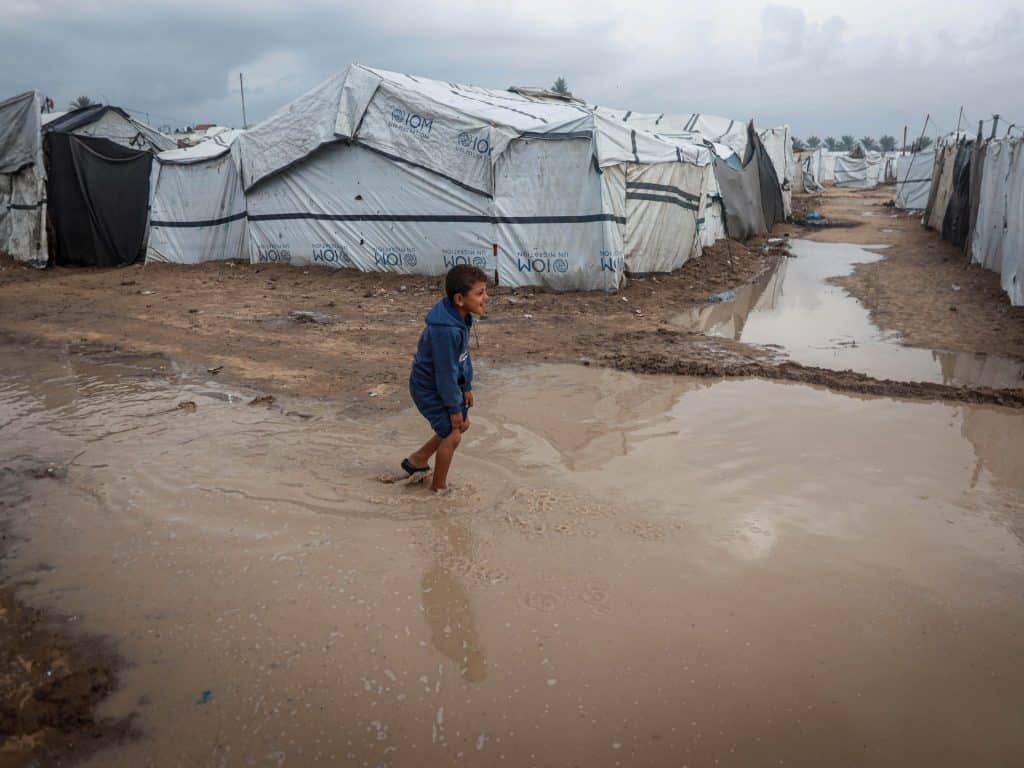
The shelter crisis has intensified as Gaza enters its fourth winter of displacement. Nearly 1.4 million Palestinians are living in makeshift shelters, while a winter storm flooded more than 70,000 tents in one day, resulting in the drowning of an infant and the deaths of five displaced people. More than 150,000 tents and 500,000 blankets remain outside Gaza awaiting permission to enter.
The Board of Peace acknowledged in a report supplied to Al Jazeera that implementation had been limited pending decisions by the parties, including the Israeli government. It said the lack of decisions on arrangements for civilian police, the National Committee for the Administration of Gaza and the International Stabilization Force was impeding implementation. The Board warned that “a ceasefire that delivers nothing visible cannot be sustained indefinitely.”