
Arabic version: إغلاق جزيرة ماكواري يبطئ رصد أمواج التسونامي
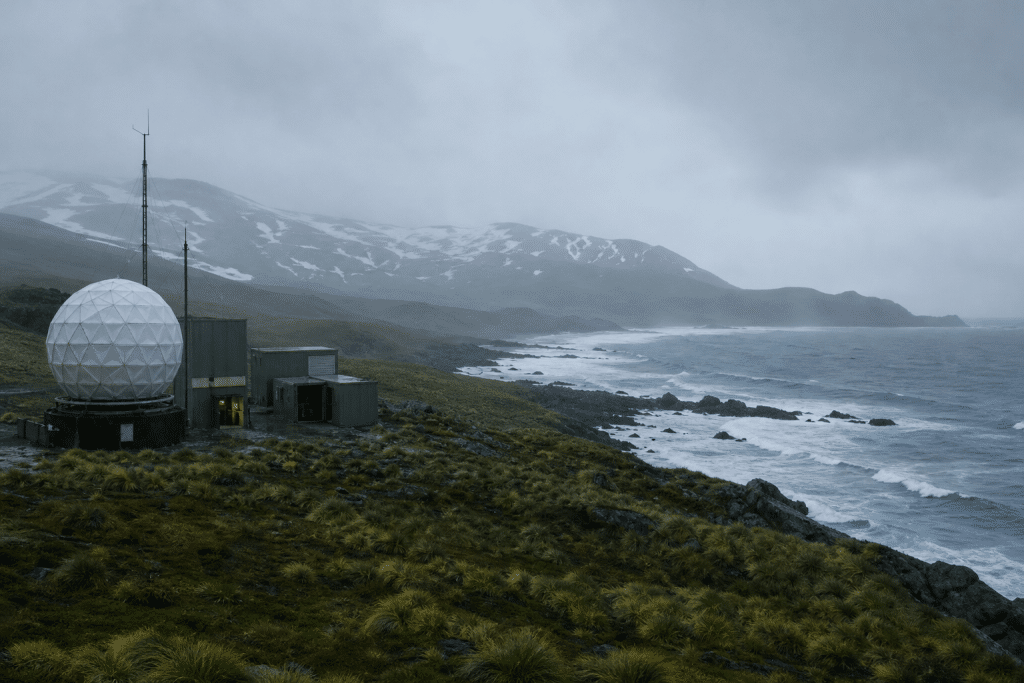
According to ABC News, Australia’s withdrawal of personnel from Macquarie Island has left a key seismic observatory without power, reducing the time available for emergency services to respond to possible tsunamis affecting the south-eastern coast.
The federal environment department removed staff from the Southern Ocean island, 1,500 kilometres south-east of Tasmania, in late August because of concerns over a potential H5 bird flu outbreak. Expeditioners were extracted in early October, and the loss of power has stopped the Geoscience Australia seismic station from operating.
Documents obtained by ABC News show the station previously enabled earthquakes in the region to be detected within eight minutes. With the observatory offline, detection is estimated to take 10 minutes, adding two minutes before alerts for potential tsunamis can be issued. Geoscience Australia said the outage would mean slower and less sensitive detection for earthquakes south of Australia and New Zealand, but said alerts were expected to remain within the required 10-minute timeframe for tsunami warnings.
The observatory lies near the boundary of the Pacific and Australian tectonic plates and is part of the Australian National Seismograph Network. Australian National University seismology and geophysics expert Professor Hrvoje Tkalčić said its closure left a “major gap” on the plate boundary, with the nearest station more than 1,000 kilometres away. The region has recorded at least nine earthquakes above magnitude 7.5 since 1900, according to the US Geological Survey.
Geoscience Australia said it tried to automate the observatory during the October drawdown, but strong winds prevented solar panels from being installed safely. It is working with the Australian Antarctic Division to return early next year to complete the work. The temporary withdrawal has also affected weather, wildlife and nuclear-explosion monitoring, while the division is preparing to send the RSV Nuyina in March next year to retrieve 185,000 litres of diesel from the station’s fuel farm.