

Arabic version: محادثات كوب31 تنتهي من دون اتفاق مناخي
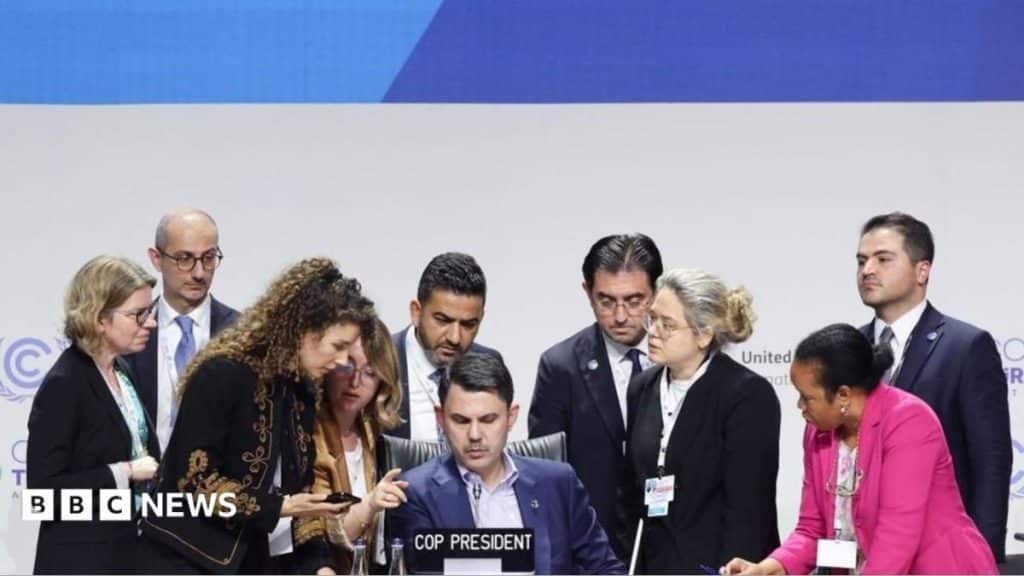
According to BBC News, countries failed to secure a major new agreement on climate change at the UN COP31 talks in Turkey after divisions over fossil fuels and finance. Negotiations, due to end on Friday, continued into Sunday and became the longest UN climate conference in history. The final text was rejected by the EU, Pacific island nations and others because it did not directly mention fossil fuels, the main cause of global warming.
A draft presented in the early hours of Sunday contained no use of the words “fossil fuels”. Its only indirect reference to coal, oil and gas pointed to the COP28 agreement in 2023 to “transition away” from fossil fuels in energy systems. Irish Minister Darragh O’Brien, representing the EU, said the decisions fell far short of the ambition needed and called it “unconscionable” for a climate pact not to mention fossil fuels. Panama and the Marshall Islands also criticised the outcome.
Finance for poorer countries to adapt to worsening climate impacts was another major obstacle. Nations agreed at COP30 in Brazil to triple adaptation finance, but the COP31 text included no concrete figures or baseline for measuring that pledge. Mohamed Adow of Power Shift Africa said rich nations and polluting governments could not keep arriving “empty-handed”. UN Secretary General Antonio Guterres said he was “deeply disappointed” and criticised what he called powerful fossil fuel interests.
Chris Bowen, the Australian government minister and COP31 president of negotiations, said there were “unbridgeable red lines” in a complicated geopolitical environment. While the main political agreement collapsed, delegates made progress on a just transition mechanism to support workers and communities shifting towards clean energy. More than 80 countries also backed Turkey’s target for electricity to account for 35% of global energy use by 2035. UN climate chief Simon Stiell said he would seek advice on possible reforms before COP32 in Ethiopia in November 2027.