Arabic version: ارتفاع حالات التهاب السحايا في غزة مع تعرض المستشفيات لضغوط
According to Al Jazeera, Gaza’s Ministry of Health declared an epidemic alert on November 24 after reporting 272 meningitis cases in October, compared with a usual monthly average of 30 to 50. Of those October cases, 108 were bacterial meningitis, against a typical 10 to 20 a month, while another 100 bacterial cases were recorded in the first weeks of November.
The ministry reported 15 deaths from meningitis since the start of 2026, including five between August and October. Meningitis affects the membranes surrounding the brain and spinal cord and may be caused by viruses or bacteria. Bacterial meningitis can progress rapidly and can lead to death or lasting complications, including hearing loss and neurological damage.
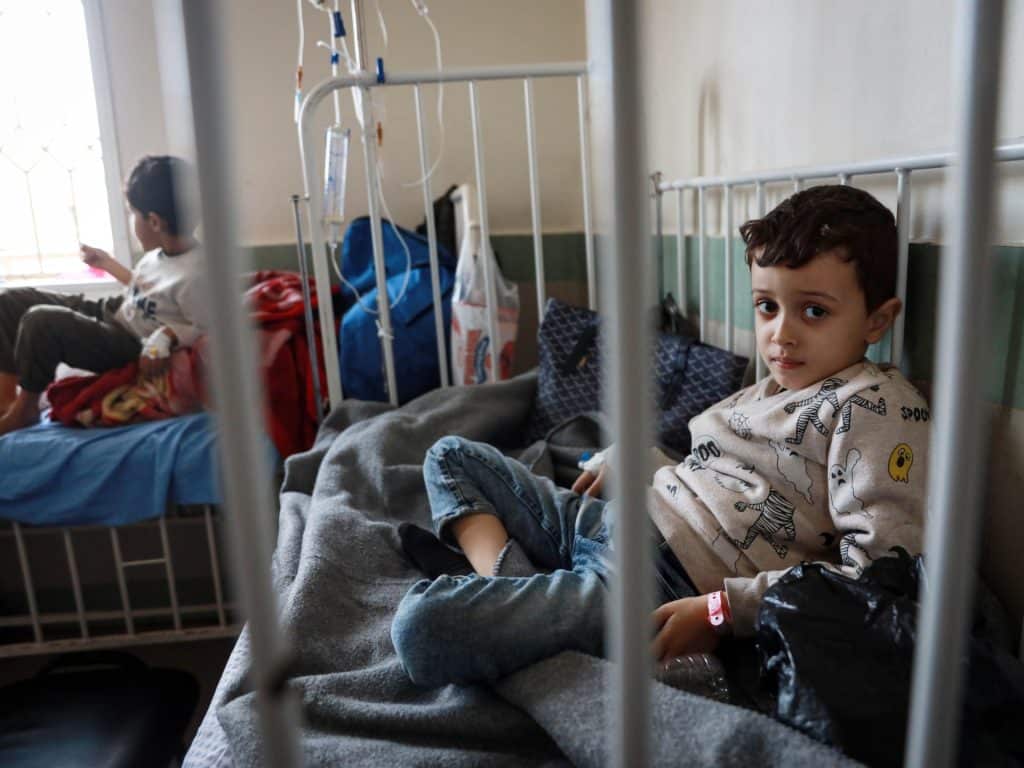
At Rantisi Children’s Hospital in Gaza City, paediatrician Sharif Matar said the current wave began about a month earlier. The hospital at one stage received more than 10 cases a day, he said, though daily admissions had fallen to three or four. Matar said the wave had not ended and linked the spread of infection to overcrowding in displacement camps and tents, where access to water and hygiene facilities is limited. He said some children had developed complications including hearing loss and hydrocephalus.
Five-year-old Omar Abu Fayed has been admitted to Rantisi’s isolation ward three times in less than a month after recurring fever and pain. His mother, Zakia Abu Fayed, said he was diagnosed with meningitis after treatment at home did not improve his condition. Another mother, Aya Salem, said her six-month-old twins, Yaman and Yumna, became ill one after the other and were diagnosed with meningitis. The World Health Organization has warned that limited laboratory capacity complicates efforts to distinguish viral from bacterial infections, while the UN reported that about 42 percent of essential medicines were at zero-stock levels in October.