Arabic version: فنانو الكاورنا يعيدون تأطير فن البورتريه عبر تصوير التنتايب
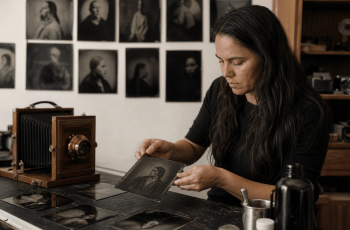
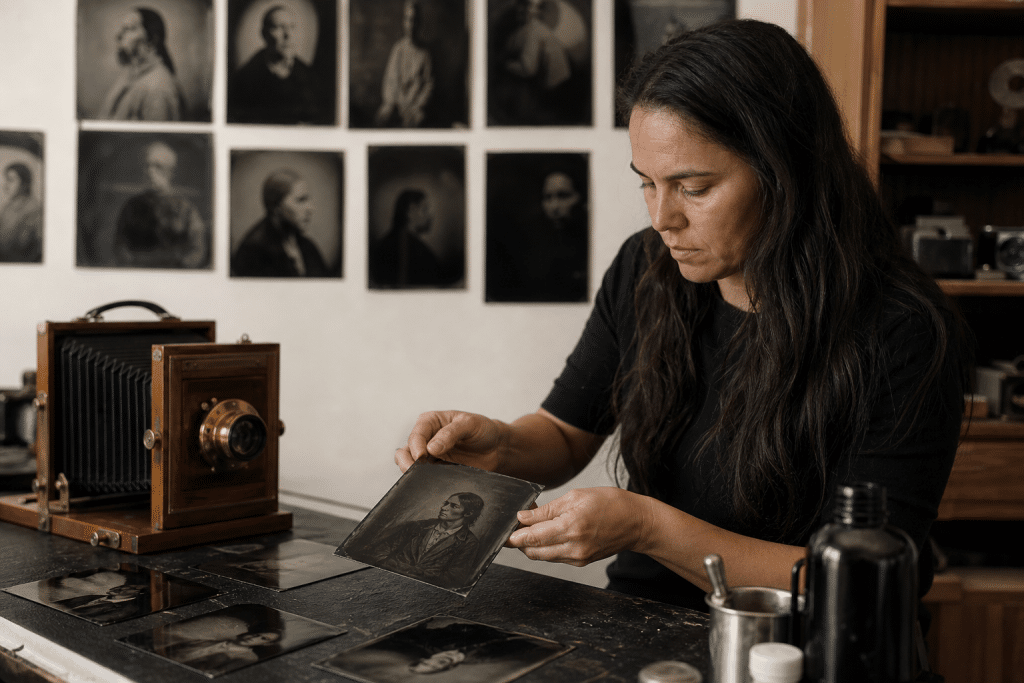
According to ABC News, Kaurna artists James Tylor and Damien Shen spent a week in October creating tintype portraits of members of the Kaurna community at the Art Gallery of South Australia in Adelaide. The work forms part of the Critical Indigenous Photo Exchange, an international project started by Navajo man Will Wilson.
Kaurna Narungga elder Joan Lamont, 83, sat for a portrait wearing a necklace representing the Seven Sisters story. Looking at the greyscale images of community members, she said she saw the eyes of ancestors looking back. She described pride and joy in taking part in a project she said showed who the community is.
Tintype photography uses a wet-plate process developed in the mid-19th century. Tylor and Shen used a vintage Linhof camera and black aluminium plates, preparing and developing the images through collodion, silver nitrate, developer, water and fixing solution. With a seven-second exposure and several variables in the process, some portraits required reshoots.
The artists’ approach also addresses photography’s colonial history. Shen said photographs of his great-grandparents were taken at Raukkan in 1939 by anthropologist Norman Tindale, raising questions for him about consent and representation. Participants in the Kaurna project choose their clothing and how they are portrayed, retain the original plate, and decide how the digital image may be stored, shared or included in the exhibition. The Art Gallery of South Australia says images from the second Kaurna photo shoot will be exhibited early next year, with the project running until the end of March.