













Arabic version: سكان أليس سبرينغز منقسمون حول الدور العسكري لباين غاب
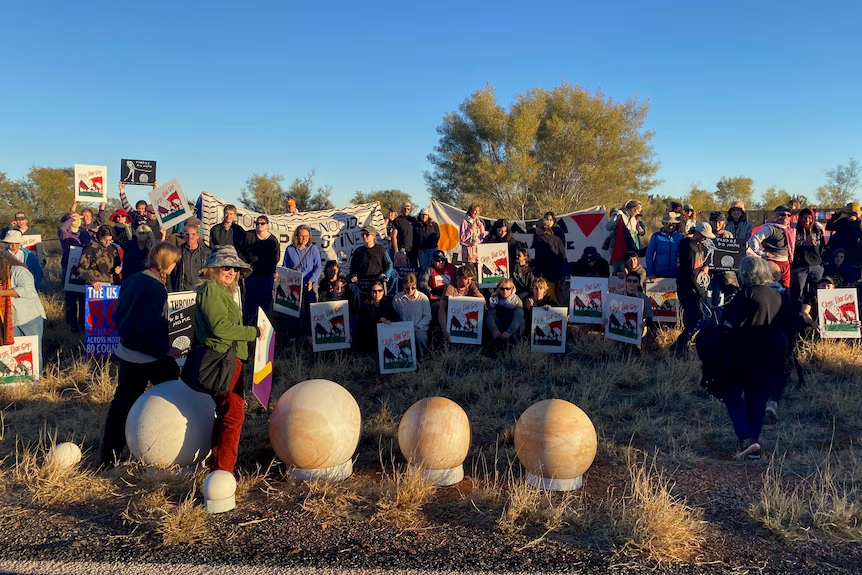
Residents of Alice Springs are expressing mixed feelings regarding the role of the Pine Gap intelligence facility in the ongoing conflict in the Middle East. With family members affected by the war, many locals are grappling with the implications of Pine Gap’s involvement in U.S. military operations. According to ABC News, defence experts suggest that intelligence from the facility may be used in U.S. strikes, yet opinions vary on Australia’s role in this situation.
Syed Ali, a member of the Alice Springs Islamic Society, expressed distress over reports of civilian casualties resulting from U.S. attacks, including a tragic incident in which more than 165 people were killed in an Iranian primary school. Ali, who has roots in Pakistan, believes that if Pine Gap has played a role in such incidents, it should be condemned. He calls for greater scrutiny of Australia’s involvement in the conflict.
Conversely, Eli Melky, who has lived in Alice Springs for 26 years after immigrating from Lebanon, maintains a pragmatic view of Pine Gap’s role. Despite having family in Lebanon affected by the war, he believes that Australia’s defence decisions are necessary for the country’s security and stability. Melky emphasizes the importance of the freedoms and democratic values that Australia offers.
The debate extends to political figures as well. Greens Senator David Shoebridge has criticized the lack of transparency regarding Pine Gap’s operations, stating that the Australian public deserves to know the extent of U.S. military actions on Australian soil. He has labeled the current conflict as an “illegal war,” urging for more accountability.
Defence experts are also weighing in on the situation. Jennifer Parker, a former naval officer, asserts that while Pine Gap provides significant intelligence to the Five Eyes Network, sharing details about its operations could jeopardize national security. She argues that while Australia should not blindly follow U.S. military actions, the current support for strikes against Iran is justified to prevent potential nuclear threats.