












Arabic version: بادنوك تدعو إلى خفض الضرائب على فواتير الطاقة بدلاً من الإنقاذ
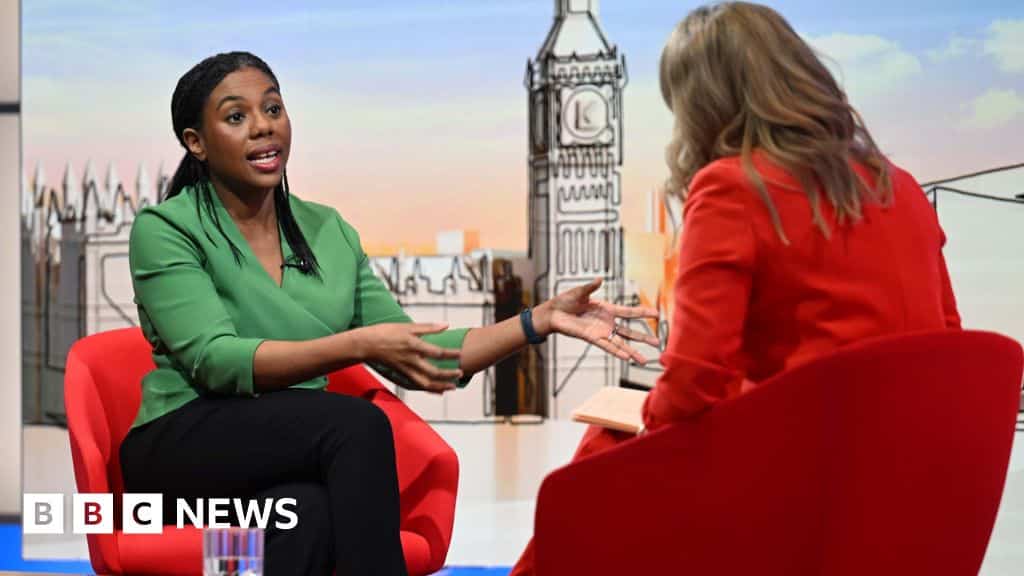
Kemi Badenoch has said the government should cut taxes on energy bills before considering bailouts for households. During an appearance on the BBC’s Sunday with Laura Kuenssberg programme, she emphasized that direct payments would ultimately lead to higher taxes for citizens. According to BBC News, Badenoch expressed her desire for the government to alleviate the burden on all citizens by reducing taxes on energy bills.
Badenoch’s comments come in light of rising energy prices due to geopolitical tensions, particularly the US-Israeli war with Iran, which has disrupted oil shipping routes. Last week, Chancellor Rachel Reeves indicated that the government would support those most affected if energy bills surged. Currently, millions in England, Scotland, and Wales are set to see a temporary reduction in energy bills under Ofgem’s price cap, but increases are expected following this period.
The Conservative Party has already pledged to eliminate certain green levies on energy bills, which contribute to funding renewable energy initiatives. When questioned about the possibility of direct support payments, Badenoch maintained that her focus is on tax reductions, stating, “Let’s not pretend that these huge bailouts don’t come with a cost.”
The debate over energy bill support has drawn various responses from opposition parties. Liberal Democrat leader Sir Ed Davey has advocated for universal assistance with energy costs, while the Green Party is urging the government to ensure bills do not rise in July when the price cap is reviewed. Additionally, Reform UK has proposed scrapping VAT and green levies if they come to power, highlighting the diverse approaches to addressing the energy crisis.
As the government navigates these challenges, Badenoch also mentioned the need to maximize domestic oil and gas production in the North Sea, despite existing bans on new drilling licenses. She acknowledged that while this would not directly reduce energy bills, the profits generated could be utilized to subsidize costs. Education Secretary Bridget Phillipson defended the current energy strategy, emphasizing the importance of transitioning away from fossil fuels and investing in sustainable energy sources.