











Reading in English | Read in العربية (Arabic)
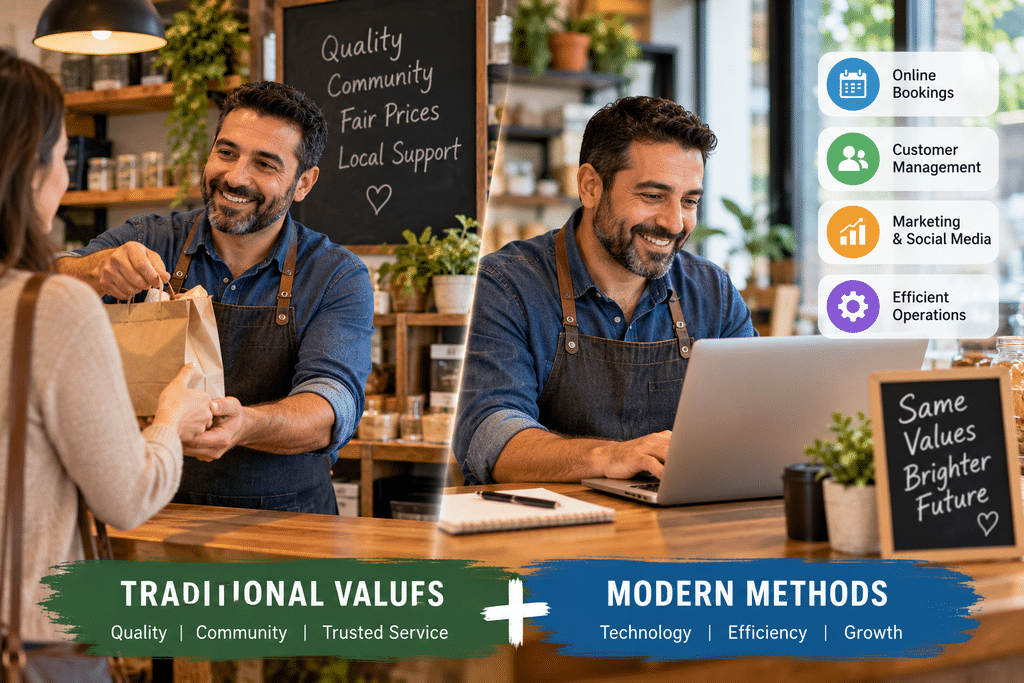
For local small business owners, the toughest work often isn’t choosing between old and new, it’s balancing tradition and innovation without losing what made the business trusted in the first place. Traditional business values like reliability, fair treatment, and pride in craft can clash with modern business practices that demand speed, consistency, and constant visibility. When the balance is off, efficiency suffers or the community connection weakens, and loyal customers feel the shift. With a clear way to separate what must stay from what can change, business owners can modernize with confidence.
Understanding What Stays Fixed vs What Can Change
At the heart of blending tradition and innovation is a simple sorting job: separate your nonnegotiable values from your adjustable tactics. Values are the promises you never break, like quality, honesty, and taking care of customers. Tactics are the tools you use to deliver those promises, like online booking, faster quoting, or new software.
This matters because tools change quickly, and small businesses feel that pressure first. When 58% of small businesses are already experimenting with new tech, staying “the same” can quietly become falling behind. Clear values make upgrades feel safe, so improvements do not dilute what people trust. With your constants defined, updating customer-facing images becomes a low-risk, high-clarity upgrade.
Refresh Marketing Visuals Fast Without Losing Brand Recognition
Once you know which parts of your business identity should stay consistent, you can update what customers see without rewriting who you are. AI image tools can help small business owners modernize marketing visuals, flyers, social posts, and storefront imagery, while still reflecting the values, identity, and community ties that make the brand familiar. An AI image-to-image generator works from what you already have: you provide a reference image (like a well-known product photo or a past campaign) and add prompts describing the new look you want. The tool then transforms the original into fresh styles or variations, keeping key cues that customers recognize, while making the visuals feel more current. If you’re exploring options, tools for free AI image conversion can help you evolve your look quickly without losing the character people associate with your business.
Build a Tradition-Plus-Innovation Action Plan
This process helps you modernize the parts of your business that benefit from speed, clarity, and consistency while protecting the routines and standards customers already trust. It matters because you can improve efficiency and growth without losing the familiar experience that keeps people coming back.
- Step 1: Define your “non-negotiables” and “upgradeables”
Start by listing the few traditions that must stay the same, such as your quality checks, customer greetings, or signature product details. Then list areas that can change safely, like scheduling, inventory tracking, and how you create promotions. This gives you a simple decision filter for every new tool or idea. - Step 2: Modernize operations with one small workflow at a time
Choose a single operational bottleneck, then add a modern method that reduces errors or saves time, like digital invoicing, appointment booking, or reorder alerts. Keep the old method running in parallel for a short trial so you can compare results without risking service quality. Document the new steps in plain language so your team can follow them consistently. - Step 3: Consolidate customer information to personalize service
Bring scattered details into one place: purchase history, preferences, service notes, and how customers like to be contacted. The business case is strong because consolidating consumer profiles helps you recognize repeat customers faster and reduce guesswork. Use what you learn to standardize small “remembered touches” that feel traditional, just more reliable. - Step 4: Refresh the customer experience without changing the tone
Keep the parts customers feel emotionally, such as warmth, honesty, and craftsmanship, then update the delivery: clearer signage, simpler menus, faster checkout, or more predictable wait times. Write a short service script for common moments like pickups, complaints, and follow ups so your best habits show up every day. Ask a few regulars what felt better and what felt less like you. - Step 5: Blend classic marketing with modern testing
Choose one familiar channel you already use and add one digital companion, such as pairing in store flyers with a weekly social post or short email. Run two versions of the same message with small differences, then keep what performs better, which is how many teams move toward personalized and identity-based experiences without guessing. Save your best performing copy and visuals as templates so future campaigns stay consistent.
Tradition Meets Innovation: Common Questions Answered
Q: What if modern tools make my business feel less authentic?
A: Authenticity comes from your values and standards, not the software you use. Protect what matters most by naming your long-standing practices like quality rules, service rituals, or signature details, then modernize only the back-end tasks. Start with one change customers will barely notice, such as faster invoicing or clearer booking.
Q: How can I modernize if I do not have time?
A: Pick one pain point that steals hours each week, then fix only that for 14 days. Keep the old method as a fallback while you test, and write the new steps in a short checklist. If it does not save time, roll it back and try a smaller tool.
Q: Can I do this on a tight budget?
A: Yes, if you focus on low-cost wins that reduce mistakes, like digital receipts, simple templates, or automated reminders. Set a monthly cap and require each tool to earn its keep by saving time or preventing rework. Cancel anything your team avoids using.
Q: What does “innovation” mean if I am not inventing new products?
A: Innovation can simply mean using efficient ways of processing that make delivery smoother and more consistent. That could be better scheduling, smarter restocking, or clearer handoffs between staff. Choose improvements that strengthen your craft rather than distract from it.
Q: Should I wait until the economy feels more stable?
A: You do not need a big bet to move forward. Small, reversible upgrades can make you more resilient, and many owners stay optimistic with the business climate rated excellent or good. Start with changes that lower overhead or speed up cash flow.
Strengthen Small Business Longevity by Updating Without Losing Roots
Keeping a small business relevant can feel like a choice between protecting what customers love and adopting what the market now expects. The steadier path is treating change as an add-on, using innovation and tradition synergy as a lens for each decision rather than a makeover. Done well, business relevance maintenance becomes simpler, community engagement deepens, and owner confidence grows because each improvement still “sounds like” the business people trust. Honor what works, then upgrade what helps customers today.