












Arabic version: هجمات البحر الأسود تهدد صادرات الحبوب الأوكرانية
According to Cnbc, Ukraine’s harvest is strong, but attacks affecting Black Sea shipping have left storage facilities in Ukraine and Russia holding millions of tons of produce that would normally be exported. Intensified Russian drone and missile strikes on Black Sea targets have made commercial ships impossible to insure, while Kyiv’s retaliatory attacks have also constrained Russian exports.
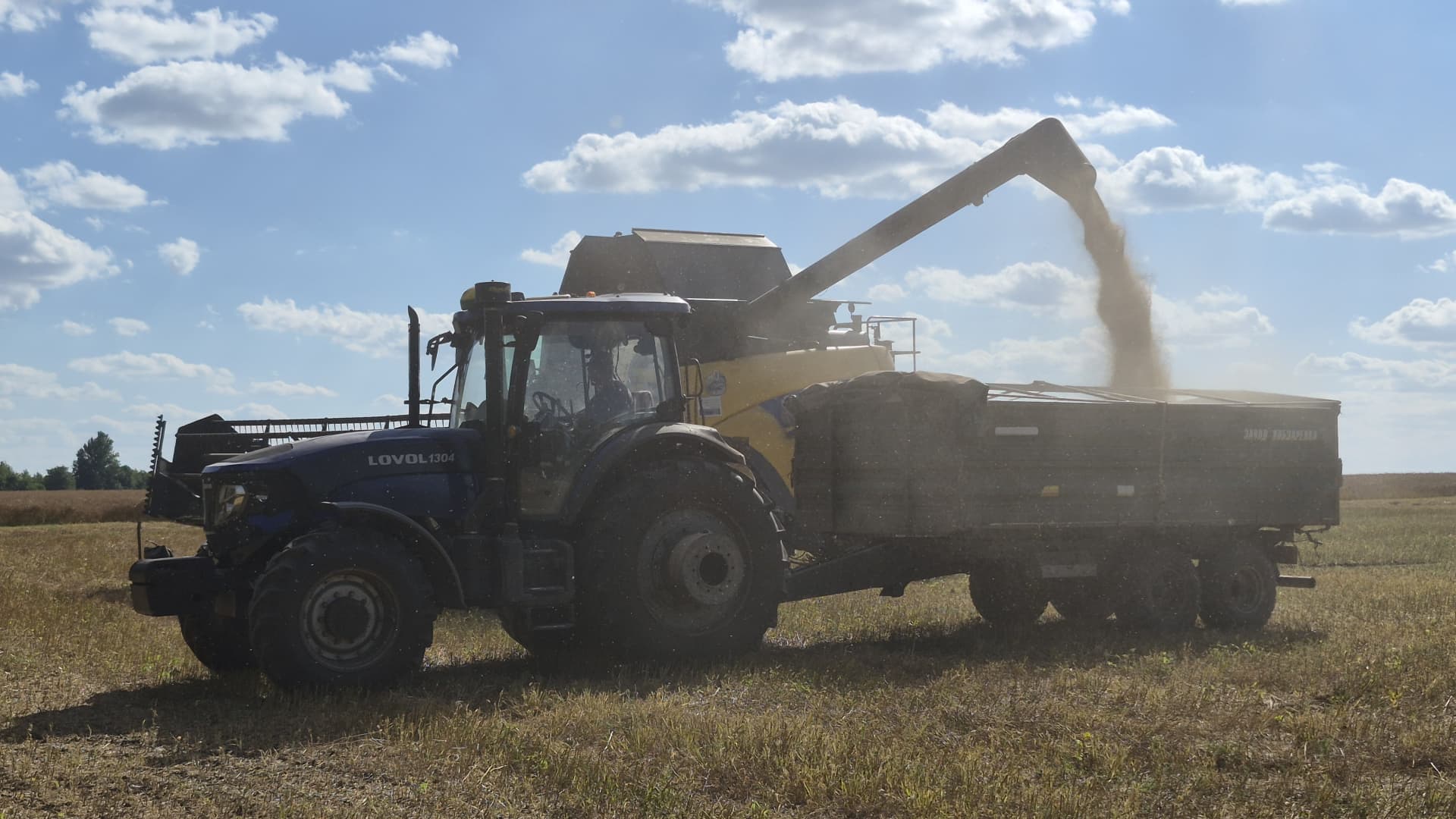
For Ukrainian farmers, the export disruption is pressuring domestic prices and cash flow as they consider planting for the 2027 crop. Oleksandr Chumak, a farmer in the Odesa region, said about 80% of his grain cannot be sold at a profit. Andrii Dykun, chairman of the Ukrainian Agri Council, said farmers still need to pay taxes and land rent while lacking the ability to sell their crops profitably.
Farmers are changing planting plans toward oilseeds and niche crops that are less dependent on logistics costs. Chumak said he will significantly reduce planting next year, avoid corn and barley, and choose crops requiring less fertilizer. PrivatBank said it disbursed 1.53 billion hryvnia in working-capital finance to agribusinesses from June through August, more than double the amount lent in the same period a year earlier.
Ukraine’s grains and oilseeds production is forecast to rise to 85 million tonnes from 80 million tonnes this year, but carry-over stocks are adding pressure to storage and transport infrastructure. Around 90% of Ukraine’s main agricultural exports typically move through the Black Sea. Its grain and legume exports totaled 981,000 tonnes in August, down about 58% from a year earlier.
The disruption has implications for global food markets. Ukraine and Russia supplied more than half of global sunflower oil, nearly a fifth of barley and 14% of wheat before the war, according to the UN. The continuing blockage is supporting prices outside both countries, but Benoit Fayaud of Expana said a reopening of Black Sea ports could release large low-cost stocks and quickly push grain prices in other origins lower.