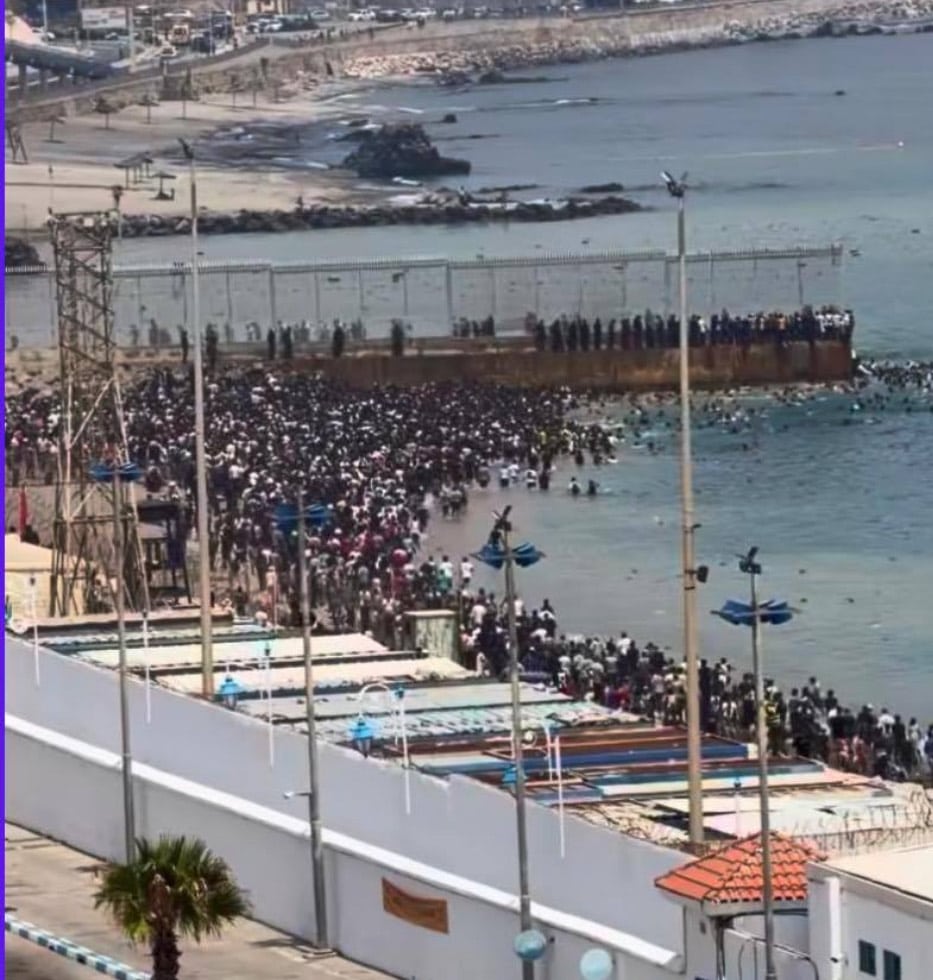
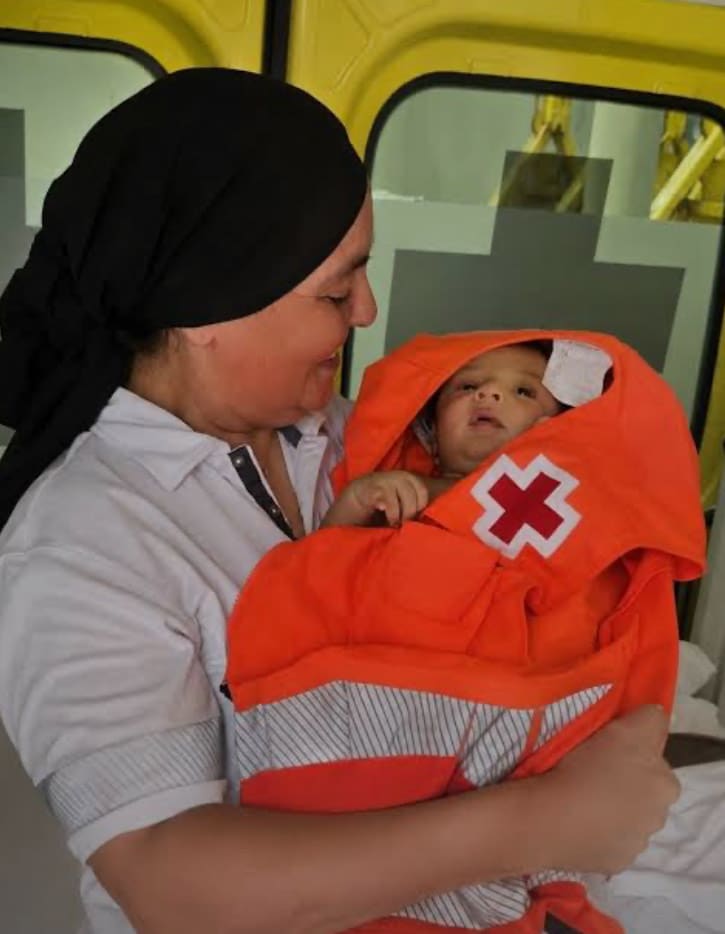
That moment was not just a breaking news item on the bulletins.It was not merely numbers about crossing attempts, or images of crowds moving toward a border fence, or official statements explaining events from a security and legal angle.Behind those images there was something else the numbers did not show.There was a human being.There was a young man carrying years of waiting, fear, and the search for an opportunity.There was a mother watching her phone, waiting for a call from a son who chose a path whose end she did not know.There was a child who doesn’t understand the meaning of borders, who doesn’t know why he found himself in events bigger than his age, and who only knows he needs his mother’s voice and a feeling of safety.In those moments, Ceuta was not just a point on the map between Morocco and Spain.It was a space where thousands of stories converged: tales coming from different neighborhoods, towns, and villages, stories that left homes and in an instant became a journey into the unknown.Between one photo and another, details appeared that stayed lodged in the minds of observers.A young man carrying his mother on his back during an attempt to reach the other side.The image wasn’t merely a crossing moment; it summed up a deep human bond between son and mother and raised a question that goes beyond borders:What makes someone believe that reaching the other shore might be the only way to protect those they love?There is no single answer.The motives for migration differ from person to person, and they can be interwoven with economic, social, family, and psychological factors.Among the faces that appeared in these journeys were women and young women carrying long stories of waiting.Some spoke of wanting to join family members and of years of distance and expectation.For others, it was not just moving to another country but an attempt to reclaim closeness they had lost or to build a more stable life.But the path between dream and reality is often far harsher than it appears from a distance.Testimonies from some participants spoke of long days filled with fear, exhaustion, and waiting.Borders that look like a short distance in photos can be, for those who attempt to cross them, a journey full of anxiety and uncertainty.Behind every crossing attempt are personal circumstances that cannot be reduced to a single number or category.Children were among the scenes that sparked the most debate.Children who found themselves in events larger than their ability to comprehend.They don’t know the meaning of borders, the details of laws, or political calculations.They only know their need for safety, for their family, and for someone to reassure them they are not alone.That is why the dossier of unaccompanied minors remains one of the most sensitive issues: a child cannot be reduced to a legal status alone, but is a human being who needs protection, care, and stability.Long separation from family and the environment in which a child grew up can raise challenges related to identity, belonging, and psychological and educational balance — aspects that put the best interests of the child at the forefront of any response.But the story of Ceuta cannot be reduced to a single image.Among those who tried to cross were also young people from diverse backgrounds.Some spoke foreign languages and showed the ability to express themselves despite difficult circumstances.Others held diplomas and degrees — people who received education and training but found themselves facing questions about opportunities and how to realize their ambitions.Migration is not always the result of a lack of education or ambition.Sometimes a person is qualified but feels the gap between their abilities and what they can achieve has grown too wide.There are those who bear family responsibilities, thinking about helping their relatives or providing a better life for those who depend on them.And there are others who have nothing but the idea of leaving.The notion that the life they seek might exist on the other side.Here lies one difficulty in understanding migration: the decision does not always stem from a single cause, but from a long accumulation of circumstances, aspirations, and images a person holds of a different future.Behind the numbers are details that do not always appear in reports.Every crossing attempt is linked to a waiting family, to a frightened person, to a dream looking for a route.That is why the story of Ceuta is not only a story of geographic borders.It is the story of young people searching for opportunities, of families living with anxiety, and of communities facing repeated questions about the future.The Ceuta and Melilla issue is not new.These borders have returned to the forefront at different moments, including events in 2005 and the 2021 crisis, which saw large numbers of migrants, including minors, reach Ceuta.Each stage has its own circumstances and context, but the question remained present:What makes a route full of risks seem to some like a choice worth trying?After the crossing moment ends, another phase of questions begins.Does the story end with a return?Is it enough to treat the phenomenon only from a security perspective?In this context, the file of unaccompanied minors remains one of the issues that require a delicate balance between protecting borders and protecting the child.In recent years this issue has been the focus of coordination between Morocco and Spain, particularly regarding the repatriation of unaccompanied minors according to established legal procedures, with the emphasis that any responsible response must place the child’s best interests and future first.A minor is not a bargaining chip in a political debate; they are a human being in need of family, educational, and psychological protection that ensures stability.At the same time, talking about migration opens a broader discussion about the relationship between development and citizens’ aspirations.Morocco is undergoing major transformations and projects and seeks to strengthen its regional and international presence.But persistent questions about opportunities, employment, and the prospects for young people keep the migration issue alive in public debate.Development is not measured solely by grand projects, but also by a person’s ability to see their future within their own society.The events in Ceuta have renewed a debate that goes beyond the moment of the border:– a debate about youth,
– about opportunities,
– about trust in the future.Interpretations of causes and responsibilities may vary, and political and legal approaches may differ.But behind every crossing attempt there is a human story.And behind every story is a person carrying their fears, dreams, and waiting.Borders may separate two places, but they also reveal the distance between what a person dreams of and what they can reach.