












Reading in English | Read in العربية (Arabic)
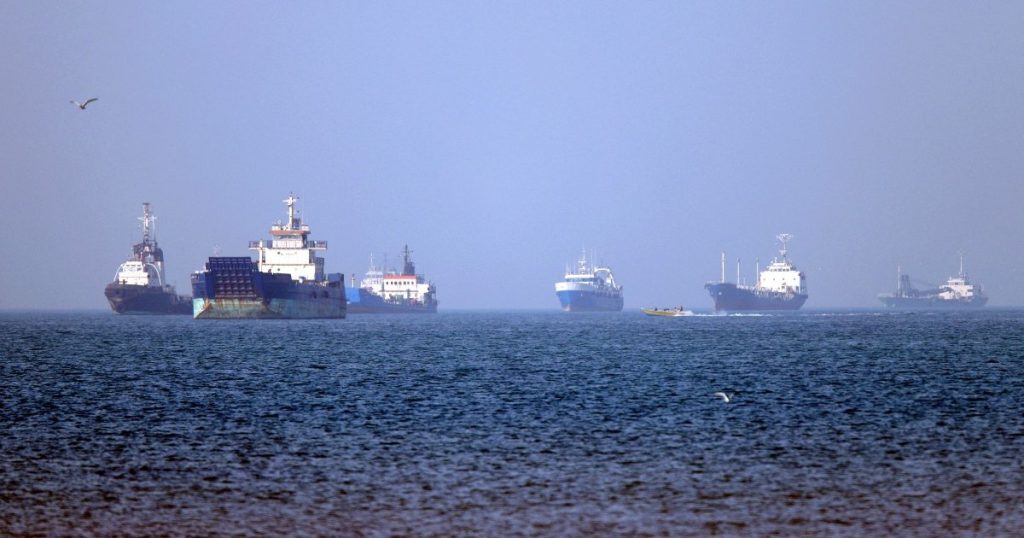
The failure of the United States and Iran to reach an agreement on a peace proposal put forth by Washington led to a significant surge in oil prices on Monday, May 10, 2026. Futures contracts for Brent crude rose by $4.5, or 4.6%, reaching $105.99 per barrel. This increase coincides with the continued partial closure of the Strait of Hormuz to maritime navigation, which has substantially reduced oil and gas supplies to global markets.
The Strait of Hormuz is one of the world’s most critical energy transit routes, accounting for around 20% of global liquid petroleum consumption, as well as an equivalent amount of liquefied natural gas, according to data from the U.S. Energy Information Administration (EIA). Any disruption in this passage has a direct impact on energy prices and supply security, particularly affecting Asia and Europe, as well as the global economy. The Strait contributes approximately 8% to global maritime trade through straits, as noted by the Center for Strategic and International Studies (CSIS).
**Decreasing Strategic Reserves**
Despite the significant shortage in global energy supplies, oil prices have not surpassed $120 per barrel since the onset of the U.S.-Israeli war against Iran. The increase in U.S. exports by 3.8 million barrels per day, alongside a reduction in China’s imports by about 5.5 million barrels per day, has temporarily compensated for the shortfall of approximately 9.3 million barrels daily, as reported by Morgan Stanley. However, this remains a temporary solution.
Advanced economies have also resorted to using parts of their strategic reserves to mitigate supply shortages, which has prevented dramatic price hikes as some experts had anticipated. Nevertheless, the ongoing closure of the Strait of Hormuz will lead to further depletion of these reserves, which have already reached their lowest levels in eight years, according to Goldman Sachs, resulting in new price increases.
If the current rate of withdrawal from strategic reserves continues, amid escalating military tensions and the closure of the Strait, concerns will shift to risks threatening the global economy. Goldman Sachs estimates that global oil inventories are sufficient to cover approximately 101 days of global demand, potentially dropping to 98 days by the end of May. Additionally, there will be shortages in the supply of petroleum products due to disparities between future and spot prices.
**Price Disparities Between Futures and Spot Markets**
The widening price gap between Brent crude futures, often referred to as “dated Brent,” which serves as a key pricing benchmark, and spot contracts typically delivered within 10 to 30 days, poses a challenge for medium and smaller refineries. This price disparity reached an unprecedented historical level in mid-April.
In futures markets, the price of Brent was approximately $99 per barrel, while spot contracts were fetching around $132. Such a sharp divergence could pressure refinery profit margins, prompting some to scale back refining operations or delay the delivery of petroleum products in anticipation of price increases in the markets, which may lead to further supply shortages and rising prices.
**Are Prices Set to Rise?**
Conversely, Fitch Ratings forecasts that Brent crude prices will fluctuate between $100 and $110 per barrel from May to July if the closure of the Strait of Hormuz persists. This outlook is influenced by the ongoing repercussions of the war in Iran and prolonged disruptions to maritime navigation in the Strait. Prices are expected to decline to around $70 by September as supplies gradually resume and markets stabilize.
Fitch has also raised its expectations for European gas prices, asserting that the European market will remain under pressure throughout this year, primarily due to disruptions in liquefied natural gas exports from Qatar through the Strait of Hormuz, as well as damage to gas infrastructure in Qatar and the UAE. Continued increases in crude oil and natural gas prices could escalate inflation, raising the likelihood of interest rate hikes, even as the global economy begins to contract.
Morgan Stanley predicts that oil prices could range from $130 to $150 per barrel if the Strait remains closed until June. However, if the Strait of Hormuz reopens, the bank estimates that Brent crude futures could average around $110 per barrel in the current quarter, dropping to $100 in the following three months, and $90 between October and December, aligning closely with Fitch’s projections.
**In the Eye of the Storm: The Strait of Hormuz**
Given these factors, global energy markets appear to be entering a highly sensitive phase, where geopolitical factors intertwine with supply and demand dynamics, strategic reserves, and inflation. If diplomatic efforts do not lead to a resolution that reopens the Strait and ensures the regular flow of maritime traffic, the world may face a new wave of rising energy prices, with direct ramifications for inflation rates, economic growth, and living standards, especially in energy-importing countries that are particularly vulnerable to external shocks.