












Reading in English | Read in العربية (Arabic)
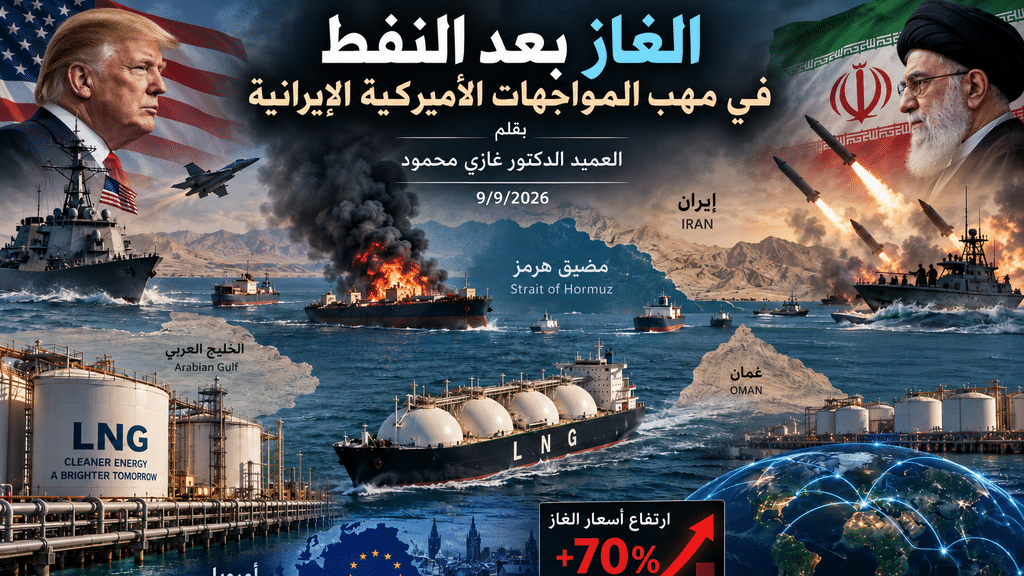
Escalating confrontations in the Strait of Hormuz — and their extension to strikes on oil and gas tankers and bulk cargo ships by both the United States and Iran — pushed the average daily transits down to about ten vessels on Sunday, 6 September 2026, the lowest level since May. The deliberate targeting of commercial carriers has become an instrument of economic pressure: what were previously mainly military strikes are now hitting tankers and other commercial ships, and through them the global economy.
Escalation of the confrontation
On Saturday, 5 September 2026, U.S. forces struck three Iranian oil tankers, including one near Kharg Island, Iran’s main oil export hub, following Iranian attacks on U.S. warships in the area. Iran retaliated by targeting three tankers that were following routes it did not approve, and by striking three U.S. vessels in different locations.
The widening of attacks to include commercial vessels — energy tankers and cargo ships — has raised the risk to Iranian energy shipments and related cargoes, as well as to ships linked to or escorted by U.S. forces while transiting the Strait of Hormuz and the Gulf of Oman. Commercial navigation has therefore been placed at the center of the confrontation.
LNG supplies in the eye of the storm
The resumption of military hostilities between the United States and Iran in early September, after a period of relative calm, has increased fears of growing disruptions to energy shipments through the strait. The consequences of disrupted navigation in this strategic passage extend beyond oil trade and directly affect liquefied natural gas (LNG) supplies.
LNG exports from the Arabian Gulf have fallen to far lower levels than before the war, which previously saw about three shipments per day. Since the Iranian attack on a Qatari vessel in early July, LNG carriers have been turning off their AIS location transmitters while transiting the strait in an effort to reduce the risk of being targeted.
Europe the first to be affected
LNG flows through the strait had already approached a near halt even before the latest military escalation, increasing pressure on global gas markets and prompting importing countries to seek alternative sources not dependent on Middle East supplies. This is especially true for Europe, which has become increasingly reliant on Gulf LNG imports to compensate for reduced Russian gas.
The situation is more dangerous as the European Union approaches winter while gas stocks remain unusually low. European storage is currently about 65 percent full — the lowest level at this time of year in at least fifteen years and far below the five‑year average of roughly 82 percent.
The challenge of risk
Despite the heightened risks, Qatar and the United Arab Emirates have continued to dispatch LNG shipments to customers worldwide. Qatar, after extending force majeure on shipments to Europe and Asia because of the current escalation, is now taking a bolder stance: six of its empty LNG carriers have returned in preparation for resuming exports through the strait.
Abu Dhabi National Oil Company (ADNOC) has likewise continued to move energy supplies — notably crude oil and LNG — despite the threat of Iranian attacks. Last month, an ADNOC-owned LNG tanker transferred its cargo to another vessel outside the strait, a move that successfully enabled additional exports via the Arabian Gulf.
Growing demand for LNG
These disruptions come at a time of record global gas demand in 2025, which reached about 4,202 billion cubic meters, according to the Global Gas Report 2026 — an increase of 69 bcm, or 1.7 percent year‑on‑year. The rise was driven by expanded use of gas for heating in the residential and commercial sectors, with heating consumption rising by the equivalent of 32 bcm, while industrial consumption increased by about 20 bcm.
The report, released on 26 August 2026, notes that the demand surge coincided with growing investment across the gas industry, especially in LNG liquefaction plants and storage facilities. Those investments helped the market absorb some of the multiple energy shocks of 2026, in contrast to the severe disruptions seen after the outbreak of the Russia‑Ukraine war in 2022.
Against a backdrop of rising global gas demand, the recent U.S.–Iran escalation, and ongoing sanctions on Russian gas linked to the war in Ukraine, European gas prices have jumped to their highest levels since January 2023. Field developments have heightened fears that Gulf supply disruptions could persist in the near term.
Rising competition for available cargoes
Competition between Europe and Asia for available LNG cargoes has intensified, after European prices climbed more than 70 percent compared with early July. If prices remain at these levels, Europe’s ability to attract additional shipments will improve, but it will face fiercer competition from Asian buyers and could trigger a new wave of higher energy and production costs. In this way, the stability of the global gas market depends on the trajectory of the confrontation in the Strait of Hormuz and on the involved parties’ capacity to avoid further escalation of this vital route.
Escalation threatens a global energy crisis
The foregoing shows that continued escalation in the Strait of Hormuz no longer threatens only oil supplies; it now puts the LNG trade to a severe test at a time of rising global demand and mounting competition between Europe and Asia for available cargoes. A protracted confrontation could further push up energy, production, and transport costs, and compel importing countries to accelerate diversification of sources and supply routes.
Accordingly, the stability of global gas markets hinges on containing the confrontation and shielding vital sea lanes from the conflict’s repercussions. Any long‑term disruption of navigation — which could also threaten the Bab al‑Mandeb after Hormuz — might turn the current supply disturbances into a broad global energy crisis. Early signs have already appeared: oil prices approached $100 per barrel after Brent futures rose in the early hours of Wednesday, 9 September 2026.