












Arabic version: تأخرت الحكومة في تحذيرات الصحة بشأن ازدهار الطحالب السامة في جنوب أستراليا
According to ABC News,
The South Australian government took months to update its health advice after the discovery of a potentially harmful toxin in the state’s disastrous algal bloom, insisting it posed minimal risk to humans.
For the last year, algae has flared at hotspots along the SA coastline, wiping out vast populations of marine life, closing parts of the fishing industry, and making some who went to the beach sick.
Despite the devastation, Premier Peter Malinauskas has remained upbeat and reassuring. “The reality of the algal bloom sometimes isn’t nearly as bad as people’s perception of it,” Mr Malinauskas told a media conference in October. “Let’s not scare 1.7 million South Australians from visiting the beach,” he said the next day.
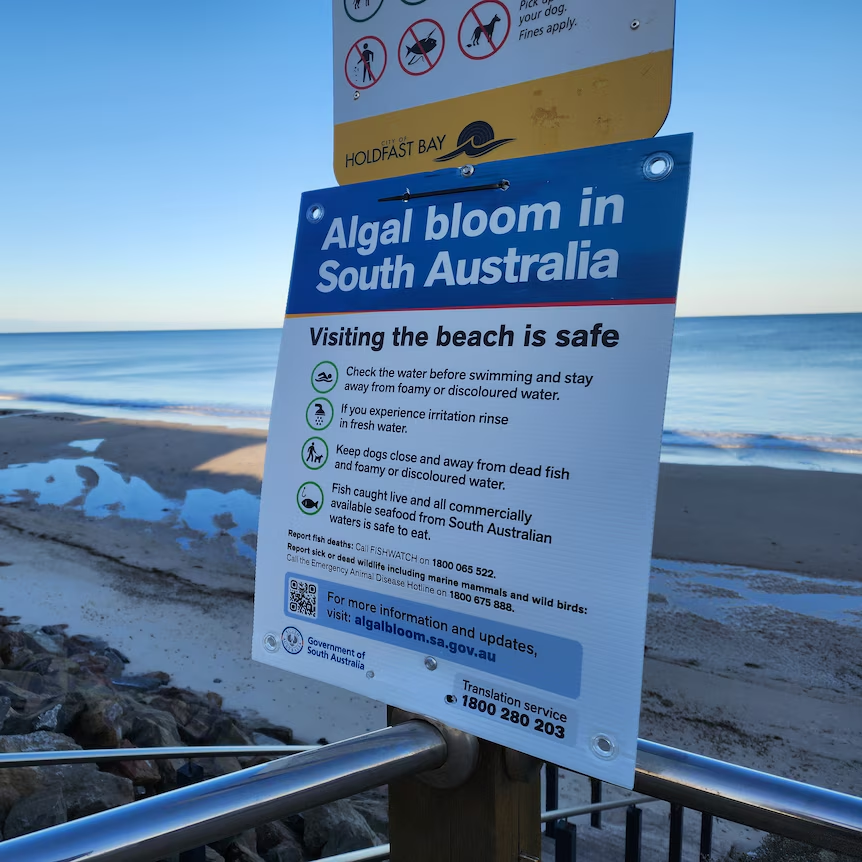
But documents show the government knew that a potentially dangerous compound, known as brevetoxin, had been found in animals, but didn’t update its health advice or tell the public for more than four months. That delay put asthmatics and those with compromised immune systems at risk.
The first effects of the algal bloom were felt by a group of surfers near the holiday town of Victor Harbor in March last year. They reported stinging eyes, coughing, rashes, headaches and breathing difficulties. Local tradie Dale Madden, who had been swimming nearby, was hospitalised with severe gastro and a bacterial infection. “It was like razor blades in my gut, I was rolling around on the floor in the emergency room, coughing and spewing blood,” he said.
While his illness can’t be definitively linked to the algae, an expert from Florida, which has dealt with the effects of toxic algal blooms since the 1950s, told Four Corners the bloom could bring on an illness like this. All up, nearly 100 swimmers and surfers said on social media they’d fallen ill, while hundreds of dead fish, birds, a seal, a baby dolphin, and other marine life washed up on the coast nearby.
Yet the state government was eager to allay public concerns. It settled on a consistent message: while the bloom was devastating to the marine environment, it posed only the mildest of threats to human health. The state’s chief public health officer, Professor Nicola Spurrier, became fond of saying the symptoms were little more than an “irritant” and that “when you’re away from that area, that does resolve”.
But in the early months of the outbreak, evidence emerged suggesting that the algae was indeed toxic. In early May, seven weeks after the algae was first seen near Victor Harbor, three oyster growing regions on Yorke Peninsula were shut down. It had been discovered that some of the oysters contained brevetoxins. It was the first time this toxin had ever been found in Australia. “This should have been a ‘break glass’ moment,” said Professor Shauna Murray from UTS, one of the world’s foremost experts on algal blooms, who studied this outbreak from the beginning. “We’d never seen these brevetoxins before in Australia.”
But the state government insisted the finding had no broader impact. It said the toxin levels were negligible and only showed up because oysters filter large amounts of water. The next warning was harder to ignore. On May 5, a great white shark was found dead on Adelaide’s popular Henley Beach. An autopsy later revealed brevetoxins on the shark’s gills. The finding was sufficiently worrying for the examining pathologist to send an email at 6pm on a Friday. “This is an uncommon and significant finding,” the pathologist wrote on May 16, in the email later released by the Department of Primary Industries. “Uncommon and significant” was how a pathologist described the discovery of brevetoxins in the autopsy.
Despite this warning, the health advice wasn’t changed. “[The algae] doesn’t represent a risk to people’s safety, largely, provided people adhere to the SA Health advice,” Mr Malinauskas told a press conference the next week. It took almost four months for the shark’s pathology findings to be released, and only after a freedom of information request.
In early June, the SA government received another warning. Professor Murray and other scientists gave a briefing at an SA government forum investigating the algal bloom. A key adviser to Nicola Spurrier was present. Those who attended were told that while the dominant algal species was thought to be Karenia mikimotoi, “brevetoxins … have been identified as part of this bloom event for the first time in Australian waters”. A summary of that briefing prepared by the primary industries department noted the “impacts from the harmful algal bloom have potentially devastating implications for industries … and human health”.
SA Health did not respond to questions about whether Nicola Spurrier was briefed on the forum. But the department insists it wasn’t known at that point that a brevetoxin-producing species was dominating the bloom. Within a few weeks, the government would have even more evidence of brevetoxins. In late June, pathology results revealed brevetoxins had been found in the organs of two kangaroos. A mob of western grey kangaroos became sick back in March, not far from where the surfers first reported experiencing symptoms. Authorities put down more than 100 of the kangaroos. Authorities were forced to put down more than 100 animals on welfare grounds, and performed autopsies on seven of them. Further testing was ordered on two of the animals. When the results arrived in late June, they showed brevetoxins were present. This time in the heart, liver, spleen and kidneys. The sickness in some of the animals was put down to a poisonous grass, which the report concluded was the most likely cause of the symptoms, but experts say the presence of brevetoxins was the revelation that should have warranted further investigation. Once again, the health advice was not updated, and the results were never formally announced. Two months went by before the SA environment department uploaded the pathology report on the kangaroos to a government website.