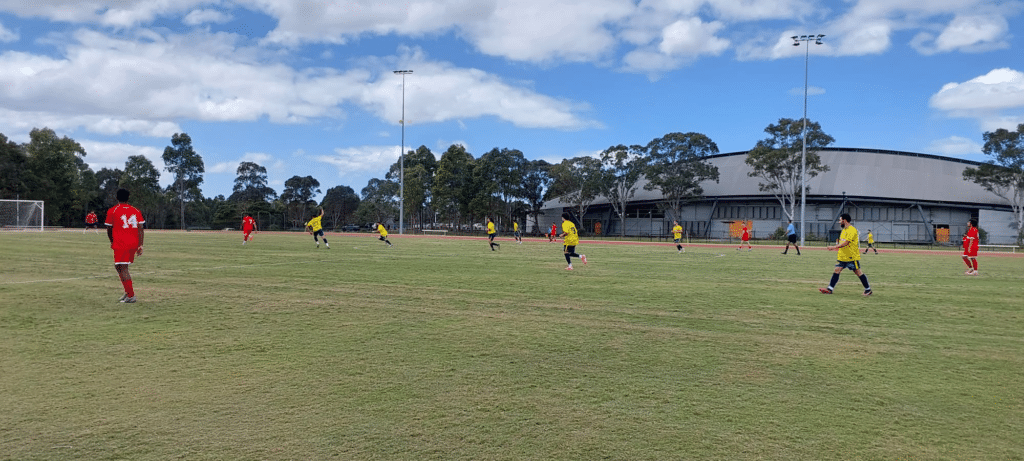













The 10th Australian Lebanese Football Association (ALFA) tournament kicked off in thrilling fashion at Crest Sporting Complex, Bass Hill, on October 13. Day one featured four highly competitive football matches, setting the stage for an exciting tournament. ALFA President Remy Wehbe delivered the opening address, reminding the crowd that the tournament has been running since 2013, with the goal of bringing Australians from various multicultural and ethnic backgrounds together to interact and understand each other, all within the framework of the Australian constitution. He also thanked the main sponsors and supporters of the event being Bankstown RSL, Multicultural NSW and Oz Arab Media.
Game One: Egypt vs Lebanon
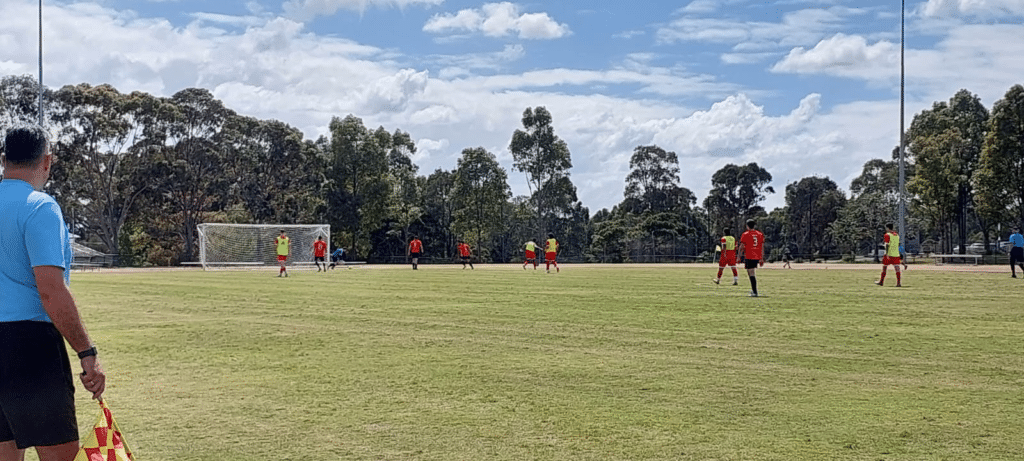
The first game of the 2024 ALFA tournament saw Egypt and Lebanon go head-to-head. Both teams began the match with strong defensive tactics, resulting in a tense battle on the field. Egypt’s backline successfully thwarted Lebanon’s early attempts at scoring.
Tensions flared when the Egyptian coach voiced frustration at a referee’s decision, adding to the match’s intensity. Despite missed opportunities from both sides, Lebanon found the back of the net twice, taking a 2-0 lead just before halftime.
In the second half, Lebanon adjusted their formation from a 4-4-2 to a 4-1-4-1, maintaining pressure on Egypt’s defence. Egypt managed to score, narrowing the gap to 2-1, and soon equalised at 2-2. However, Lebanon secured a late victory with a close-range goal, finishing 3-2.
Lebanon’s striker and coach, Salah Haddad, credited the late development of the team and their ability to adapt to each other as the key to their success. “We built from the back and looked for the long ball to the winger and into the box to score,” Haddad explained.
Game Two: Australia vs Brazil
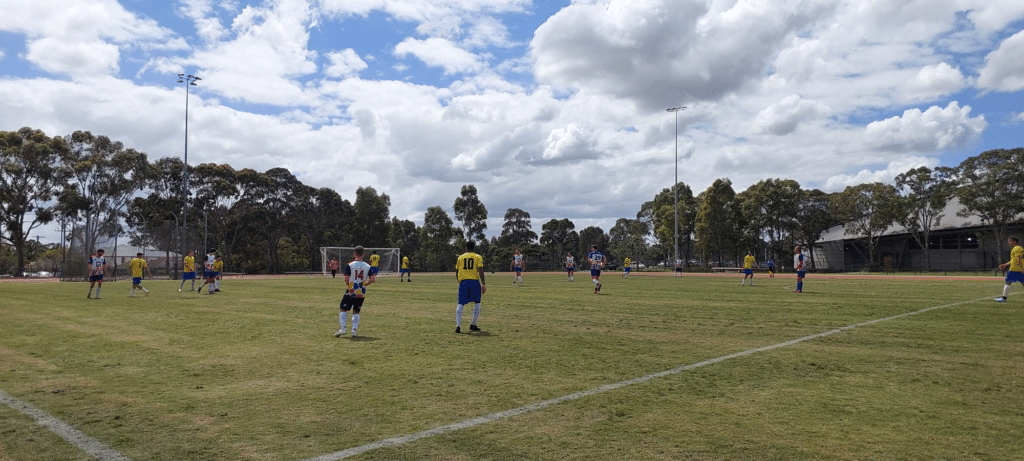
The second match saw Australia face Brazil in a thrilling encounter. Brazil struck first, scoring within the opening two minutes, but Australia quickly responded to level the score at 1-1. Australia then pulled ahead 2-1, but Brazil thought they had equalised with a long-range strike, only for the goal to be disallowed as it was taken before the referee’s whistle.
The first half ended with Australia leading, but not without drama. A dangerous tackle just before halftime led to only a warning, which raised tensions. The second half continued in a similar vein, with confusion surrounding yellow cards causing a brief pause in play. Once resolved, Australia extended their lead to 3-1, and strong offensive play allowed them to make it 4-1. A penalty following a dangerous tackle resulted in Australia’s fifth goal, sealing a 5-1 victory.
Australian team manager Jarrod Galbraith Marten attributed the win to their tactical approach. “We played to our strengths with low-risk, possession-based football, using futsal IQ for rotations and short passing, waiting for the right moments to strike,” Marten said. He also praised his team’s ability to adapt to Brazil’s skillful and fast play by keeping the ball away from them and playing expansive football when in possession.
Game Three: Lebanon vs Palestine

Lebanon returned to the field in the third game, this time against Palestine. Palestine came out strong, scoring twice within the first ten minutes to take a 2-0 lead. The match turned into a hard-fought contest, with both teams showcasing solid defence and attacking play.
The game grew increasingly physical, with numerous tackles flying in as players sought to prevent the opposition from scoring. While Lebanon improved their performance in the second half, Palestine’s dominance prevailed, leading to a 3-0 victory.
Palestine’s coach, Hassan Reda, highlighted the importance of their fast start. “We needed a strong, early lead, and we achieved that with two quick goals. Our focus was to keep the play in their half and hit them with speed,” Reda said.
Game Four: Australia vs Qatar
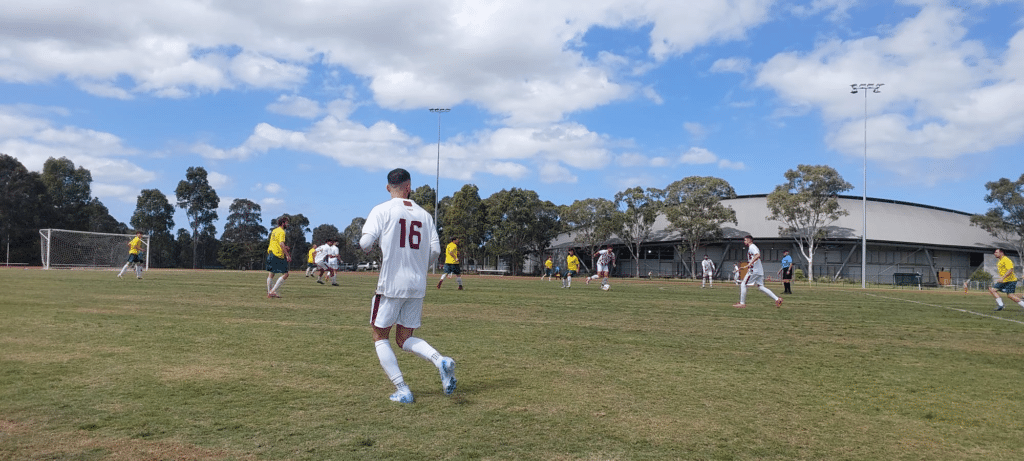
The final match of the day saw Australia take on Qatar. The game began as a closely contested battle, with Qatar’s strong midfield pressuring Australia’s defence. The Aussies had several chances to score but were repeatedly caught offside.
In the second half, Australia finally broke through, scoring twice to take a 2-0 lead. Despite an injury scare when an Australian player suffered a neck bump, the team maintained their composure. A late opportunity to make it 3-0 was missed when the ball sailed over the crossbar, but Australia held on to win their second match of the day, 2-0.
Conclusion
Day one of the ALFA tournament provided fans with a spectacle of high-quality football, featuring dramatic finishes and fierce competition. From Remy Wehbe’s opening remarks to the final whistle, the tournament’s first day was memorable. As the action moves to Adore Reserve in Rockdale for day two and the finals, football enthusiasts can expect more thrilling contests as teams continue to battle for glory.