














Arabic version: إيران تتهم الولايات المتحدة بعرقلة التقدم الدبلوماسي في محادثات الهدنة
According to Al Jazeera,
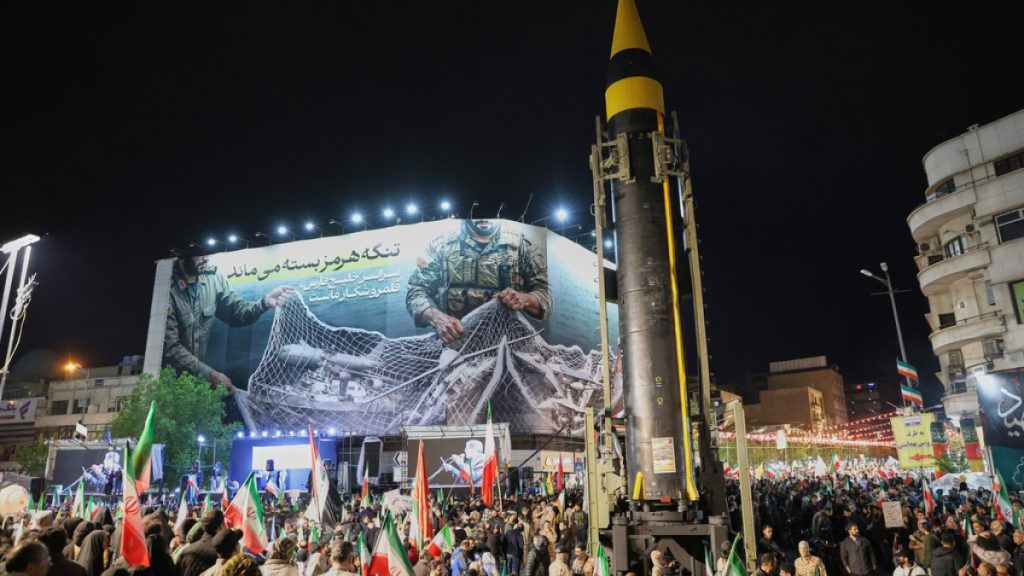
Iranian officials have blamed the United States for the impasse in the negotiations and the continued closure of the Strait of Hormuz, stressing that Tehran will not submit to “bullying” by Washington. Parliament Speaker Mohammad Bagher Ghalibaf emphasized that there can be no full ceasefire between the two countries if the US naval blockade on Iranian ports persists.
In his first comment since President Donald Trump announced he would extend the US-Iran truce, Ghalibaf, one of Iran’s lead negotiators, suggested that Tehran will not capitulate to Washington’s demands because of the siege. He stated that reopening the Strait of Hormuz is impossible with such a flagrant breach of the ceasefire.
Iranian President Masoud Pezeshkian echoed that position, stressing that diplomacy, not pressure, was necessary for peace talks. He called out the inconsistencies in the US and Israel’s approach, highlighting that threats and blockades hinder genuine negotiations.
Although both countries have said they are ready to return to war, the ceasefire has so far appeared to hold on Wednesday, the day its initial two-week period expired. The ceasefire’s extension came only a day earlier, after it became apparent that Iranian officials would not attend talks scheduled in Pakistan in protest against the US blockade. Iran’s ambassador to the United Nations stated that breaking the siege is a necessary condition for the negotiations to proceed.
As the situation remains tense, concerns grow that hostilities could reignite at any moment. Al Jazeera correspondent Ali Hashem reported that Iran is experiencing a “situation of no war, no peace,” with businesses uncertain about future developments. The ongoing US military blockade has further complicated the situation, with both countries maintaining a cautious stance as they navigate the complexities of the conflict.