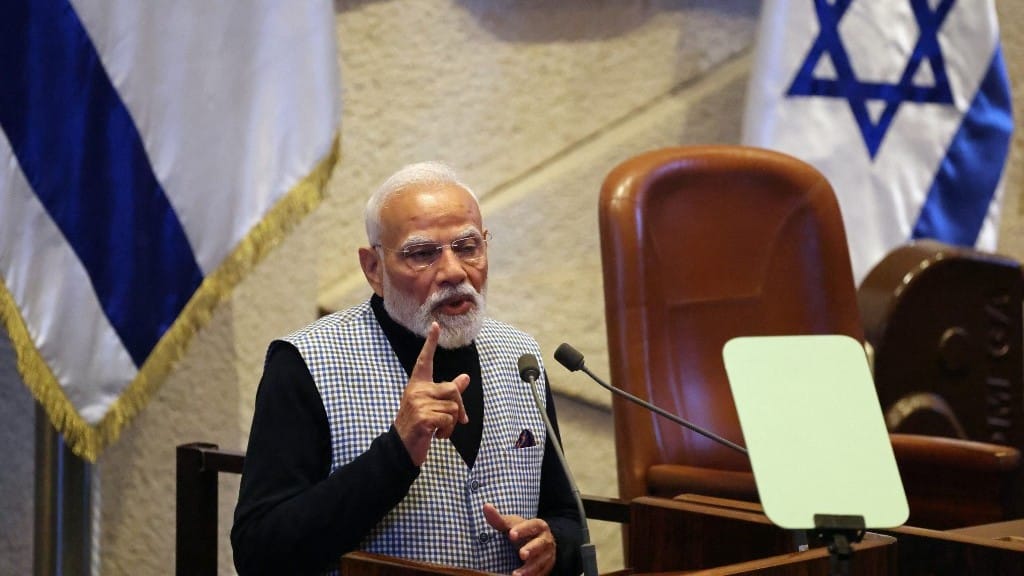













Arabic version: مودي يؤكد الروابط القوية مع إسرائيل في خطاب الكنيست
Indian Prime Minister Narendra Modi received a warm welcome from the Knesset, Israel’s parliament, during his address on February 25, 2026. Applause and chants of “Modi! Modi! Modi!” filled the chamber as he began his speech, which emphasized the deepening alliance between India and Israel. According to Middle East Eye, Modi expressed condolences for the lives lost during the October 7 attacks on Israel, stating, “India stands with Israel firmly with full conviction in this moment and beyond.”
The address highlighted the historical significance of the India-Israel partnership, with Modi referring to the relationship as one of friendship, respect, and shared values. He condemned the attacks carried out by Hamas, marking a strong stance from India, which has increasingly aligned itself with Israel in recent years. Modi’s visit included gestures of goodwill, such as children waving the flags of both nations and the Knesset illuminated in the colors of the Indian flag.
Israeli Prime Minister Benjamin Netanyahu described Modi as “my brother,” showcasing the personal and strategic ties between the two leaders. Netanyahu praised Modi’s support following the October attacks and emphasized the importance of their partnership in addressing regional challenges. He also recalled Modi’s first visit to Israel in 2017, symbolizing their longstanding camaraderie.
During the address, Modi made no mention of the ongoing humanitarian crisis in Gaza, focusing instead on potential peace initiatives, including the Gaza Peace Initiative endorsed by the UN Security Council. He asserted that the initiative could pave the way for a just and durable peace, while also reaffirming India’s support for Israel.
The strengthening of economic ties was another focal point of Modi’s address, as negotiations for a Free Trade Agreement between India and Israel resumed. With trade between the two nations exceeding $3.62 billion in the 2024-2025 period, Modi highlighted the potential for further cooperation across various sectors, including defense and technology. This relationship is seen as both strategic and ideological, reflecting shared expansionist goals between the two nations.